


Some error occured while loading the Quick View. Please close the Quick View and try reloading the page.
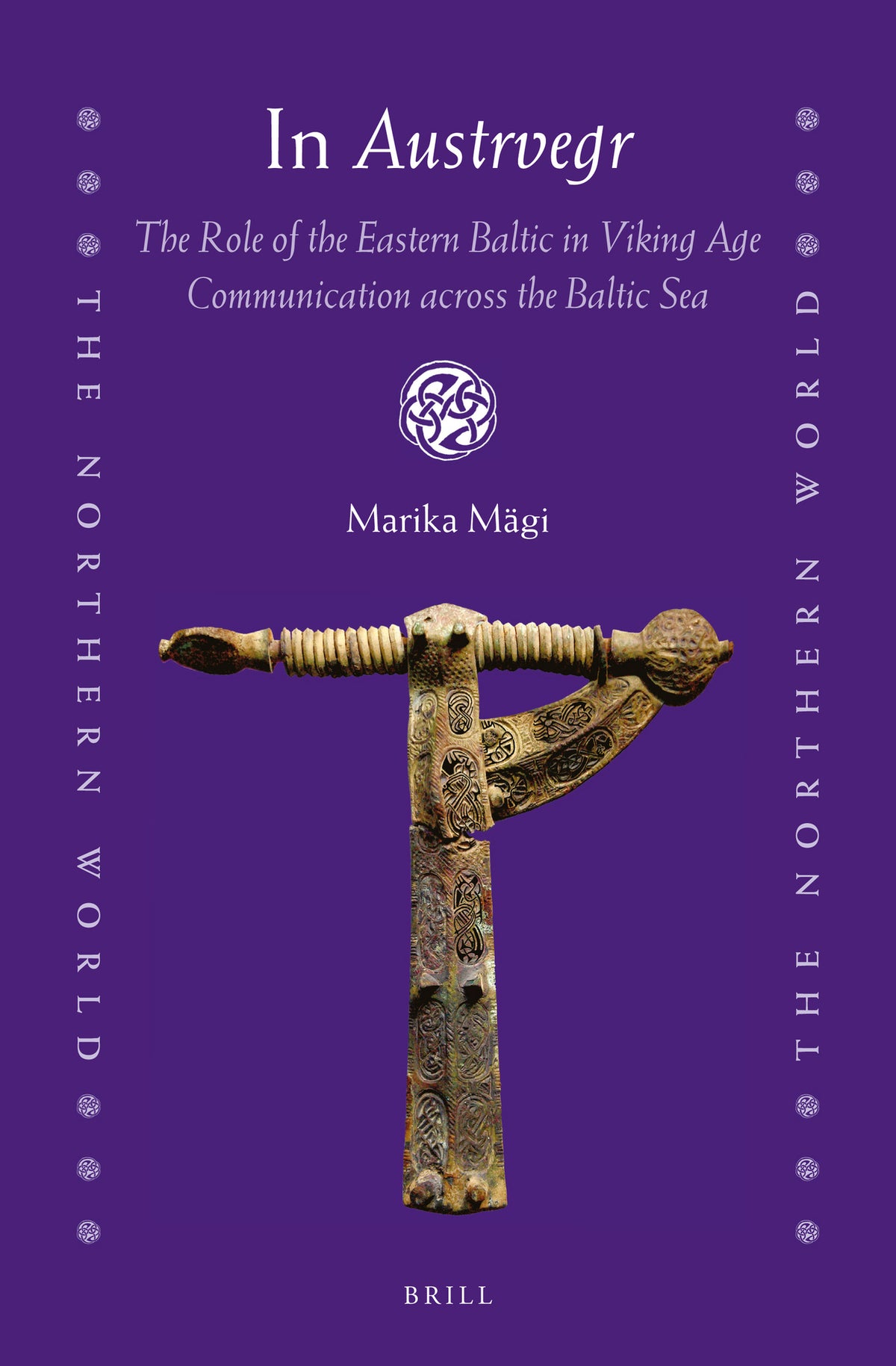
Winner of the Early Slavic Studies Association 2018 Book Prize
Marika Mägi’s book considers the cultural, mercantile and political interaction of the Viking Age (9th-11th century), focusing on the eastern coasts of the Baltic Sea. The majority of research on Viking activity in the East has so far concentrated on the modern-day lands of Russia, while the archaeology and Viking Age history of today’s small nation states along the eastern coasts of the Baltic Sea is little known to a global audience.
This study looks at the area from a trans-regional perspective, combining archaeological evidence with written sources, and offering reflections on the many different factors of climate, topography, logistics, technology, politics and trade that shaped travel in this period. The work offers a nuanced vision of Eastern Viking expansion, in which the Eastern Baltic frequently acted as buffer zone between eastern and western powers.
Winner of the Early Slavic Studies Association 2018 Book Prize for most outstanding recent scholarly monograph on pre-modern Slavdom.
The work was described by the prize committee in the following terms: "The scope of this book is far broader than the title might suggest. It amounts to a substantial rethinking of the history of the eastern Baltic from the tenth to the thirteenth century, based on both archaelogical and written evidence. The author is by training an archaeologist, and she mounts a powerful criticism of historians who prioritise the written sources and then pick and choose from the archaeological evidence to suit their theories. This book foregrounds the archaeology, which is used to question and consider the written evidence. The author is also highly and rightly critical of the archaeological scholarship, for projecting back into the past the narrow concerns of the numerous nation states that now exist across the eastern and northern Baltic, or the Great Russian nationalist-materialist-imperialist interpretations of the Soviet period. The result is a detailed and fascinating account of the interactions of the worlds of Scandinavia and Rusʹ with the various peoples of the Baltic region, both Finno-Ugric and Baltic. The resulting picture of commercial, political, and cultural interaction across several cultures, and based on reading in a wide range of languages, is a tour-de-force."
Marika Mägi’s book considers the cultural, mercantile and political interaction of the Viking Age (9th-11th century), focusing on the eastern coasts of the Baltic Sea. The majority of research on Viking activity in the East has so far concentrated on the modern-day lands of Russia, while the archaeology and Viking Age history of today’s small nation states along the eastern coasts of the Baltic Sea is little known to a global audience.
This study looks at the area from a trans-regional perspective, combining archaeological evidence with written sources, and offering reflections on the many different factors of climate, topography, logistics, technology, politics and trade that shaped travel in this period. The work offers a nuanced vision of Eastern Viking expansion, in which the Eastern Baltic frequently acted as buffer zone between eastern and western powers.
Winner of the Early Slavic Studies Association 2018 Book Prize for most outstanding recent scholarly monograph on pre-modern Slavdom.
The work was described by the prize committee in the following terms: "The scope of this book is far broader than the title might suggest. It amounts to a substantial rethinking of the history of the eastern Baltic from the tenth to the thirteenth century, based on both archaelogical and written evidence. The author is by training an archaeologist, and she mounts a powerful criticism of historians who prioritise the written sources and then pick and choose from the archaeological evidence to suit their theories. This book foregrounds the archaeology, which is used to question and consider the written evidence. The author is also highly and rightly critical of the archaeological scholarship, for projecting back into the past the narrow concerns of the numerous nation states that now exist across the eastern and northern Baltic, or the Great Russian nationalist-materialist-imperialist interpretations of the Soviet period. The result is a detailed and fascinating account of the interactions of the worlds of Scandinavia and Rusʹ with the various peoples of the Baltic region, both Finno-Ugric and Baltic. The resulting picture of commercial, political, and cultural interaction across several cultures, and based on reading in a wide range of languages, is a tour-de-force."

Price: $200.00
Pages: 492
Publisher: Brill
Imprint: Brill
Publication Date:
17 May 2018
ISBN: 9789004216655
Format: Hardcover

Winner of the Early Slavic Studies Association 2018 Book Prize for most outstanding recent scholarly monograph on pre-modern Slavdom.
The work was described by the prize committee in the following terms: "The scope of this book is far broader than the title might suggest. It amounts to a substantial rethinking of the history of the eastern Baltic from the tenth to the thirteenth century, based on both archaelogical and written evidence. The author is by training an archaeologist, and she mounts a powerful criticism of historians who prioritise the written sources and then pick and choose from the archaeological evidence to suit their theories. This book foregrounds the archaeology, which is used to question and consider the written evidence. The author is also highly and rightly critical of the archaeological scholarship, for projecting back into the past the narrow concerns of the numerous nation states that now exist across the eastern and northern Baltic, or the Great Russian nationalist-materialist-imperialist interpretations of the Soviet period. The result is a detailed and fascinating account of the interactions of the worlds of Scandinavia and Rusʹ with the various peoples of the Baltic region, both Finno-Ugric and Baltic. The resulting picture of commercial, political, and cultural interaction across several cultures, and based on reading in a wide range of languages, is a tour-de-force."
"This is unarguably a very important, rich and often well-conceived work with many profound analyses of the source material. For the first time, an experienced archaeologist has brought together the whole archaeological material from the Eastern Baltic region, from Eastern Prussia to Estonia. This is a formidable presentation. I am convinced that this book will for a long time be a standard work of reference for those interested in the Baltic region and the period in question." Johan Callmer, in Journal of Northern Studies 13 (2019).
The work was described by the prize committee in the following terms: "The scope of this book is far broader than the title might suggest. It amounts to a substantial rethinking of the history of the eastern Baltic from the tenth to the thirteenth century, based on both archaelogical and written evidence. The author is by training an archaeologist, and she mounts a powerful criticism of historians who prioritise the written sources and then pick and choose from the archaeological evidence to suit their theories. This book foregrounds the archaeology, which is used to question and consider the written evidence. The author is also highly and rightly critical of the archaeological scholarship, for projecting back into the past the narrow concerns of the numerous nation states that now exist across the eastern and northern Baltic, or the Great Russian nationalist-materialist-imperialist interpretations of the Soviet period. The result is a detailed and fascinating account of the interactions of the worlds of Scandinavia and Rusʹ with the various peoples of the Baltic region, both Finno-Ugric and Baltic. The resulting picture of commercial, political, and cultural interaction across several cultures, and based on reading in a wide range of languages, is a tour-de-force."
"This is unarguably a very important, rich and often well-conceived work with many profound analyses of the source material. For the first time, an experienced archaeologist has brought together the whole archaeological material from the Eastern Baltic region, from Eastern Prussia to Estonia. This is a formidable presentation. I am convinced that this book will for a long time be a standard work of reference for those interested in the Baltic region and the period in question." Johan Callmer, in Journal of Northern Studies 13 (2019).
Marika Mägi, Ph.D. (2002), Tartu University, is senior research fellow at the Centre for Medieval Studies at Tallinn University. She is an archaeologist and historian, and has published mainly on Viking Age and Middle Ages in Estonia and neighbouring areas.