


Some error occured while loading the Quick View. Please close the Quick View and try reloading the page.
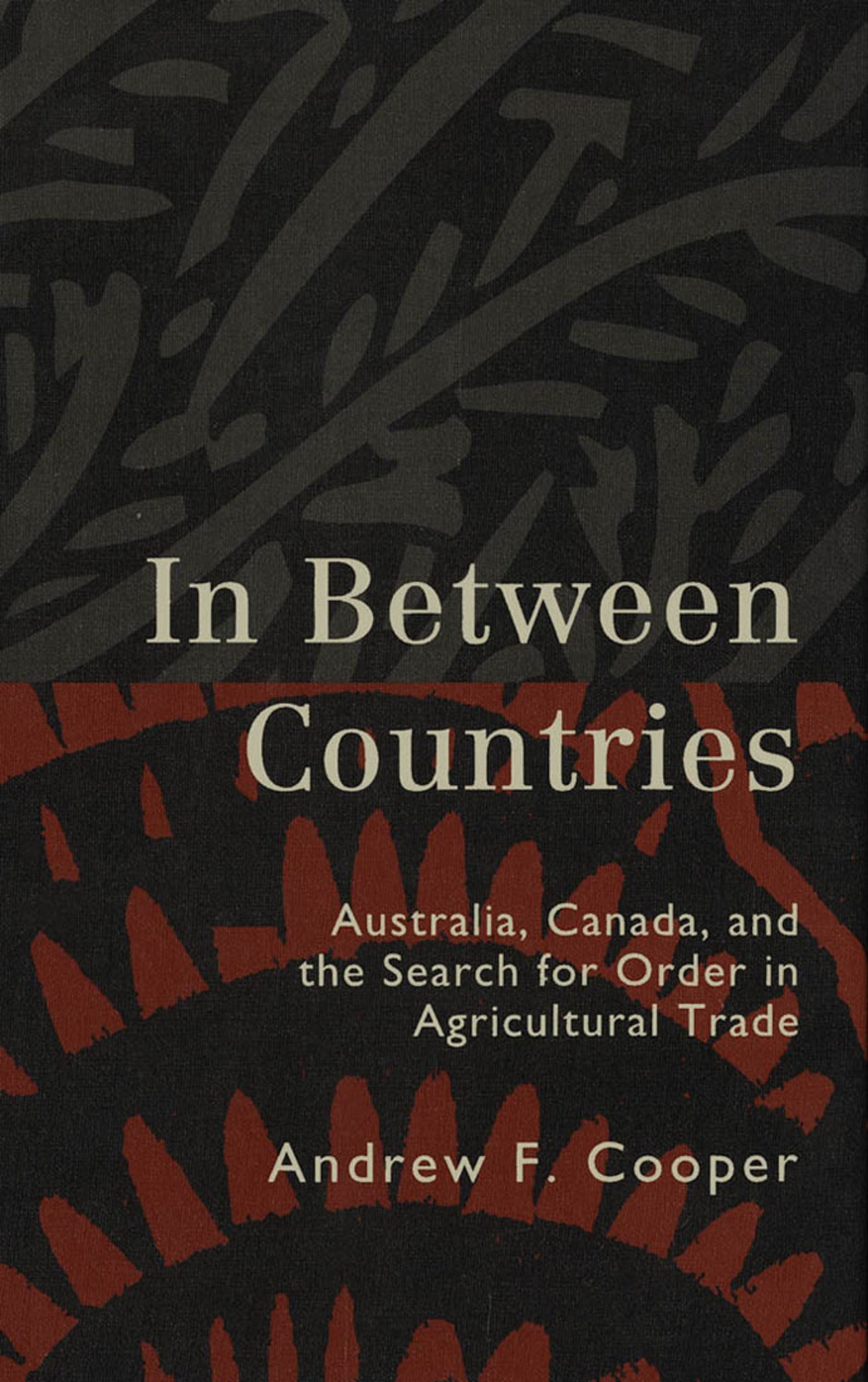


"In Between Countries makes an original contribution in the field of international political economy, advancing our understanding of how middle powers behave. By highlighting some of the distinctive features of Canadian and Australian foreign policies it furthers the understanding of both." Derek McDougall, Department of Political Science, University of Melbourne, Australia
"In Between Countries is a valuable discussion of policy issues on agriculture and international trade more generally. Cooper makes good use of the middle power concept, including the related notion of followership, acknowledging the limitations of the concept as well as stressing its utility. This kind of comparative analysis is a productive way of exploring the distinctive characteristics of Canada's foreign economic policies." Robert Boardman, Department of Political Science, Dalhousie University
"In Between Countries makes an original contribution in the field of international political economy, advancing our understanding of how middle powers behave. By highlighting some of the distinctive features of Canadian and Australian foreign policies it furthers the understanding of both." Derek McDougall, Department of Political Science, University of Melbourne, Australia "In Between Countries is a valuable discussion of policy issues on agriculture and international trade more generally. Cooper makes good use of the middle power concept, including the related notion of followership, acknowledging the limitations of the concept as well as stressing its utility. This kind of comparative analysis is a productive way of exploring the distinctive characteristics of Canada's foreign economic policies." Robert Boardman, Department of Political Science, Dalhousie University