


Some error occured while loading the Quick View. Please close the Quick View and try reloading the page.
Winner, 2026 Best Book Award, Migration and Citizenship Section, American Political Science Association
The economic benefits of increased immigration are potentially massive, many experts say. The United States and other wealthy countries, however, have put up barriers against even the highest-skilled foreign workers. Such choices reflect public opinion, which typically favors stringent restrictions. Under what conditions do voters in affluent democracies back higher levels of immigration? How can advocates build support for pro-immigration policies?
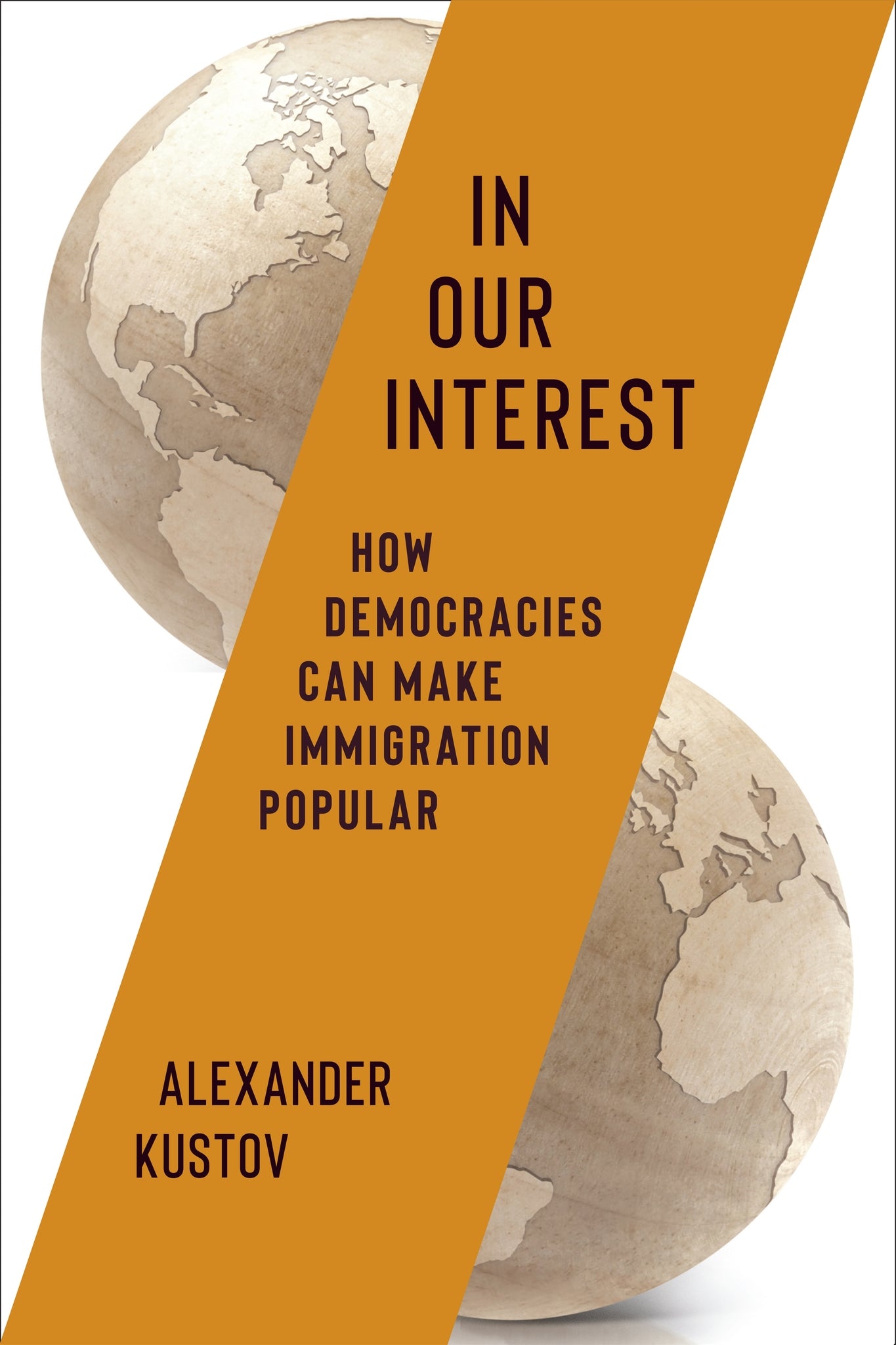
In this data-driven, counterintuitive book, Alexander Kustov argues that showing people how immigration benefits them and their fellow citizens can lead to greater acceptance of more open policies. Looking beyond the stereotype of xenophobic voters, he identifies people’s genuine concern for their compatriots as a key driver of attitudes toward immigration. Using extensive cross-national surveys and experiments, this book demonstrates that people are willing to bear costs to benefit others—but they prioritize helping their fellow citizens. Voters tend to oppose freer immigration because they believe it threatens the well-being of their communities, but they can be persuaded to support it if they see the outcomes of immigration policies as in their interest. Through in-depth comparison of Canada and Sweden, Kustov shows why pragmatic approaches that focus on attracting skilled, needed workers are more effective than humanitarian appeals and policies. Offering a realistic path forward that meets voters where they are, In Our Interest provides a new, optimistic perspective on the political prospects of pro-immigration reforms.


— Wayne A. Cornelius, coeditor of Controlling Immigration: A Global Perspective
Increased immigration: What do you do when the most economically beneficial policy in the world is virtually the least politically popular? Alexander Kustov’s In Our Interest takes a can-do approach by experimentally investigating the best ways to close the gap. His answer: Countries should prioritize "demonstrably beneficial" high-skilled immigration so voters stop picturing liberalization as charity or national suicide. Even refugees benefit if the stereotypical immigrant is a star.
— Bryan Caplan, author of Open Borders: The Science and Ethics of Immigration
Anti-immigration politics are on the march. In this synthetic, deeply researched book, Kustov demonstrates that we misunderstand that opposition: citizens are not implacably anti-immigration. Kustov’s path forward fosters support for immigration by addressing the altruistic concerns underpinning opposition. Moral clarity, conceptual novelty, and extensive evidence—from many strengths, one great book.
— Daniel J. Hopkins, author of The Increasingly United States: How and Why American Political Behavior Nationalized
There's an abyss between what the empirical evidence tells us about the economic and social benefits of immigration and what the average person believes about immigration. Those tasked with convincing the public about the benefits of welcoming newcomers usually make an immigrant-centered argument that appeals to compassion. Kustov convincingly shows that only appeals that tell us immigration is good for us and our countries, when backed by good policies, will work to make immigration popular. This perspective isn't only refreshing. It's perfectly consistent with the facts on how immigration is a net positive. This is an important book for anyone interested in the future wellbeing of their country.
— Zeke Hernandez, author of The Truth About Immigration: Why Successful Societies Welcome Newcomers
Kustov is a liberal who challenges his fellow liberals to think more deeply about what is really driving public attitudes, and to not simply dismiss public attitudes as irrational or manipulated. It's a thought-provoking and brilliantly researched piece of work.
— Madeleine Sumption, author of What Is Immigration Policy For?
Carefully argued and data-rich... This cautiously optimistic book offers a welcome respite from futile, endless debates over migration.
— Andrew Moravcsik
Empirically rigorous, theoretically generative, and normatively pragmatic, In Our Interest is that rare book that will reshape the debate.
— Ann Jiang, University of California, San Diego
Preface
Introduction
Part I. Borders of Compassion: How Nationalists Can Embrace Immigration
1. Nationalism as Parochial Altruism: A Theory of Conditional Support for Immigration
2. The Altruist’s Dilemma in the Data: Why Don’t Altruists Support Immigration?
3. Altruistic Nationalism Revealed: Why Do Most Voters Oppose Immigration?
4. National Interest Randomized: When Would Most Voters Support Immigration?
Part II. Persuasion by Design: How Demonstrably Beneficial Policies Make Immigration Popular
5. Making Immigration Popular: From Framing to Policymaking
6. Backlash Versus Legitimation: Do Programmatic Pro-immigration Reforms Backfire?
7. There Is No Shortcut: Why Does Immigration Have to Be Demonstrably Beneficial to Be
Popular?
8. How (Not) to Design Popular Immigration Policies: Comparing Reforms in Canada and
Sweden
Conclusion
Acknowledgments
Appendix A: Data
Appendix B: Tables
Notes
References
Index