


Some error occured while loading the Quick View. Please close the Quick View and try reloading the page.
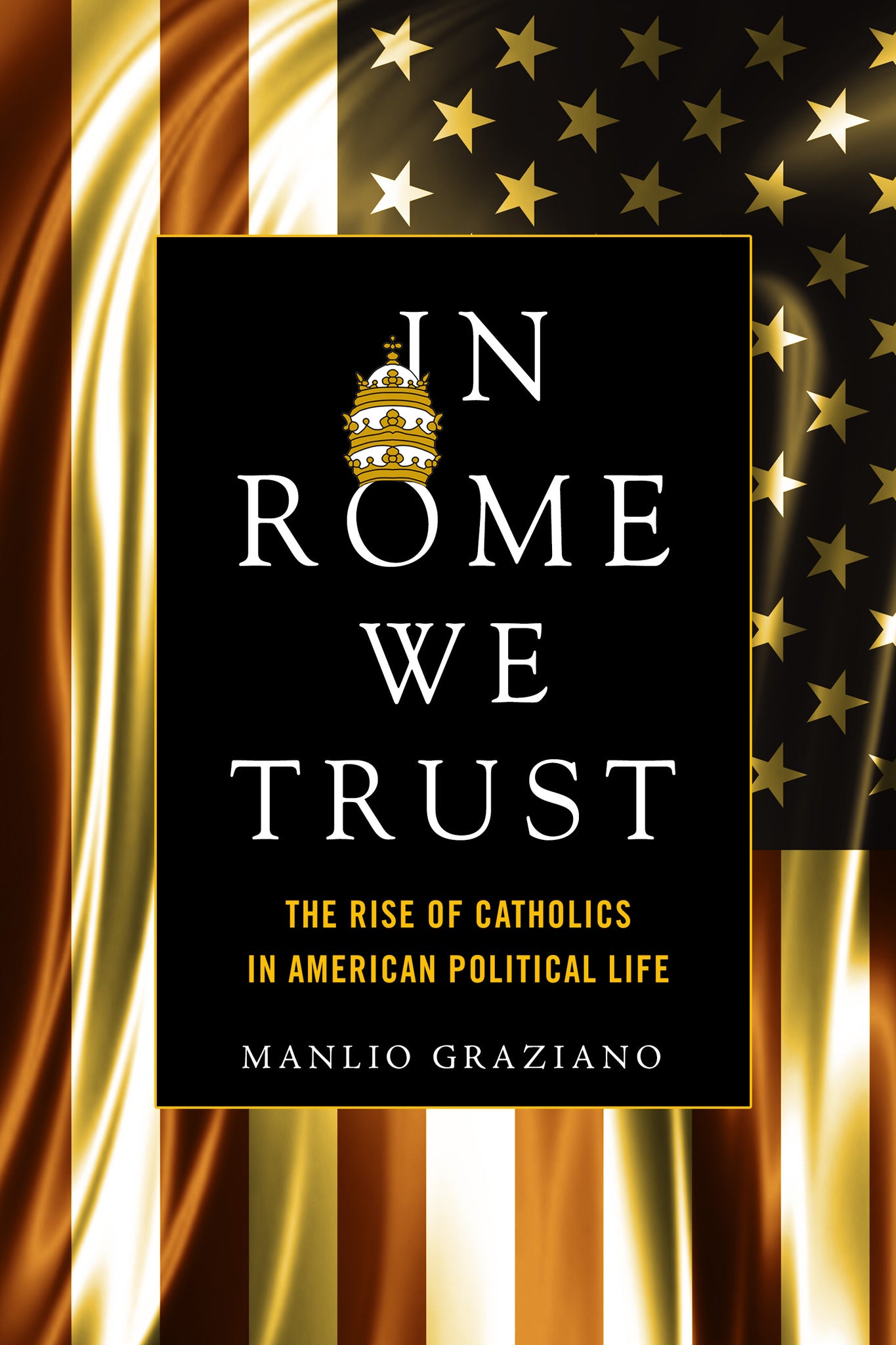
On the heels of an extremely lively U.S. presidential election campaign, this book examines the unusually serene relationship between the chief global superpower and the world's most ancient and renowned institution. The "Catholicization" of the United States is a recent phenomenon: some believe it began during the Reagan administration; others feel it emerged under George W. Bush's presidency. What is certain is that the Catholic presence in the American political ruling class was particularly prominent in the Obama administration: over one-third of cabinet members, the Vice President, the White House Chief of Staff, the heads of Homeland Security and the CIA, the director and deputy director of the FBI, the Chairman of the Joint Chiefs of Staff and other top military officers were all Roman Catholic. Challenging received wisdom that the American Catholic Church is in crisis and that the political religion in the United States is Evangelicalism, Manlio Graziano provides an engaging account of the tendency of Catholics to play an increasingly significant role in American politics, as well as the rising role of American prelates in the Roman Catholic Church.


— Timothy Byrnes
"This fascinating and astonishingly neglected subject is of immense importance, and I can think of no one better positioned than Manlio Graziano to treat it in all its complexity."
— Stanislao G. Pugliese
"[Graziano's] book deserves attention both from scholars interested in religion and politics, broadly understood, and from intelligent citizens searching for new possibilities for civic life."
— David J. O'Brien
"[Graziano] devotes much of In Rome We Trust to a tightly written, dispassionate and unsentimental account of American Catholic political history, one backed by substantial research."
— Jason K. Duncan
"[A]s the volume ably documents, Catholics have moved into the mainstream of national-level political life in America....The analysis is at its best in tracing the complex relationship between American and Vatican interests in international affairs. Graziano demythologizes the U.S.-Vatican relationship in the post-World War II era, particularly the cooperation between President Ronald Reagan and Pope John Paul II."
— David T. Buckley
"Manlio Graziano's In Rome We Trust is much more than an erudite and well documented analysis of the relations between the Vatican and the United States, between Catholicism and the ultimate superpower. It is a priceless interpretation of the geopolitics that the Roman Church, appearing here in its worldly role, and America, the leader of the West, have recently practiced and will continue to practice in the post-Cold War era."
— Corriere della Sera
This chapter describes the essentially anti-Catholic nature of the 13 colonies and of the early years of the United States, as well as the specific role of the Catholics at that time.
This chapter recounts the early stages of the relationship between the universal Catholic Church and the United States, and the long-term fundamental incomprehension of the nature of the United States by a Catholic Church still exclusively Eurocentric
This chapter treats the relationship between the universal Catholic Church and the United States in the twentieth century before the establishment of diplomatic relations, and the global competition over moral values
This chapter describes the evolution of the political role of American Catholics from the World War I to the Reagan administration, with particular attention to Roosevelt's New Deal Coalition
This chapter covers the political role of Evangelicalism in the United States, and shows how the Catholic Church was able to learn from this experience as well
This Chapter shows how American Catholics became more and more present at the top of the political power in the United States and puts this trend in relation with the general geopolitical frame of global power shifts and the relative decline of the US
This chapter presents the real condition of the American Catholic Church today, providing data and considerations that contradict commonplaces about the crisis of Catholicism. It also recounts the stages of the process of "Americanization" of the universal Catholic Church, not only in financial terms nor by the growing numbers of American cardinals, but essentially in terms of adoption of the American model of free competition on the market of faith: from social doctrine to freedom of religion, through to the condemnation of anti-Semitism. The election of an "American Pope" is the last stage of this process.