


Some error occured while loading the Quick View. Please close the Quick View and try reloading the page.
Foster a sense of belonging for everyone in your classroom community
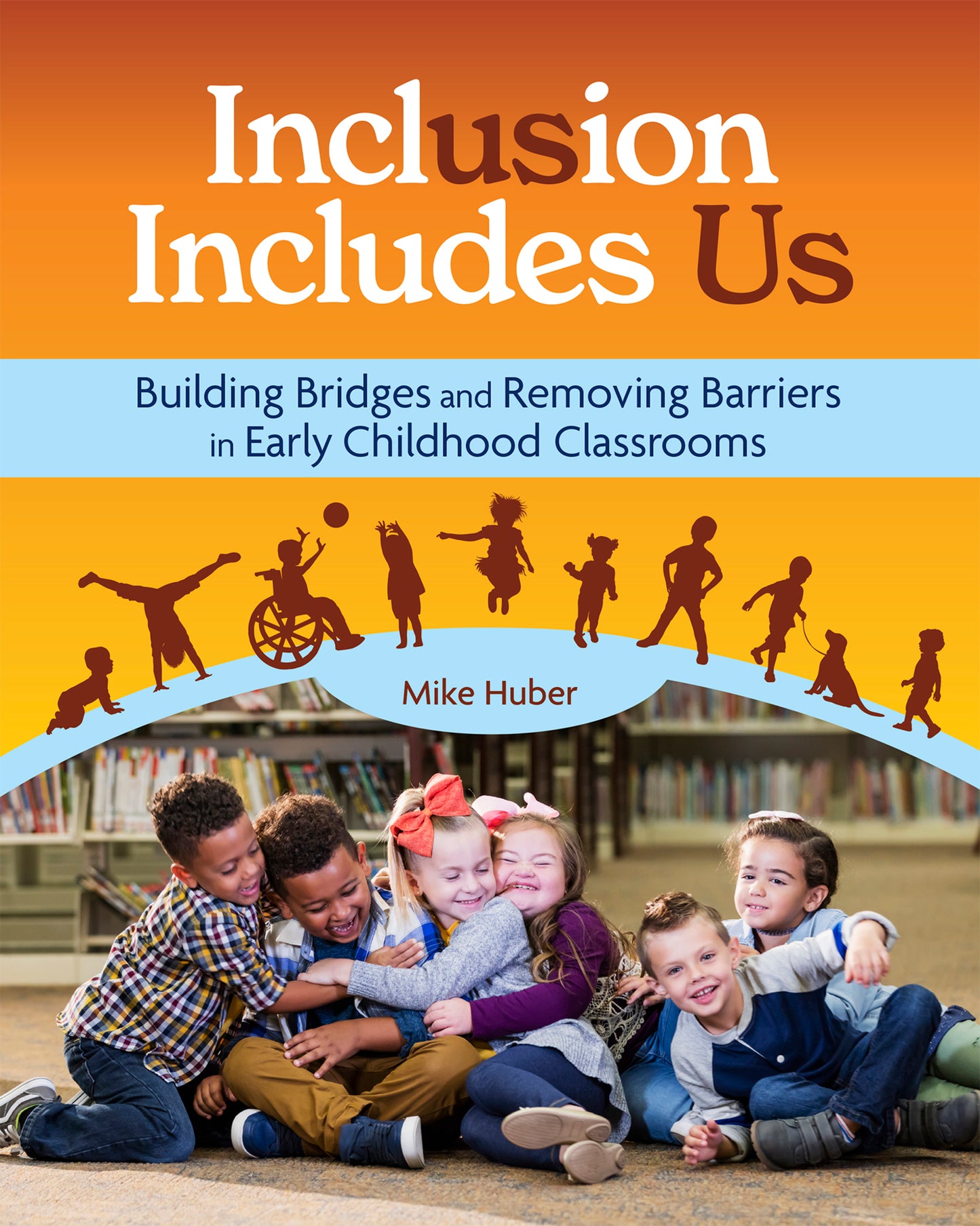
For early childhood educators, creating an inclusive early childhood environment is more than adapting interactions and the learning environment to help specific children. Every person views the world based on their needs, culture, and life experience, and identifying our personal culture can empower us to find ways to work with the needs and culture of the children we care for, instead of using strategies to help children adapt to the classroom culture. Replace binary thinking (typical vs. atypical, acceptable vs. challenging, the norm vs. the other) with constellation thinking, considering each person based on their own unique combination of strengths.Inclusion Includes Us seeks to replace barriers between early childhood educators and their students with an understanding that every person in the classroom has a unique combination of needs, strengths, and preferences. This book will help early childhood educators reflect on how they view themselves and others in terms of both culture and abilities, offering concrete ideas for connecting with children of all cultures and abilities and creating a sense of belonging for everyone.


Wow. What a gift to ALL children in early childhood settings. Mike Huber presents a passionate, intelligent, achievable case for us to progress from settling for “inclusion” to creating and building spaces where everyone authentically belongs. He is one of the field’s strongest voices for nonbinary thinking, children’s movement needs, and the neurodiversity we see in all children! This book is a must-read for early childhood practitioners, administrators, college instructors and policy makers.
—Heather Bernt-Santy, MA Ed, That Early Childhood Nerd
Inclusion Includes Us is a powerful book that challenges readers to think about inclusion in a new light. Mike Huber expertly guides readers through a series of thought-provoking questions that will help them expand their understanding and question their role as they work and care for children. This book is essential for anyone who wants to learn more about creating ecosystems that promote belonging and joy as central to the well-being of children. With its insights and Hubert's engaging writing style, Inclusion Includes Us will leave a lasting impression on all who read it. Inclusion Includes Us challenged me to think beyond the surface level of the word inclusion and the use of inclusive language. It made me examine my own beliefs, assumptions, and practices. Mike Huber candidly and openly shares his journey and the many lessons he learned from children and families. The humbleness and humility with which he approaches his learning was moving and left me with a desire to know more.
—Miriam Beloglovsky, coauthor of the award-winning Loose Parts series
In my time as an early childhood consultant, I have never claimed expertise in “special education” because I assumed my focus on self-reflection, creating a sense of belonging, and adjusting the space to meet the needs of the kids (whether they had a diagnosis or not) wasn’t enough. But I do speak play, and I know that all children have the right to a playful childhood. Too many times, we find ourselves in programs where diagnoses, behaviors, and symptoms are all that is seen, and the child gets lost in the haze of it all. Mike Huber’s book so very clearly provides strategy and suggestions for all practitioners looking to reflect on the language they use and their own teaching culture, practices, and assumptions and expand their tool belt with practical applications and opportunities to rethink their guiding ideology.
—Lisa Murphy, MEd, Author, Speaker, Early Childhood Specialist
Introduction
Chapter One: Including Children
Chapter Two: Moving from Binary Thinking to Constellation Thinking: Recognizing and Appreciating Each Individual
Chapter Three: Reflective Practice and Self-Reflection
Chapter Four: Multiple Experts
Chapter Five: Putting It Together