


Some error occured while loading the Quick View. Please close the Quick View and try reloading the page.
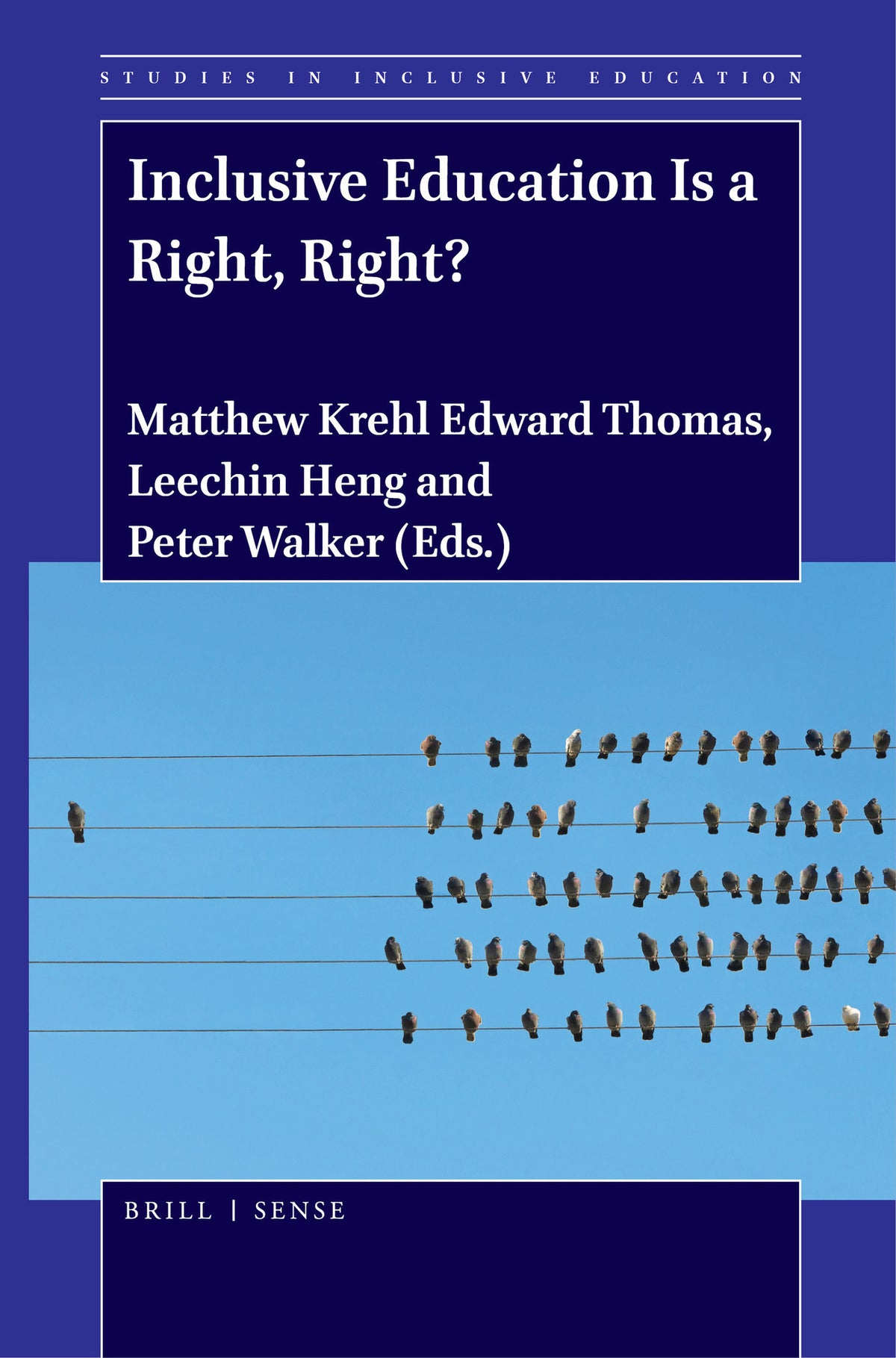
Overarching principles of human rights which shore up a nearly 30-year history of international efforts to develop educational systems that are responsive to the needs of all. Arguably the most widely recognised international inclusive education policy, the Salamanca Statement released in 1994 from the United Nations Education, Science and Cultural Organisation (UNESCO), recognised that every child has a basic right to education.
In so doing, however, it drew a line around special needs as a particular emphasis, in globalising efforts towards equal opportunity through decrees for first principles of universally attainable privileges. Considered a watershed moment in global responses to educational exclusion, the Salamanca Statement was core to increasing awareness among nations of the need for fostering more inclusive education policy and practice. Nonetheless, the liberal ideologies that frame human rights in inclusive education are seldom called into question, despite perpetual marginalisation and disadvantage post Salamanca.
Inclusive Education Is a Right, Right? brings the many together to consider educational democracy at a moment in global history where the political order fractures populations, and the displacement of socio-economic participation is displayed in every news bulletin – true, fake or otherwise. Under these conditions, the significance of academic activism, wherein diverse perspectives, methodologies and theoretical approaches are put to work to increase equity in education, has perhaps never been so stark. Across the collection the combined chapters engage with researchers, students, education professionals and leaders, advocacy organisations, and people experiencing exclusion and consider human rights in relation to inclusive education.
Contributors are: Kate Anderson, Alison Baker, Tim Corcoran, Edwin Creely, Jenny Duke, Peng-Sim Eng, Leechin Heng, Anna Kilderry, Sarah Lambert, Bec Marland, Julianne Moss, Philippa Moylan, Mia Nosrat, Joanne O’Mara, Jo Raphael, Bethany Rice, Andrew Riordan, Amathullah Shakeeb, Roger Slee, Kitty te Riele, Matthew K. E. Thomas, Peter Walker, Scott Welsh, Ben Whitburn, Julie White and Michalinos Zembylas.
In so doing, however, it drew a line around special needs as a particular emphasis, in globalising efforts towards equal opportunity through decrees for first principles of universally attainable privileges. Considered a watershed moment in global responses to educational exclusion, the Salamanca Statement was core to increasing awareness among nations of the need for fostering more inclusive education policy and practice. Nonetheless, the liberal ideologies that frame human rights in inclusive education are seldom called into question, despite perpetual marginalisation and disadvantage post Salamanca.
Inclusive Education Is a Right, Right? brings the many together to consider educational democracy at a moment in global history where the political order fractures populations, and the displacement of socio-economic participation is displayed in every news bulletin – true, fake or otherwise. Under these conditions, the significance of academic activism, wherein diverse perspectives, methodologies and theoretical approaches are put to work to increase equity in education, has perhaps never been so stark. Across the collection the combined chapters engage with researchers, students, education professionals and leaders, advocacy organisations, and people experiencing exclusion and consider human rights in relation to inclusive education.
Contributors are: Kate Anderson, Alison Baker, Tim Corcoran, Edwin Creely, Jenny Duke, Peng-Sim Eng, Leechin Heng, Anna Kilderry, Sarah Lambert, Bec Marland, Julianne Moss, Philippa Moylan, Mia Nosrat, Joanne O’Mara, Jo Raphael, Bethany Rice, Andrew Riordan, Amathullah Shakeeb, Roger Slee, Kitty te Riele, Matthew K. E. Thomas, Peter Walker, Scott Welsh, Ben Whitburn, Julie White and Michalinos Zembylas.

Price: $188.00
Pages: 214
Publisher: Brill
Imprint: Brill
Publication Date:
October 29, 2020
ISBN: 9789004420649
Format: Hardcover

Matthew Krehl Edward Thomas, PhD (SFHEA), is a Senior Lecturer in Pedagogy and Curriculum at Deakin University. Matthew’s research explores time, power, human rights and technology. He tweets @whoseprivacy
Leechin Heng, PhD, is a postdoctoral researcher at the National Yunlin University of Science and Technology, Taiwan. Her other publications can be found in the Studies in Inclusive Education book series (2016, 2017) and the International Journal of Inclusive Education.
Peter Walker is a former principal with 20 years in diverse educational settings across Australia. He has presented at TedX, promoting inclusive education, and in 2018 was an invited guest of the Adelaide Festival of Ideas. He lectures at Flinders University.
Leechin Heng, PhD, is a postdoctoral researcher at the National Yunlin University of Science and Technology, Taiwan. Her other publications can be found in the Studies in Inclusive Education book series (2016, 2017) and the International Journal of Inclusive Education.
Peter Walker is a former principal with 20 years in diverse educational settings across Australia. He has presented at TedX, promoting inclusive education, and in 2018 was an invited guest of the Adelaide Festival of Ideas. He lectures at Flinders University.