


Some error occured while loading the Quick View. Please close the Quick View and try reloading the page.
This edited volume is the result of a collaborative project of Indigenous graduate education training and higher education-tribal institution partnerships in the southwestern United States. We feature the work of interdisciplinary scholars writing about local peoples, issues, and knowledges that demonstrate rich linkages between universities and Indigenous communities. Collectively, as Indigenous peoples writing, this work takes the opportunity to explore why and how Indigenous peoples are working to reframe dominant limits of our power and to shift educational efforts from the colonial back to an Indigenous center. These efforts reflect a conscientious practice to maintain Indigenous worldviews through diverse yet unified approaches aimed at serving Indigenous peoples and places.
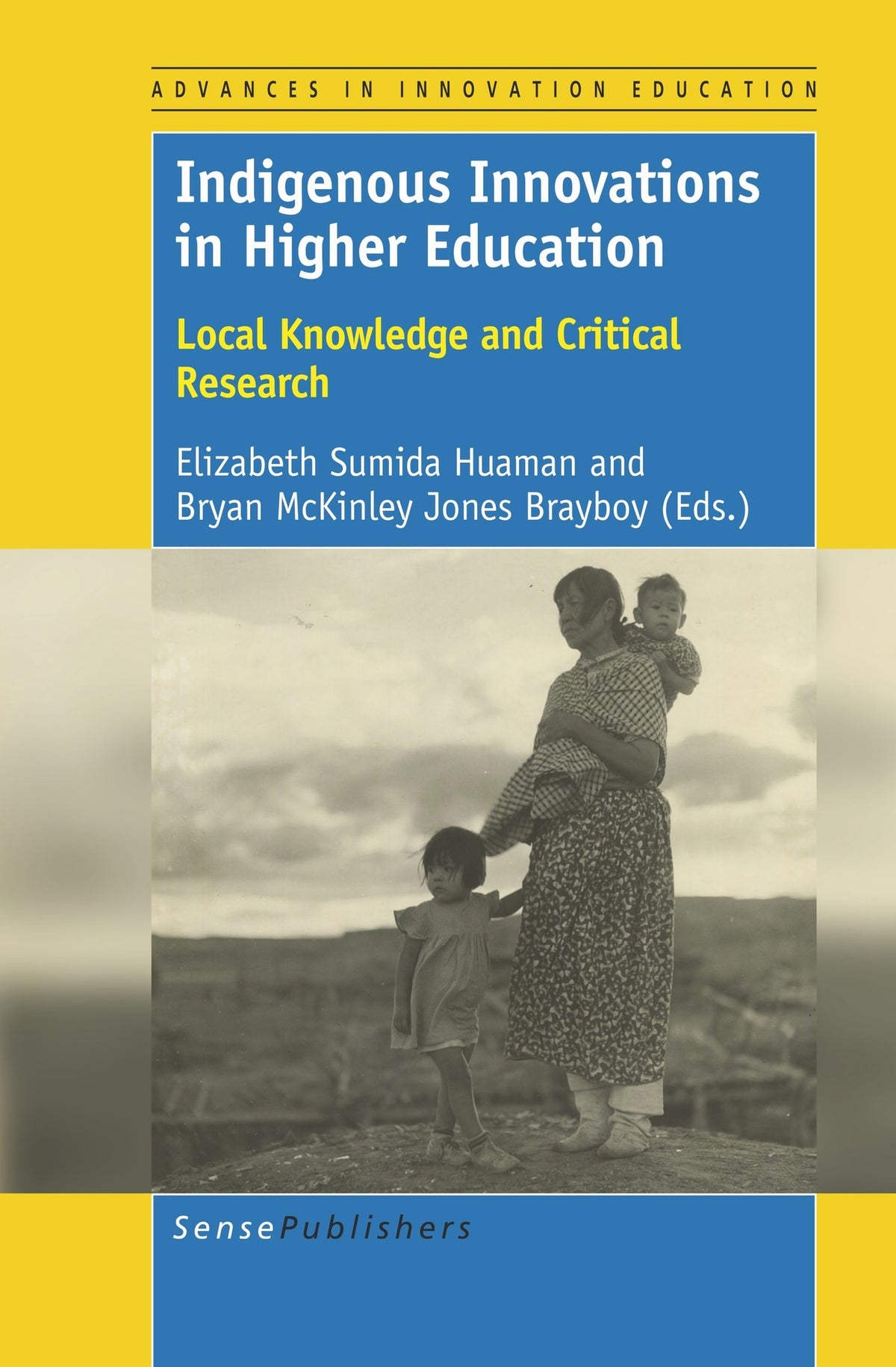
Cover photo: Gia Khun (Mother Corn) with Gia (Mother) and Uncle Manual, c. 1918. This is a family photo provided by Dr. Tessie Naranjo (Santa Clara Pueblo). Imaging assistance provided by Tewa artist, Jason Garcia (Okuu Pin).
Cover photo: Gia Khun (Mother Corn) with Gia (Mother) and Uncle Manual, c. 1918. This is a family photo provided by Dr. Tessie Naranjo (Santa Clara Pueblo). Imaging assistance provided by Tewa artist, Jason Garcia (Okuu Pin).

Price: $119.00
Pages: 246
Publisher: Brill
Imprint: Brill
Publication Date:
May 26, 2017
ISBN: 9789463510134
Format: Hardcover

“The luminous Indigenous scholarship contained here comes to us as a rare gift. The voices of Pueblo intellectuals speak to the profoundly innovative Indigenous doctoral cohort model they co-developed with Liz Sumida Huaman and Bryan Brayboy of Arizona State University. They also instruct us in the richness of their contemporary, community-based research, rooted in the ‘creative genius of our ancestors,’ as Karuk scholar Julian Lang evocatively described Indigenous epistemologies.” —K. Tsianina Lomawaima, Professor & Distinguished Scholar of Indigenous Education, School of Social Transformation, Arizona State University
“The editors and writers reveal identity and sense of place as indigenous people from their own native perspectives rooted in both their spirit and in their place in the academy. As indigenous people, we strive for the academy to belong to us without the definitions and framework of colonization. This book contributes to our ownership of the academy as a place where we belong with all the knowledge of our ancestors and the promises of the future embedded in what we learn and what we teach.” —Cheryl Crazy Bull, President & CEO, American Indian College Fund
“The depth and breadth of knowledge of the editors in Indigenous education and their ability to apply the knowledge to produce practical outcomes and benefits to our Indigenous communities on the ground comes through in this book. It transforms ideas into action and demonstrates the ‘blisters on the authors’ hands’ based experiences that delineate Indigenous Leaders from Indigenous Academics in my view. Indigenous Leaders enact their research into real outcomes for the people on the ground and don’t just write about the issues challenging our peoples.” —Bentham Atirau Ohia, President AMO-Advancement of Maori Opportunity & and AIO-Americans for Indian Opportunity Board member
“The editors and writers reveal identity and sense of place as indigenous people from their own native perspectives rooted in both their spirit and in their place in the academy. As indigenous people, we strive for the academy to belong to us without the definitions and framework of colonization. This book contributes to our ownership of the academy as a place where we belong with all the knowledge of our ancestors and the promises of the future embedded in what we learn and what we teach.” —Cheryl Crazy Bull, President & CEO, American Indian College Fund
“The depth and breadth of knowledge of the editors in Indigenous education and their ability to apply the knowledge to produce practical outcomes and benefits to our Indigenous communities on the ground comes through in this book. It transforms ideas into action and demonstrates the ‘blisters on the authors’ hands’ based experiences that delineate Indigenous Leaders from Indigenous Academics in my view. Indigenous Leaders enact their research into real outcomes for the people on the ground and don’t just write about the issues challenging our peoples.” —Bentham Atirau Ohia, President AMO-Advancement of Maori Opportunity & and AIO-Americans for Indian Opportunity Board member