


Some error occured while loading the Quick View. Please close the Quick View and try reloading the page.
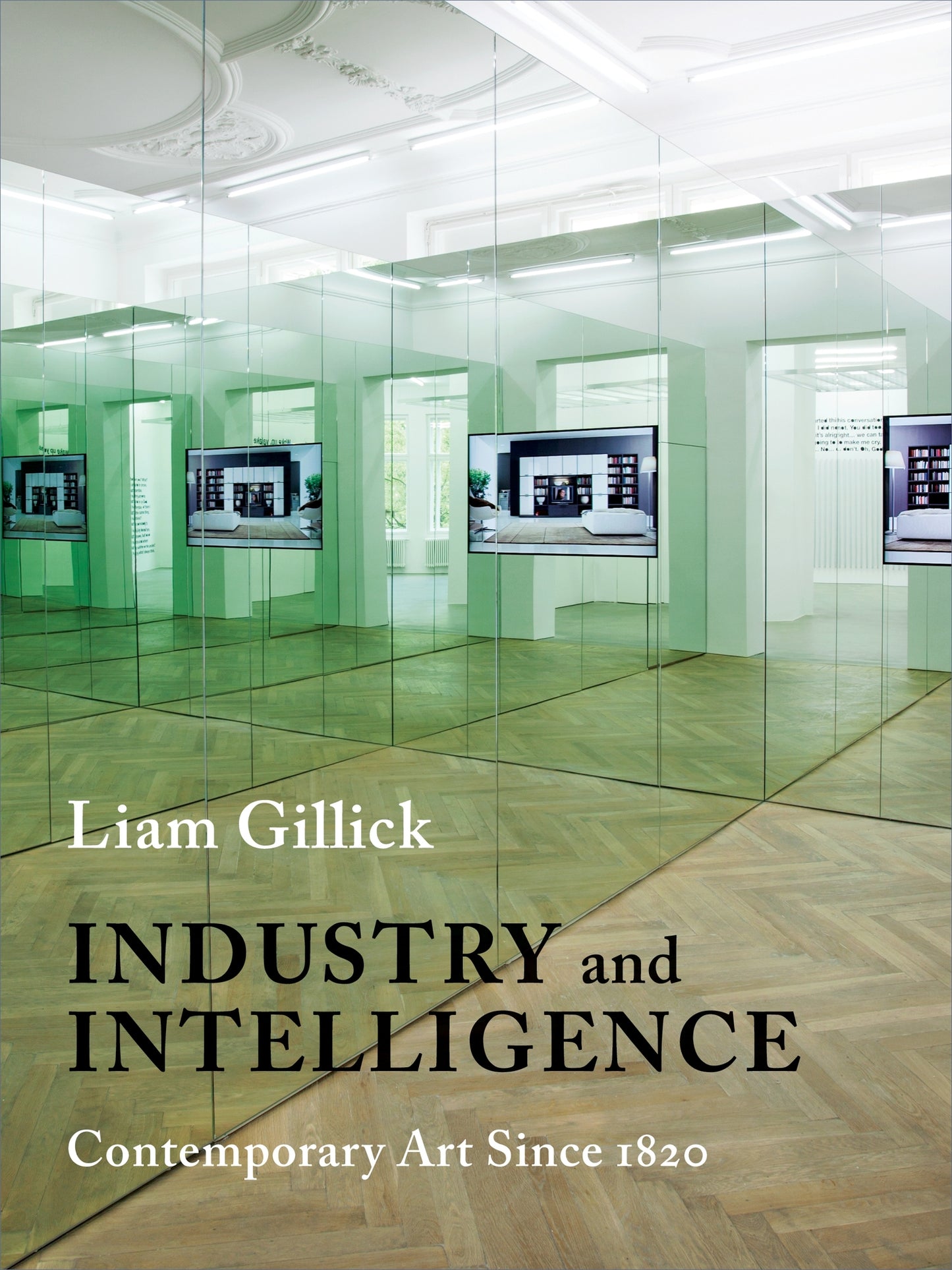
The history of modern art is often told through aesthetic breakthroughs that sync well with cultural and political change. From Courbet to Picasso, from Malevich to Warhol, it is accepted that art tracks the disruptions of industrialization, fascism, revolution, and war. Yet filtering the history of modern art only through catastrophic events cannot account for the subtle developments that lead to the profound confusion at the heart of contemporary art.
In Industry and Intelligence, the artist Liam Gillick writes a nuanced genealogy to help us appreciate contemporary art's engagement with history even when it seems apathetic or blind to current events. Taking a broad view of artistic creation from 1820 to today, Gillick follows the response of artists to incremental developments in science, politics, and technology. The great innovations and dislocations of the nineteenth and twentieth centuries have their place in this timeline, but their traces are alternately amplified and diminished as Gillick moves through artistic reactions to liberalism, mass manufacturing, psychology, nuclear physics, automobiles, and a host of other advances. He intimately ties the origins of contemporary art to the social and technological adjustments of modern life, which artists struggled to incorporate truthfully into their works.


— Tom McDonough, Binghamton University, author of The Situationists and the City: A Reader
Read Gillick's book to find the packed sediment of conceptual art discourse undergoing metamorphic transformation—with the marketized artworld's slow heat, dull pressure, and surface torque leaving inevitable traces on an intelligent maker's mind.
— Caroline A. Jones
Forceful, persuasive and provocative, while Industry and Intelligence will no doubt find purchase as a set text in universities for those studying art history or curatorial studies, it would seem its most urgent readership should be artists themselves, whose struggle has been, and continues to be, one of finding a way to avoid being subsumed completely by the logic of the market: to escape the trap, as Gillick has it, of the 'capitalisation of the mind'.
— Adam Pugh
Acknowledgments
Introduction: Creative Disruption in the Age of Soft Revolutions
1. Contemporary Art Does Not Account for That Which Is Taking Place
2. Projection and Parallelism
3. Art as a Pile: Split and Fragmented Simultaneously
4. 1820: Erasmus and Upheaval
5. ASAP Futures, Not Infinite Future
6. 1948: B. F. Skinner and Counter-Revolution
7. Abstract
8. 1963: Herman Kahn and Projection
9. The Complete Curator
10. Maybe It Would Be Better If We Worked in Groups of Three?
11. The Return of the Border
12. 1974: Volvo and the Mise-en-Scène
13. The Experimental Factory
14. Nostalgia for the Group
15. Why Work?
Notes
Index