


Some error occured while loading the Quick View. Please close the Quick View and try reloading the page.
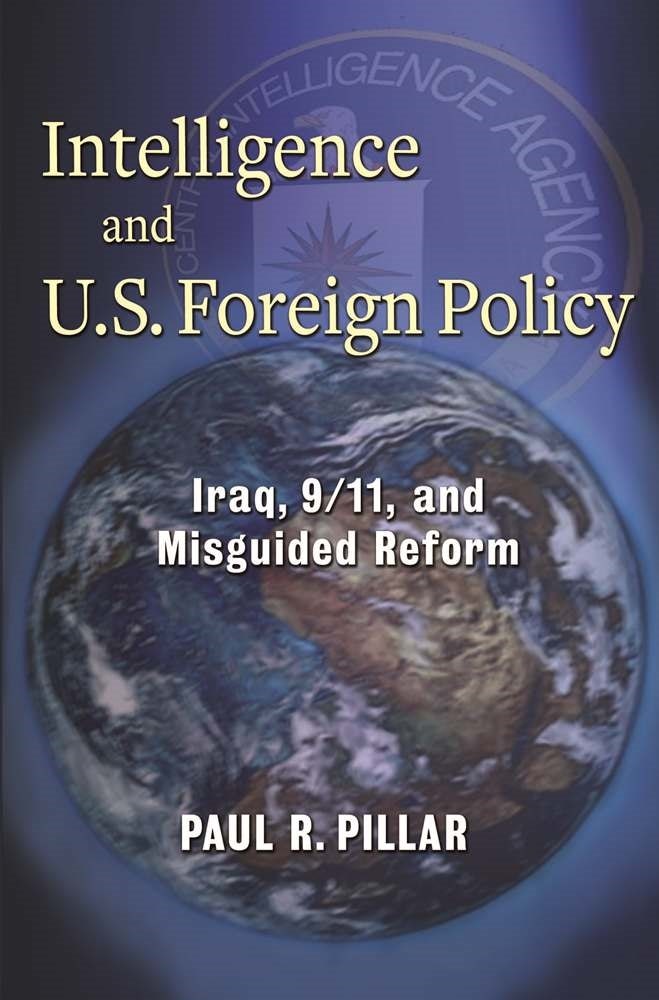
A career of nearly three decades with the CIA and the National Intelligence Council showed Paul R. Pillar that intelligence reforms, especially measures enacted since 9/11, can be deeply misguided. They often miss the sources that underwrite failed policy and misperceive our ability to read outside influences. They also misconceive the intelligence-policy relationship and promote changes that weaken intelligence-gathering operations.
In this book, Pillar confronts the intelligence myths Americans have come to rely on to explain national tragedies, including the belief that intelligence drives major national security decisions and can be fixed to avoid future failures. Pillar believes these assumptions waste critical resources and create harmful policies, diverting attention away from smarter reform, and they keep Americans from recognizing the limits of obtainable knowledge.
Pillar revisits U.S. foreign policy during the Cold War and highlights the small role intelligence played in those decisions, and he demonstrates the negligible effect that America's most notorious intelligence failures had on U.S. policy and interests. He then reviews in detail the events of 9/11 and the 2003 invasion of Iraq, condemning the 9/11 commission and the George W. Bush administration for their portrayals of the role of intelligence. Pillar offers an original approach to better informing U.S. policy, which involves insulating intelligence management from politicization and reducing the politically appointed layer in the executive branch to combat slanted perceptions of foreign threats. Pillar concludes with principles for adapting foreign policy to inevitable uncertainties.


List of Abbreviations
Preface
1. Introduction: A Comforting Explanation for Calamity
2. Weapons of Mass Destruction and the Iraq War
3. Alternative Visions of the Iraq War
4. Congress and the Politics of the Iraq War
5. Great Decisions and the Irrelevance of Intelligence
6. Politicization
7. Scapegoats and Spectator Sport
8. The Never-Ending Issue
9. Catharsis and 9/11
10. Responses to Catharsis
11. The Illusion of Reform
12. Real Reform
13. Adapting Policy to Uncertainty
Notes
Index