


Some error occured while loading the Quick View. Please close the Quick View and try reloading the page.
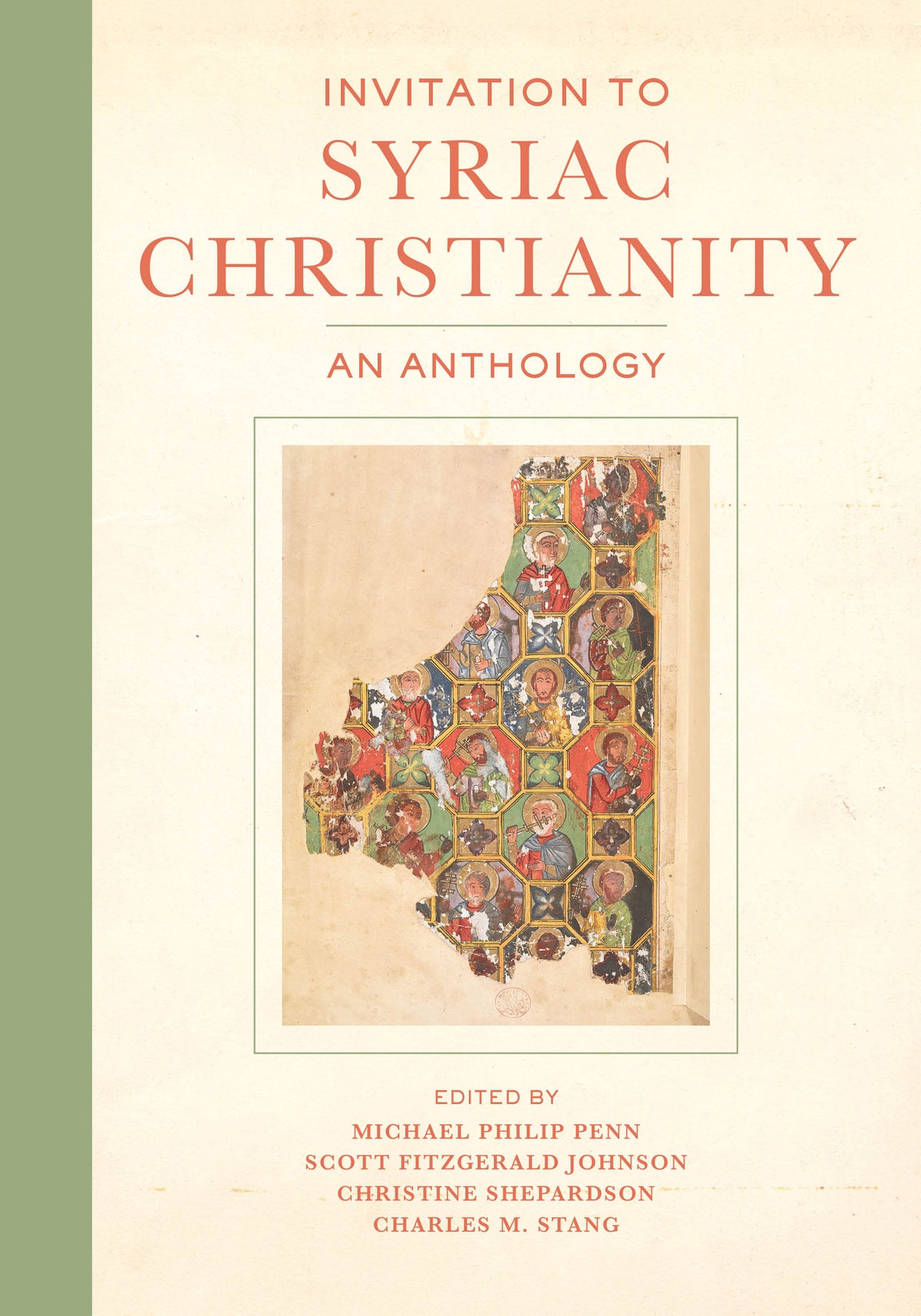
Despite their centrality to the history of Christianity in the East, Syriac Christians have generally been excluded from modern accounts of the faith. Originating from Mesopotamia, Syriac Christians quickly spread across Eurasia, from Turkey to China, developing a distinctive and influential form of Christianity that connected empires. These early Christians wrote in the language of Syriac, the lingua franca of the late ancient Middle East, and a dialect of Aramaic, the language of Jesus. Collecting key foundational Syriac texts from the second to the fourteenth centuries, this anthology provides unique access to one of the most intriguing, but least known, branches of the Christian tradition.

Price: $39.95
Pages: 462
Publisher: University of California Press
Imprint: University of California Press
Publication Date:
22 February 2022
Trim Size: 10.00 X 7.00 in
ISBN: 9780520299207
Format: Paperback

"A courageous work. . . .meant to become a useful point of departure for teaching, learning, and further research on the numerous facets of Syriac literature. I have no doubt that the volume will serve this function in the best way."
"This volume represents a broad and accessible introduction to the material of Syriac studies, suitable for scholars of classics and the ancient world looking to familiarize themselves with this important late ancient language and its literary tradition. . . . also well suited for use as a sourcebook for undergraduate teaching."
"This volume is warmly recommended to every library that wants to keep history alive and help its students understand the present and future of an often-forgotten Christianity, through an appeal to the past epitomized in the excellent sources that this book skillfully presents."
"An essential resource. . . .The rich array of texts succeeds in captivating the audience’s attention and inviting them to further study."
"Through the selection of sources and the introductory materials, the editors guide readers through the Christian history of these regions…The result is a landmark volume that will be essential reading for church history seminars, ministers, and laity interested in the origins and history of the faith, and for scholars looking to familiarize themselves with the Syriac tradition."
"The expertise of these editors is unimpeachable, and they have produced an extraordinary volume that is sure to become a standard introduction to Syriac Christianity."
"A highly valuable sourcebook for the study of Syriac Christianity."
"This volume represents a broad and accessible introduction to the material of Syriac studies, suitable for scholars of classics and the ancient world looking to familiarize themselves with this important late ancient language and its literary tradition. . . . also well suited for use as a sourcebook for undergraduate teaching."
"This volume is warmly recommended to every library that wants to keep history alive and help its students understand the present and future of an often-forgotten Christianity, through an appeal to the past epitomized in the excellent sources that this book skillfully presents."
"An essential resource. . . .The rich array of texts succeeds in captivating the audience’s attention and inviting them to further study."
"Through the selection of sources and the introductory materials, the editors guide readers through the Christian history of these regions…The result is a landmark volume that will be essential reading for church history seminars, ministers, and laity interested in the origins and history of the faith, and for scholars looking to familiarize themselves with the Syriac tradition."
"The expertise of these editors is unimpeachable, and they have produced an extraordinary volume that is sure to become a standard introduction to Syriac Christianity."
"A highly valuable sourcebook for the study of Syriac Christianity."
Michael Philip Penn is Teresa Hihn Moore Professor of Religious Studies at Stanford University. He is author of When Christians First Met Muslims: A Sourcebook of the Earliest Syriac Writings on Islam, Envisioning Islam: Syriac Christians in the Early Muslim World, and Kissing Christians: Ritual and Community in the Late Ancient Church.
Scott Fitzgerald Johnson is Joseph F. Paxton Presidential Associate Professor and Chair of Classics and Letters at the University of Oklahoma. He was awarded a Guggenheim Fellowship in 2018. He is author of Literary Territories: Cartographical Thinking in Late Antiquity andThe Life and Miracles of Thekla: A Literary Study and editor of The Oxford Handbook of Late Antiquity, among other volumes.
Christine Shepardson is Lindsay Young Professor and Department Head of Religious Studies at the University of Tennessee. She is author of Anti-Judaism and Christian Orthodoxy: Ephrem’s Hymns in Fourth-Century Syria and Controlling Contested Places: Late Antique Antioch and the Spatial Politics of Religious Controversy and coeditor of Dealing with Difference: Christian Patterns of Response to Religious Rivalry in Late Antiquity and Beyond.
Charles M. Stang is Professor of Early Christian Thought and Director of the Center for the Study of World Religions at Harvard Divinity School. He is author of Our Divine Double and Apophasis and Pseudonymity in Dionysius the Areopagite: “No Longer I.”
Scott Fitzgerald Johnson is Joseph F. Paxton Presidential Associate Professor and Chair of Classics and Letters at the University of Oklahoma. He was awarded a Guggenheim Fellowship in 2018. He is author of Literary Territories: Cartographical Thinking in Late Antiquity andThe Life and Miracles of Thekla: A Literary Study and editor of The Oxford Handbook of Late Antiquity, among other volumes.
Christine Shepardson is Lindsay Young Professor and Department Head of Religious Studies at the University of Tennessee. She is author of Anti-Judaism and Christian Orthodoxy: Ephrem’s Hymns in Fourth-Century Syria and Controlling Contested Places: Late Antique Antioch and the Spatial Politics of Religious Controversy and coeditor of Dealing with Difference: Christian Patterns of Response to Religious Rivalry in Late Antiquity and Beyond.
Charles M. Stang is Professor of Early Christian Thought and Director of the Center for the Study of World Religions at Harvard Divinity School. He is author of Our Divine Double and Apophasis and Pseudonymity in Dionysius the Areopagite: “No Longer I.”
Contents
List of Illustrations
Acknowledgments
Note on Translation, Transliteration, and Nomenclature
Maps by David A. Michelson and Ian Mladjov
Introduction
PART I. FOUNDATIONS
1. Origin Stories
2. Poetry
3. Doctrine and Disputation
PART II. PRACTICES
4. Liturgy
5. Asceticism
6. Mysticism and Prayer
PART III. TEXTS AND TEXTUAL TRANSMISSION
7. Biblical Interpretation
8. Hagiography
9. Books, Knowledge, and Translation
PART IV. INTERRELIGIOUS ENCOUNTERS
10. Judaism
11. Islam
12. Religions of the Silk Road
Appendix A. Translations and Editions
Appendix B. Biographies of Named Authors
Appendix C. Glossary
Index
List of Illustrations
Acknowledgments
Note on Translation, Transliteration, and Nomenclature
Maps by David A. Michelson and Ian Mladjov
Introduction
PART I. FOUNDATIONS
1. Origin Stories
2. Poetry
3. Doctrine and Disputation
PART II. PRACTICES
4. Liturgy
5. Asceticism
6. Mysticism and Prayer
PART III. TEXTS AND TEXTUAL TRANSMISSION
7. Biblical Interpretation
8. Hagiography
9. Books, Knowledge, and Translation
PART IV. INTERRELIGIOUS ENCOUNTERS
10. Judaism
11. Islam
12. Religions of the Silk Road
Appendix A. Translations and Editions
Appendix B. Biographies of Named Authors
Appendix C. Glossary
Index