


Some error occured while loading the Quick View. Please close the Quick View and try reloading the page.
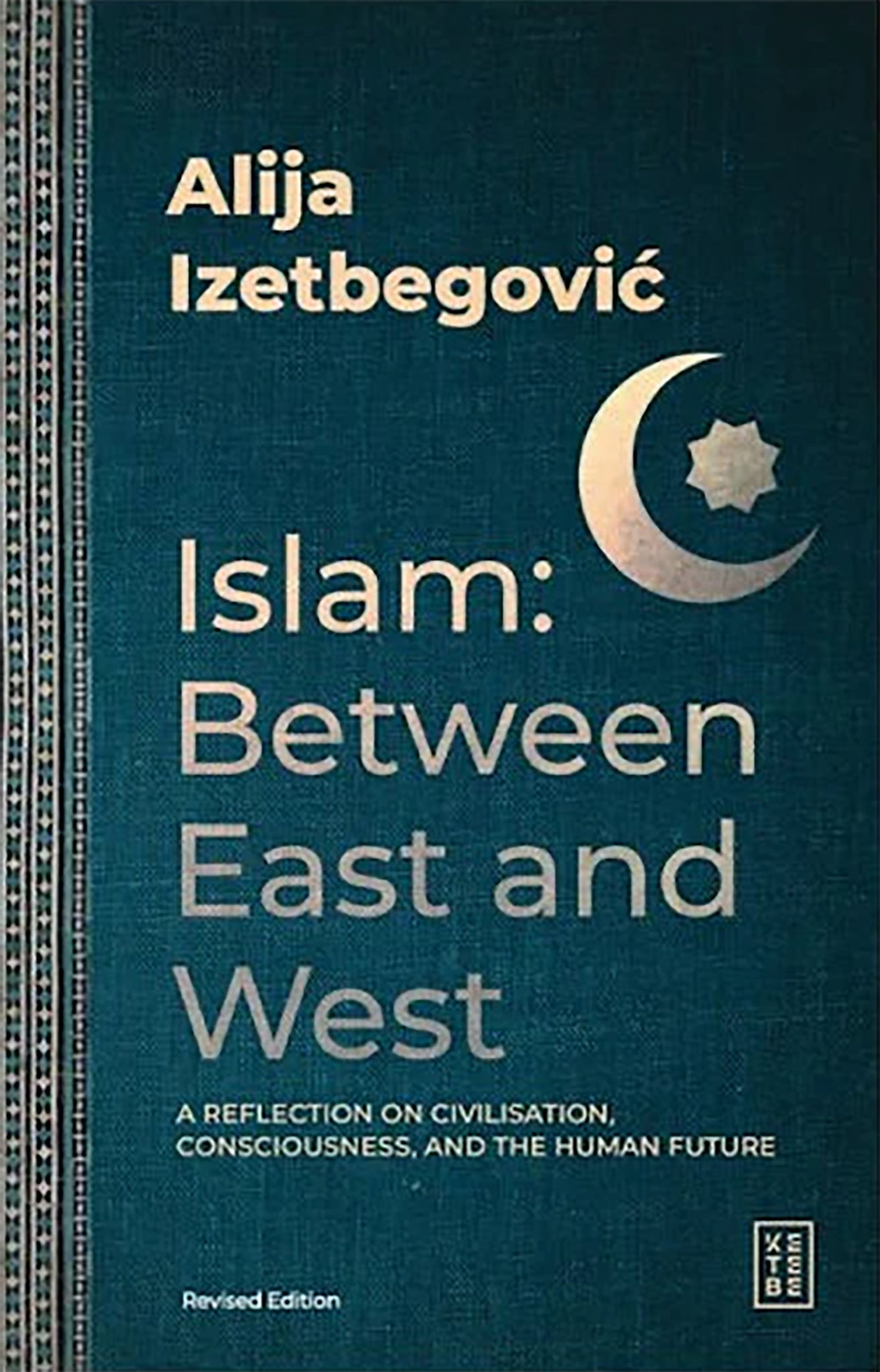
We live in an age of ideological fragmentation and existential uncertainty. Between the extremes of religious dogmatism and materialist reductionism, modern humanity struggles to find a meaningful centre. What role can Islam play in this fractured landscape? Can it offer not merely a system of belief, but a worldview that addresses the dual nature of the human being - both material and spiritual? In this profound and far-reaching work, Alija Izetbegović - philosopher, statesman, and one of the twentieth century's most original Muslim thinkers - presents Islam as a version that transcends binary thinking. Where materialism denies the soul and religion risks neglecting the body, Islam affirms both: it sees the human being as a synthesis of spirit and matter, freedom and necessity, reason and revelation.
Written with clarity and depth, Islam: Between East and West explores the philosophical roots of civilisation, the structure of human consciousness, and the metaphysical foundations of ethical life. It challenges readers, religious and secular alike, to reconsider how we think about progress, responsibility, and the future of human dignity.
Published to mark the 100th anniversary of Alija Izetbegović's birth, this newly revised edition reintroduces a work ever more pertinent to contemporary thought, offering an incisive critique and timely vision.


Introduction
The Chart of Opposites
Introductory Remark
Part One: Debating Premises
Chapter One: Evolution and Creation
Chapter Two: Culture and Civilisation
Chapter Three: Phenomenon of Art
Chapter Four: Morality
Chapter Five: Culture and History
Part Two: Bipolar Unity
Chapter Seven: Moses - Jesus - Muhammad (Peace Be Upon Them)
Chapter Eight: Islam and Religion
Chapter Nine: Islamic Nature of Every Law
Chapter Ten: On the Impossibility of Pure Religion and Pure Materialism
Chapter Eleven: The Third Path Outside Islam