


Some error occured while loading the Quick View. Please close the Quick View and try reloading the page.
An original, rigorously researched volume that questions long-accepted paradigms concerning land ownership and its use in Africa.
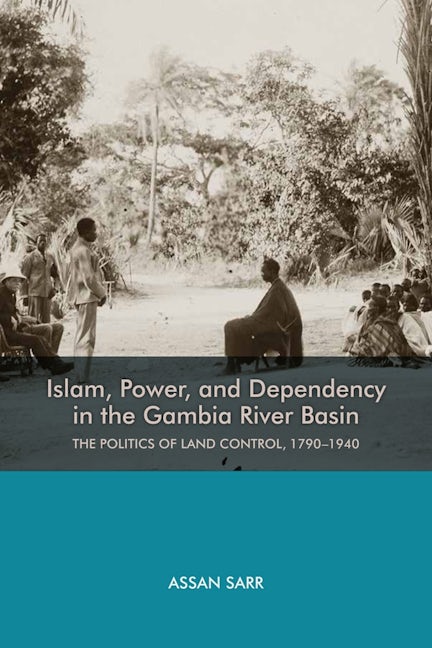
Islam, Power, and Dependency in the Gambia River Basin draws on new sources to offer an original approach to the study of land in African history. Documenting the impact of Islamization, the development of peanut production, and the institution of colonial rule on people living along the middle and lower Gambia River, the book shows how these waves of changes sweeping the region after 1850 altered local political and social arrangements, with important implications for the ability of elites to control land.
Author Assan Sarr argues for a nuanced understanding of land and its historic value in Africa. Moving beyond a recognition of the material value of land, Sarr'sanalysis highlights its cultural and social worth, pointing out the spiritual associations the land generated and the ways that certain people gained privileged access to those spiritual powers. By emphasizing that the land aroundthe Gambia River both inspired and gave form to a cosmology of ritual and belief, the book points to what might be considered an indigenous tradition of ecological preservation and protection.
Assan Sarr is assistant professor of history at Ohio University.
Islam, Power, and Dependency in the Gambia River Basin draws on new sources to offer an original approach to the study of land in African history. Documenting the impact of Islamization, the development of peanut production, and the institution of colonial rule on people living along the middle and lower Gambia River, the book shows how these waves of changes sweeping the region after 1850 altered local political and social arrangements, with important implications for the ability of elites to control land.
Author Assan Sarr argues for a nuanced understanding of land and its historic value in Africa. Moving beyond a recognition of the material value of land, Sarr'sanalysis highlights its cultural and social worth, pointing out the spiritual associations the land generated and the ways that certain people gained privileged access to those spiritual powers. By emphasizing that the land aroundthe Gambia River both inspired and gave form to a cosmology of ritual and belief, the book points to what might be considered an indigenous tradition of ecological preservation and protection.
Assan Sarr is assistant professor of history at Ohio University.

Price: $130.00
Pages: 258
Publisher: Boydell & Brewer Inc.
Imprint: University of Rochester Press
Publication Date:
15 December 2016
Trim Size: 9.00 X 6.00 in
ISBN: 9781580465694
Format: Hardcover
BISACs:
HISTORY / Africa / West, African history, RELIGION / Islam / General, Islam

Assan Sarr is making me rethink much of what I thought I knew, from four decades of study, about land, politics, and society along the lower Gambia River in the nineteenth and early twentieth centuries. This is African history at its best.
Introduction
The Founding of Mandinka Settlements
Land and the Politics of Exclusion
The Power of the Wild Spirits
The End of Soninke Rule
Spiritual Persistence though Change
The Politicization of Chieftaincy
Conclusion
Notes
Bibliography
Index
The Founding of Mandinka Settlements
Land and the Politics of Exclusion
The Power of the Wild Spirits
The End of Soninke Rule
Spiritual Persistence though Change
The Politicization of Chieftaincy
Conclusion
Notes
Bibliography
Index