


Some error occured while loading the Quick View. Please close the Quick View and try reloading the page.
2012 Winner of the Shapiro Award for the Best Book in Israel Studies, presented by the Association for Israel Studies
Whose life is worth more?
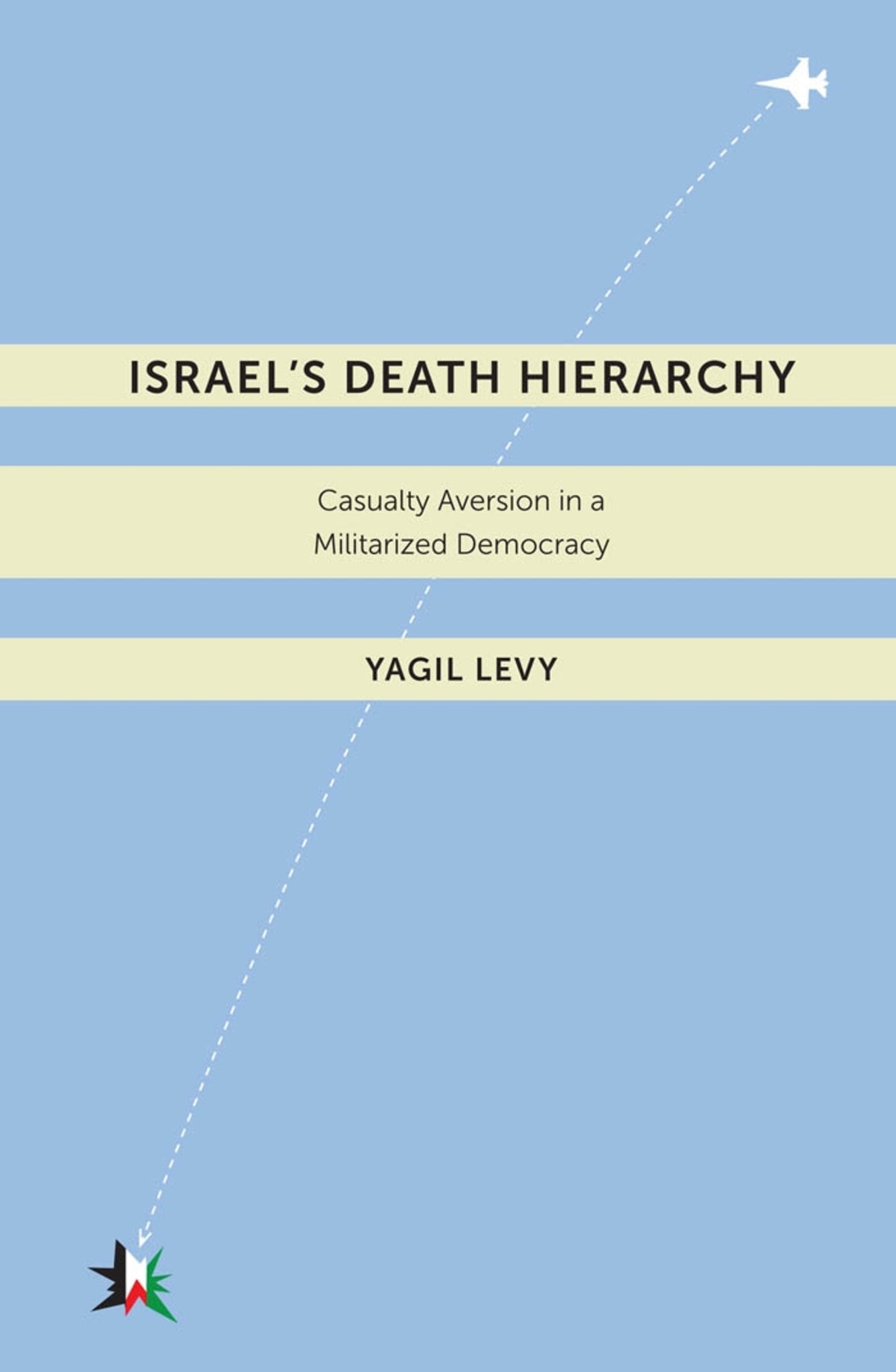
That is the question that states inevitably face during wartime. Which troops are thrown to the first lines of battle and which ones remain relatively intact? How can various categories of civilian populations be protected? And when front and rear are porous, whose life should receive priority, those of soldiers or those of civilians? In Israel’s Death Hierarchy, Yagil Levy uses Israel as a compelling case study to explore the global dynamics and security implications of casualty sensitivity. Israel, Levy argues, originally chose to risk soldiers mobilized from privileged classes, more than civilians and other soldiers. However, with the mounting of casualty sensitivity, the state gradually restructured what Levy calls its “death hierarchy” to favor privileged soldiers over soldiers drawn from lower classes and civilians, and later to place enemy civilians at the bottom of the hierarchy by the use of heavy firepower. The state thus shifted risk from soldiers to civilians. As the Gaza offensive of 2009 demonstrates, this new death hierarchy has opened Israel to global criticism.


"This is a thought-provoking book."
— David Benjamin,Advocate/Lieutenant Colonel (Res.) IDF; Dir. of SILS (Security and International Law Specialists
"Yagil Levy provides powerful contribution to the debate about the degree to which liberal democracies are & casualty sensitive. With his concept of & death hierarchy he reflects on whether these states tend to favor their soldiers' lives over those of enemy civilians and how far this is explained by the declining motivation among their own privileged groups to sacrifice their lives in the military. Although focused on the case of Israel, the argument encompasses other cases and will appeal to scholars of & casualty aversion on both sides of the Atlantic."
— Christopher Dandeker,Co-Director, King's Centre for Military Health Research
"Asuperb analysis of the relationship between the changing social structure in Israel, the makeup of its military, and the resulting strategic posture. It is unique in that it explores these relationships through the analysis of the social and economic characteristics of the casualties in Israels limited conflicts with the Palestinians and with Lebanon. It also blends sociological and political theories of civil-military relations in a manner that is insightful and thought-provoking. Anyone who is interested in societal-military relations and in Israeli society and politics should put this book on top of their reading list."
— Zeev Maoz,Distinguished Professor of Political Science, University of California, Davis
"Levy effectively blends theory and case analysis to explore the underlying social dynamics that influence how society responds to the threats and perils of war. In so doing he bridges the wide gap between IR/Political Science and Sociology."
— Patricia M. Shields,Texas State University