


Some error occured while loading the Quick View. Please close the Quick View and try reloading the page.
Text and facing English translation of a version of the Tristan story from north-east Italy.
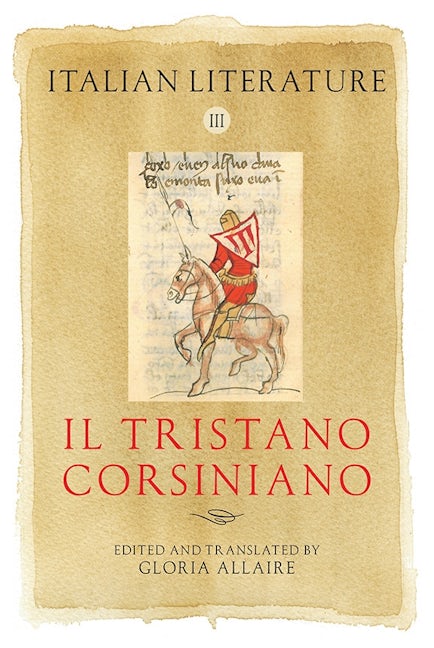
The Tristano Corsiniano is preserved in a unique manuscript of the Biblioteca Corsiniana housed at the Accademia Nazionale dei Lincei in Rome (MS 55.K.5; formerly Rossi 2593). Written in a mixture of northeastern Italian dialects, the manuscript was probably copied in the third quarter of the fourteenth century. The contents are a much abbreviated descendent of the noted French prose Roman de Tristan; opening with Dinadan's amusing discoursesand misadventures, the majority of the story concerns the famous three-day Tournament at Loverzep, and concludes with King Arthur and Lancelot visiting Tristan, Yseut and their companions. The manuscript, although not luxurious,is heavily decorated with designs that perfectly reflect the vigorous and spirited narrative style.
This volume presents a new edition of the text, accompanied by the first ever translation into English, thereby making this important version of the Tristan story available more widely. It also includes an introduction, listing of illuminations, bibliography and explanatory notes.
Gloria Allaire is Assistant Professor of Italian at theUniversity of Kentucky.
The Tristano Corsiniano is preserved in a unique manuscript of the Biblioteca Corsiniana housed at the Accademia Nazionale dei Lincei in Rome (MS 55.K.5; formerly Rossi 2593). Written in a mixture of northeastern Italian dialects, the manuscript was probably copied in the third quarter of the fourteenth century. The contents are a much abbreviated descendent of the noted French prose Roman de Tristan; opening with Dinadan's amusing discoursesand misadventures, the majority of the story concerns the famous three-day Tournament at Loverzep, and concludes with King Arthur and Lancelot visiting Tristan, Yseut and their companions. The manuscript, although not luxurious,is heavily decorated with designs that perfectly reflect the vigorous and spirited narrative style.
This volume presents a new edition of the text, accompanied by the first ever translation into English, thereby making this important version of the Tristan story available more widely. It also includes an introduction, listing of illuminations, bibliography and explanatory notes.
Gloria Allaire is Assistant Professor of Italian at theUniversity of Kentucky.

Price: $120.00
Pages: 228
Publisher: Boydell & Brewer Inc.
Imprint: D.S.Brewer
Publication Date:
19 February 2015
Trim Size: 9.21 X 6.14 in
ISBN: 9781843843986
Format: Hardcover
BISACs:
POETRY / Medieval, Classic and pre-20th century poetry, LITERARY CRITICISM / Medieval, Ancient, classical and medieval texts, Literary studies: ancient, classical and medieval

In the translation of the manuscript, Allaire finds a felicitous balance between being faithful to the original Italian text with its own repetitions and inconsistencies while also making the English narrative readable and enjoyable.
Introduction
Text and Translation
Appendix: Typology of Illuminations
Bibliography
Index of Proper Names
Text and Translation
Appendix: Typology of Illuminations
Bibliography
Index of Proper Names