


Some error occured while loading the Quick View. Please close the Quick View and try reloading the page.
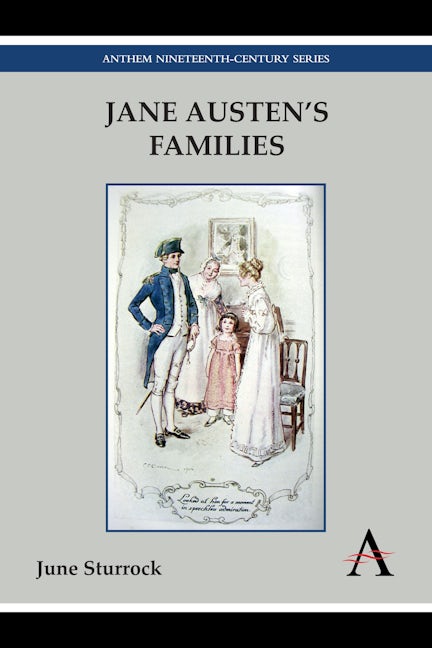
“Jane Austen’s Families” focuses on family dynamics in Jane Austen’s six novels. After a general introduction, which places its approach in the context of ethical criticism, it divides into two sections. The first, “Family Dynamics,” consists of three chapters – “The Function of the Dysfunctional Family,” “Spoilt Children” and “Usefulness and Exertion.” The three chapters of section two, “Fathers and Daughters,” look at father–daughter relationships in “Mansfield Park,” “Emma” and “Persuasion.”


'Sturrock reads the novels through the lens of ethical criticism, and explores how the heroines differ from their parents in terms of morality. [...] Sturrock's contribution lies in her exploration of the various intrafamilial relations: those between sisters, between mothers and daughters, and between fathers and daughters. [...] Exhaustively researched and well written, "Jane Austen's Families" is a pleasure to read.' —'Forum for Modern Language Studies'
June Sturrock is professor emeritus of English at Simon Fraser University, Burnaby, BC, Canada.
Acknowledgements; References and Abbreviations; General Introduction; PART I: FAMILY DYNAMICS: Introduction; Chapter One: The Functions of the Dysfunctional Family: “Northanger Abbey,” “Sense and Sensibility,” “Pride and Prejudice”; Chapter Two: Spoilt Children: “Pride and Prejudice,” “Mansfield Park” and “Emma”; Chapter Three: “Usefulness and Exertion”: Mothers and Sisters in “Sense and Sensibility,” “Mansfield Park,” “Emma” and “Persuasion”; PART II: FATHERS AND DAUGHTERS: Introduction; Chapter Four: Money, Morals and “Mansfield Park”; Chapter Five: Speech and Silence in “Emma”; Chapter Six: Dandies and Beauties: The Issue of Good Looks in “Persuasion”; Conclusion: “Creative Attention”; Notes; Select Bibliography; Index