


Some error occured while loading the Quick View. Please close the Quick View and try reloading the page.
Honorable Mention, 2025 AAAS Book Awards: Social Sciences Category
How race continues to shape the citizenship and everyday lives of later-generation Japanese
Americans
Japanese Americans are seen as the “model minority,” a group that has fully assimilated and excelled within the US. Yet third- and fourth-generation Japanese Americans continue to report feeling marginalized within the predominantly white communities they call home. Japanese Americans and the Racial Uniform explores this apparent contradiction, challenging the way society understands the role of race in social and cultural integration.
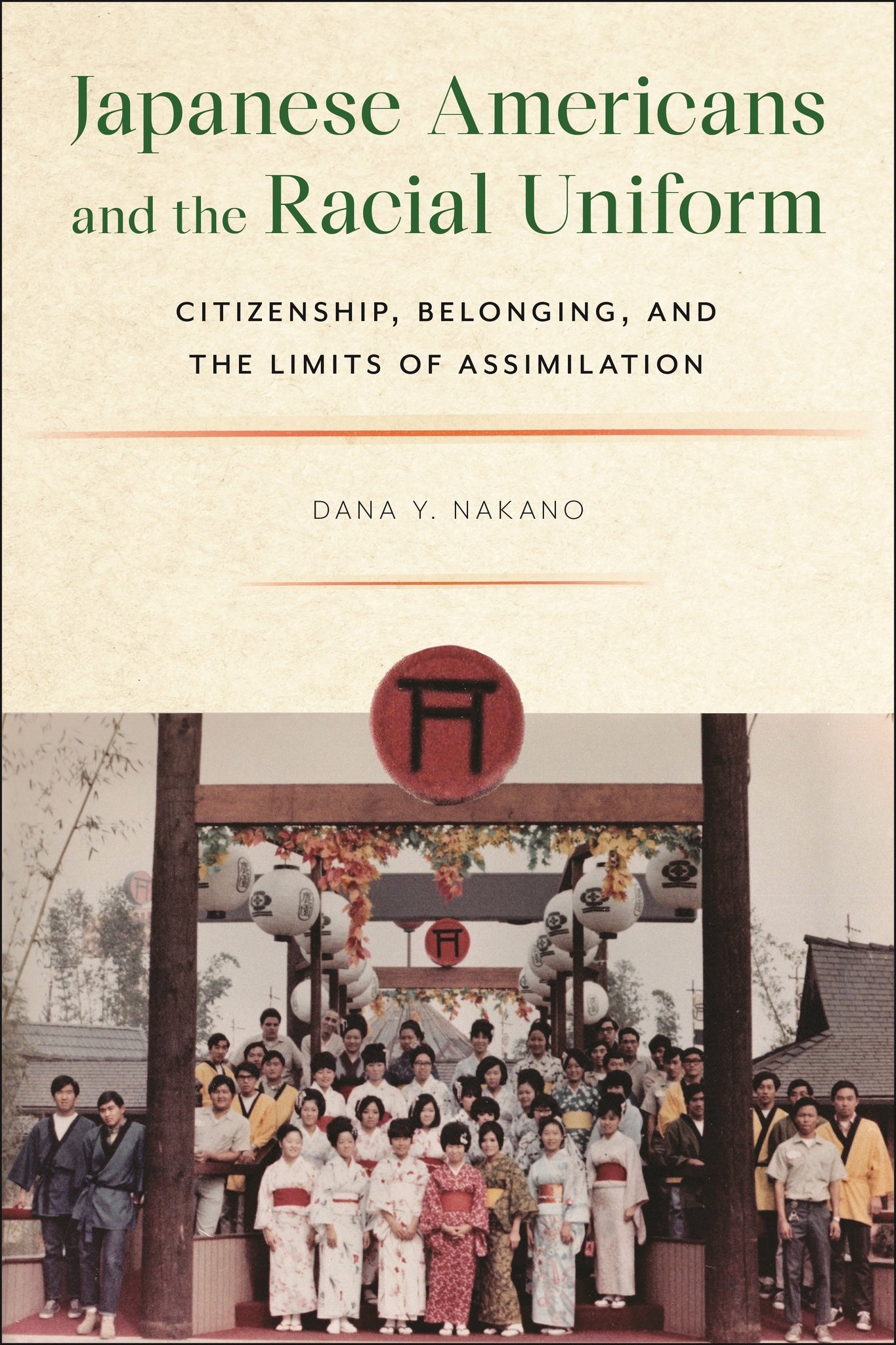
To explore race and the everyday practices of citizenship, Dana Y. Nakano begins at an unlikely site, Japanese Village and Deer Park, a now defunct Japan-themed amusement park in suburban Southern California. Drawing from extensive interviews with the park’s Japanese American employees as well as photographic imagery, Nakano shows how the employees' race acted as part of their work uniform and magnified their sense of alienation from their white peers and the park’s white visitors. While the racial perception of Japanese Americans as forever foreigners made them ideal employees for Deer Park, the same stigma continues to marginalizes Japanese Americans beyond the place and time of the amusement park. Into the present day, third and fourth generation Japanese Americans share feelings of racialized non-belonging and yearning for community. Japanese Americans and the Racial Uniform pushes us to rethink the persistent recognition of racial markers—the racial body as a visible, ever-present uniform—and how it continues to impact claims on an American identity and the lived experience of citizenship.


"A major contribution to Japanese American studies, especially on post-incarceration generations of US-born Sansei and Yonsei. Japanese Americans and the Racial Uniform sheds light on the fallacy of a perspective that assumes the end of “assimilation” for children and grandchildren of second-generation Asian Americans, and hence the neglect of their minoritized experiences. Deeply personal and yet theoretically sound, Nakano’s research unveils why and how race still matters to these ostensibly fully assimilated Americans. As later-generation citizens of Asian ancestries are sure to increase in number, this book stands as a trailblazer in the scholarship on race and being American in contemporary Asian America."
"The book tells a fascinating and theoretically compelling story of the daily lived experience of third-plus generation Japanese Americans through an in-depth study of an ethnic theme park. It offers invaluable insight into the long-lasting insidious impact of race on a highly assimilated ethnic group and reminds readers of the continuing significance of race and the limits of assimilation in US society."
"Based upon extensive interviews with former employees, as well as collected visual images, Nakano examines Deer Park as a workplace that represented both racialized stereotypes and as a broadly positive ethnic community for its young adult workers. Deer Park traded upon race, regardless of generational differences; class position; cultural knowledge; or miscegenation. Indeed, then and now—as reinforced during the COVID era—race matters in the US as a highly contentious meeting ground of difference, etching sharp limits upon affective citizenship as national belonging."