


Some error occured while loading the Quick View. Please close the Quick View and try reloading the page.
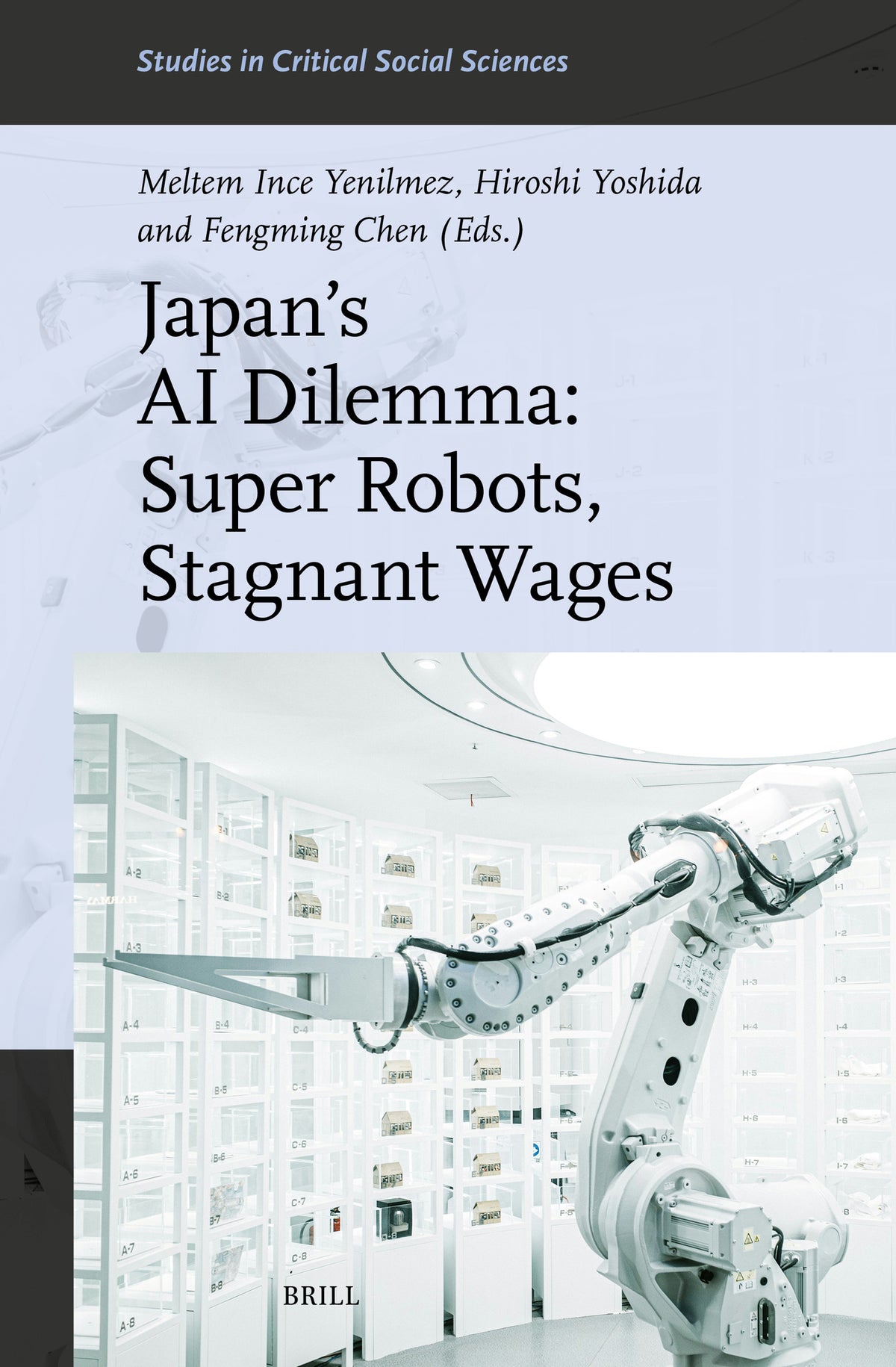
While China rushes ahead with more than 80% adoption, why is it that Japan understands AI but hardly employs it? This book reveals the actual impetus behind digital transformation: institutions, not algorithms. You'll see how China uses AI for geopolitical domination, while Japan is compelled to see it as a labor supplement due to an aging population. Based on unpublished policy documents, labor data divided by gender, and a five-stage chronology of China's rise, this book provides the first institutionalist comparison of East Asia's two titans. You'll leave with tangible changes for inclusive AI governance. To find out why the next decade belongs to those who align social reality with technology, read it.

Price: $117.00
Pages: 180
Publisher: Brill
Imprint: Brill
Series: Studies in Critical Social Sciences
Publication Date:
07 January 2027
ISBN: 9789004775787
Format: Hardcover
BISACs:
SOCIAL SCIENCE / Sociology / General, SOCIAL SCIENCE / Anthropology / General, LAW / International, TECHNOLOGY & ENGINEERING / General, COMPUTERS / Social Aspects, COMPUTERS / General

Meltem Ince-Yenilmez is Professor of Economics at Izmir Democracy University. Her research focuses on gender economics, labour economics, social policy, sustainability, behavioural economics, and care work. She has held visiting research and teaching positions at the University of California, Berkeley, the University of Göttingen, Lund University, the University of Massachusetts Amherst, IIM Rohtak, and Tohoku University. She is the author and editor of twelve books published by Routledge, Palgrave, Rowman & Littlefield, Brill, and Peter Lang.
Hiroshi Yoshida is Professor at the Graduate School of Economics and Management at Tohoku University, Japan, where he also serves as Director of the Centre for Research on the Economic Society of Ageing. His research focuses on the economics of ageing, population dynamics, public finance, social security, health economics, and population-intelligent societies.
Fengming Chen is a Specially Appointed Assistant Professor at the Hitotsubashi Institute for Advanced Study (HIAS), Hitotsubashi University, and a Visiting Researcher at Tohoku University. He received his PhD in Economics from Tohoku University. His research focuses on health economics and population economics, particularly preventive care, behavioural change, and the use of large-scale survey and administrative data to improve public health outcomes.
Hiroshi Yoshida is Professor at the Graduate School of Economics and Management at Tohoku University, Japan, where he also serves as Director of the Centre for Research on the Economic Society of Ageing. His research focuses on the economics of ageing, population dynamics, public finance, social security, health economics, and population-intelligent societies.
Fengming Chen is a Specially Appointed Assistant Professor at the Hitotsubashi Institute for Advanced Study (HIAS), Hitotsubashi University, and a Visiting Researcher at Tohoku University. He received his PhD in Economics from Tohoku University. His research focuses on health economics and population economics, particularly preventive care, behavioural change, and the use of large-scale survey and administrative data to improve public health outcomes.