


Some error occured while loading the Quick View. Please close the Quick View and try reloading the page.
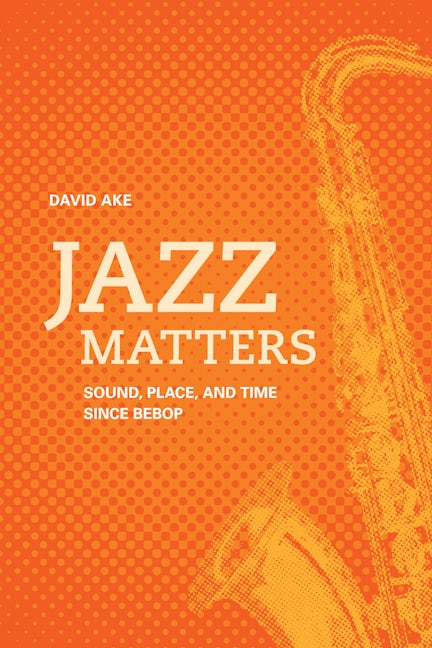
What, where, and when is jazz? To most of us jazz means small combos, made up mostly of men, performing improvisationally in urban club venues. But jazz has been through many changes in the decades since World War II, emerging in unexpected places and incorporating a wide range of new styles. In this engrossing new book, David Ake expands on the discussion he began in Jazz Cultures, lending his engaging, thoughtful, and stimulating perspective to post-1940s jazz. Ake investigates such issues as improvisational analysis, pedagogy, American exceptionalism, and sense of place in jazz. He uses provocative case studies to illustrate how some of the values ascribed to the postwar jazz culture are reflected in and fundamentally shaped by aspects of sound, location, and time.

Price: $34.95
Pages: 216
Publisher: University of California Press
Imprint: University of California Press
Publication Date:
07 October 2010
Trim Size: 9.00 X 6.00 in
ISBN: 9780520266896
Format: Paperback

“David Ake doesn't pretend to stand on a mountaintop and deliver the Truth about jazz. Instead, he takes a wider view, showing that the Truth is really a series of possibilities, each one exciting enough in itself to keep us enthralled by the music no matter how much we think we know.”
David Ake is Professor and Chair of the Department of Musicology at the Frost School of Music, University of Miami.
List of Illustrations
Introduction
Part I. Sound and Time
1. Being (and Becoming) John Coltrane: Listening for Jazz “Subjectivity”
2. Musicology beyond the Score and the Performance: Making Sense of the Creak on Miles Davis’s “Old Folks”
3. Sex Mob and the Carnivalesque in Postwar Jazz
Part II. Place and Time
4. Race, Place, and Nostalgia after the Counterculture: Keith Jarrett and Pat Metheny on ECM
5. Rethinking Jazz Education
6. Negotiating National Identity among American Jazz Musicians in Paris
Acknowledgments
Appendix 1. Sample of American Jazz Musicians Born Since 1950 Who Studied Jazz at the College Level
Appendix 2. Interview Locations and Dates
Notes
Index
Introduction
Part I. Sound and Time
1. Being (and Becoming) John Coltrane: Listening for Jazz “Subjectivity”
2. Musicology beyond the Score and the Performance: Making Sense of the Creak on Miles Davis’s “Old Folks”
3. Sex Mob and the Carnivalesque in Postwar Jazz
Part II. Place and Time
4. Race, Place, and Nostalgia after the Counterculture: Keith Jarrett and Pat Metheny on ECM
5. Rethinking Jazz Education
6. Negotiating National Identity among American Jazz Musicians in Paris
Acknowledgments
Appendix 1. Sample of American Jazz Musicians Born Since 1950 Who Studied Jazz at the College Level
Appendix 2. Interview Locations and Dates
Notes
Index