


Some error occured while loading the Quick View. Please close the Quick View and try reloading the page.
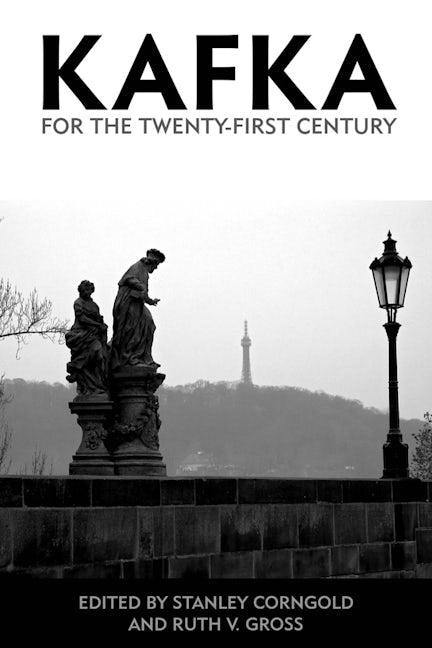
Leading international Kafka scholars face the challenges Kafka poses in the new millennium.
Franz Kafka's literary career began in the first decade of the twentieth century and produced some of the most fascinating and influential works in all of modern European literature. Now, a hundred years later, the concerns of a new century call for a look at the challenges facing Kafka scholarship in the decades ahead: What more can we hope to learn about the context in which Kafka wrote? How does understanding that context affect how we read his stories?What are the consequences of new critical editions that offer unprecedented access to Kafka's works in manuscript form? How does our view of Kafka change the priorities and fashions of literary scholarship? What elements in Kafka's fiction will find resonance in the historical context of a new millennium? How do we compose a coherent account of a personality with so many contradictory aspects? All these questions and more are addressed by the essays in this volume, written by a group of leading international Kafka scholars.
Contributors: Peter Beicken, Iris Bruce, Jacob Burnett, Uta Degner, Doreen Densky, Katja Garloff, Rolf Goebel, Mark Harman, Robert Lemon, Roland Reuß, Ritchie Robertson, Walter Sokel, John Zilcosky, Saskia Ziolkowski.
Stanley Corngold is Professor Emeritus of German and Comparative Literature at Princeton University. Ruth V. Gross is Professor of German and Head ofthe Department of Foreign Languages and Literatures at North Carolina State University.
Franz Kafka's literary career began in the first decade of the twentieth century and produced some of the most fascinating and influential works in all of modern European literature. Now, a hundred years later, the concerns of a new century call for a look at the challenges facing Kafka scholarship in the decades ahead: What more can we hope to learn about the context in which Kafka wrote? How does understanding that context affect how we read his stories?What are the consequences of new critical editions that offer unprecedented access to Kafka's works in manuscript form? How does our view of Kafka change the priorities and fashions of literary scholarship? What elements in Kafka's fiction will find resonance in the historical context of a new millennium? How do we compose a coherent account of a personality with so many contradictory aspects? All these questions and more are addressed by the essays in this volume, written by a group of leading international Kafka scholars.
Contributors: Peter Beicken, Iris Bruce, Jacob Burnett, Uta Degner, Doreen Densky, Katja Garloff, Rolf Goebel, Mark Harman, Robert Lemon, Roland Reuß, Ritchie Robertson, Walter Sokel, John Zilcosky, Saskia Ziolkowski.
Stanley Corngold is Professor Emeritus of German and Comparative Literature at Princeton University. Ruth V. Gross is Professor of German and Head ofthe Department of Foreign Languages and Literatures at North Carolina State University.

Price: $36.95
Pages: 298
Publisher: Boydell & Brewer Inc.
Imprint: Camden House
Series: Studies in German Literature Linguistics and Culture
Publication Date:
01 February 2015
Trim Size: 9.00 X 6.00 in
ISBN: 9781571139313
Format: Paperback
BISACs:
LITERARY CRITICISM / European / German, Literature: history and criticism

The essays in this volume are all worth reading, . . . well written and cogently argued. . . . Often they are provocative, sometimes opening up new avenues into parts of Kafka's oeuvre . . . sometimes, just as productively, re-exploring old ones. . . . [T]aken together the essays do in fact set out a fairly coherent agenda for Kafka Studies over the coming years and even decades. --Julian Preece,