


Some error occured while loading the Quick View. Please close the Quick View and try reloading the page.
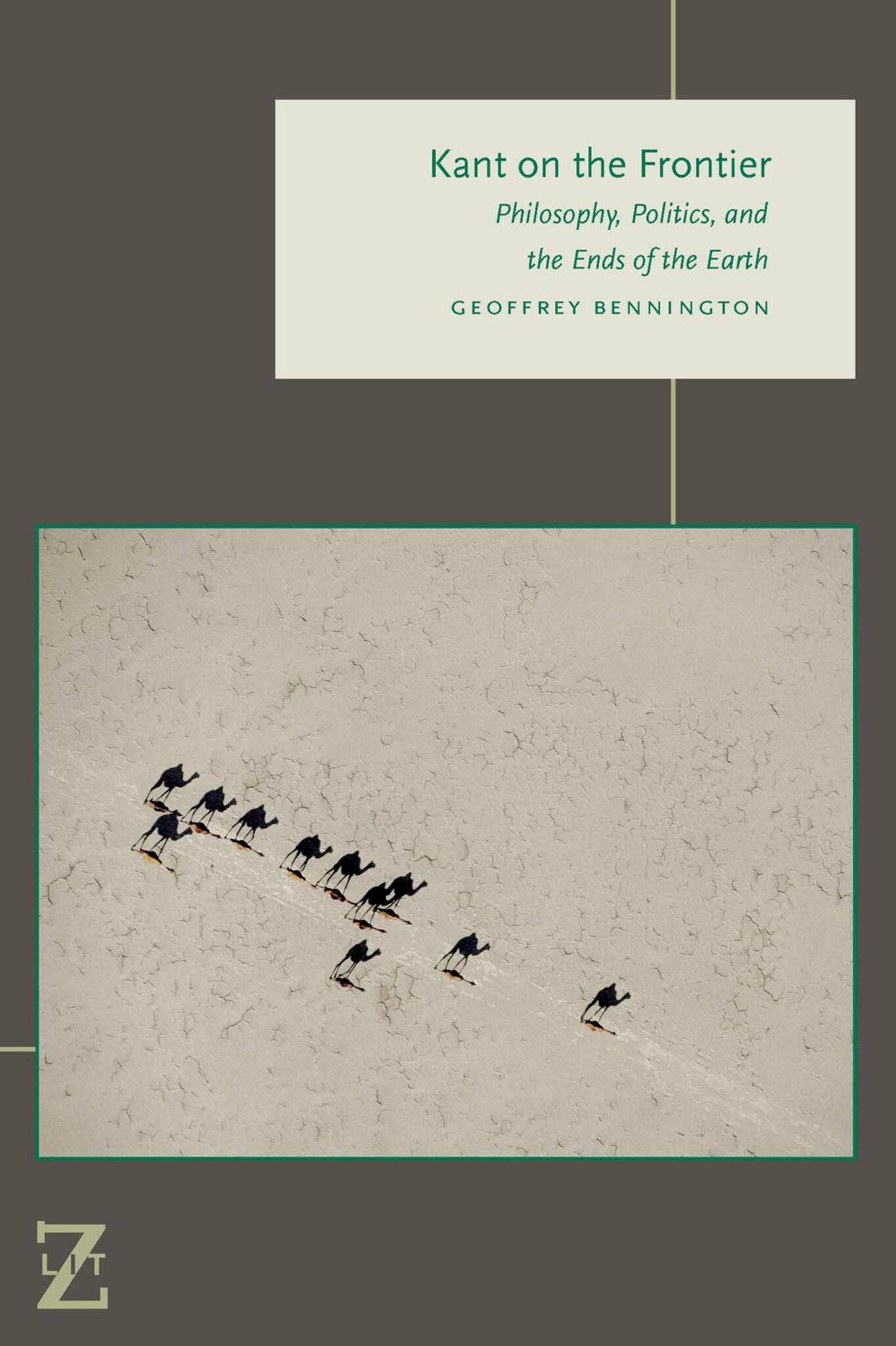
Frontier: the border between two countries; the limits of civilization; the bounds of established knowledge; a new field of activity. At a time when all borders, boundaries, margins, and limits are being—often violently—challenged, erased, or reinforced, we must rethink the concept of frontier itself. But is there even such a concept? Through an original and imaginative reading of Kant, Geoffrey Bennington casts doubt upon the conceptual coherence of borders.
The frontier is the very element of Kant’s thought yet the permanent frustration of his conceptuality. Bennington brings out the frontier’s complex, abyssal, fractal structure that leaves a residue of violence in every frontier and complicates Kant’s most rational arguments in the direction of cosmopolitanism and perpetual peace.
Neither a critique of Kant nor a return to Kant, this book proposes a new reflection on philosophical reading, for which thinking the frontier is both essential and a recurrent, fruitful, interruption.


Beyond meticulously describing the impasses around which Kant conducts what he sometimes calls his 'critical business,' Kant on the Frontier culminates in an analysis of the Critique of Teleological Judgment that is at once philologically exact and strikingly topical: here we encounter a thinker who, in seeking to erect impregnable borders, opens onto the 'abyss of judgment.'---—Peter Fenves, Northwestern University