


Some error occured while loading the Quick View. Please close the Quick View and try reloading the page.
Winner, 2024 Clifford Geertz Prize in the Anthropology of Religion, Society for the Anthropology of Religion
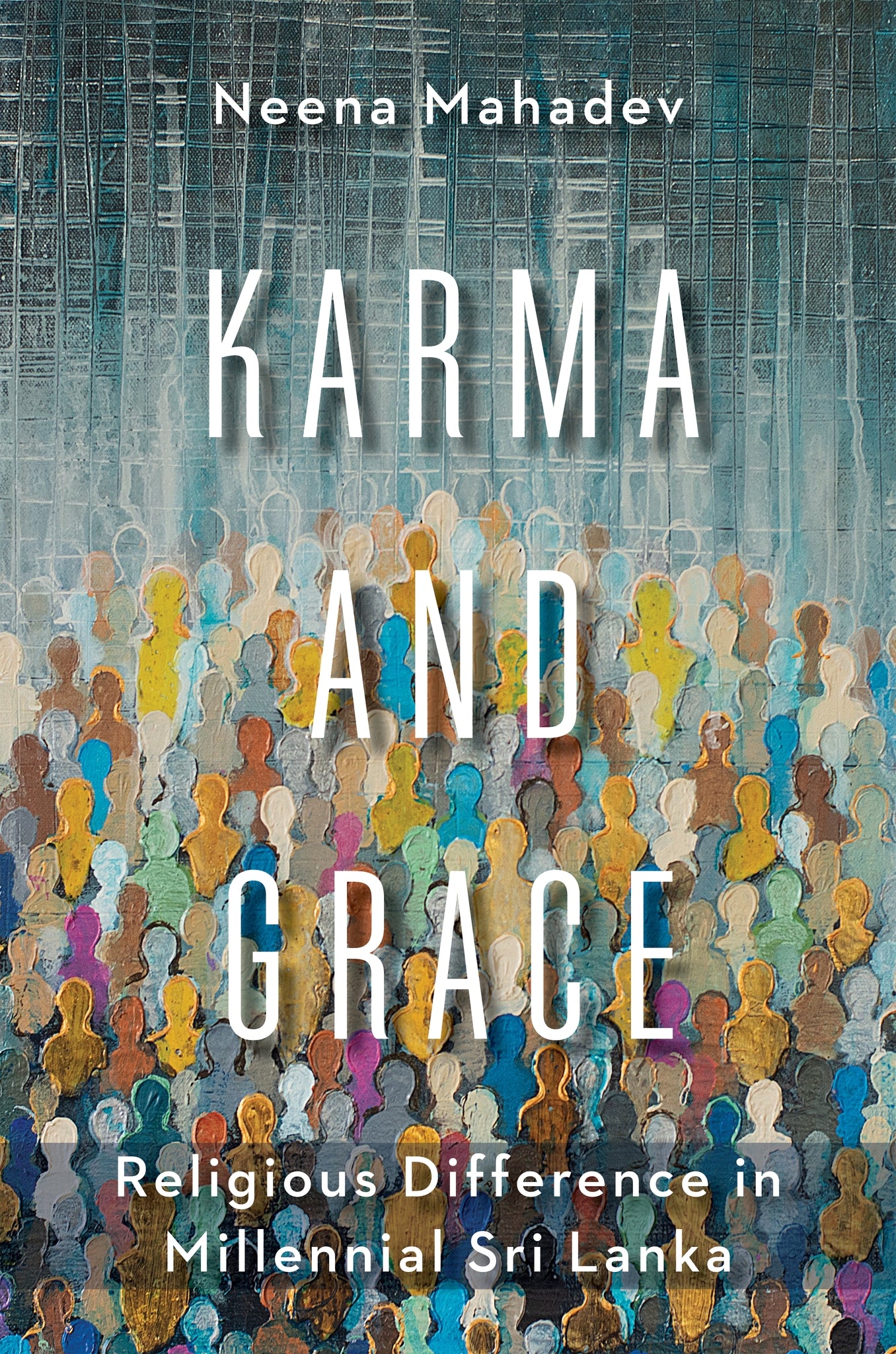
Around the turn of the millennium, Pentecostal churches began to pepper majority-Buddhist Sri Lanka, setting off a sense of alarm among Buddhists who saw Christianity as a neocolonial threat to the nation. Rumors of foul play in the death of a Buddhist monk, as well as allegations of proselytizing in the aftermath of the 2004 tsunami and during the final stages of civil war, spurred nationalist anxieties, moral panics, and even episodes of violence by Buddhists against Christians suspected of facilitating “unethical” conversions.
Through vivid ethnography and keen observations of media events, Karma and Grace illuminates disputes over religious freedom and pluralism amid the rise of charismatic Christianity in Sri Lanka. Neena Mahadev explores the dueling efforts of Buddhist nationalists and Christian evangelists to reshape Sri Lanka’s religious, economic, and political landscapes. She considers theological and political impasses between Buddhism’s vast timescales of karma and Christians’ promises of the immediacy of their God’s salvific grace. While Christian missions spread “the Good News,” subsets of Buddhists produced bad press, sting operations, and disparaging media to impede born-again churches from taking root. In gripping detail, Mahadev recounts how modernist and traditionalist Theravāda Buddhists, Pentecostal newcomers, long-established Christian denominations, local deity and spirit cults, and the innovations of mavericks intermingle in a multireligious public sphere. Even amid trenchant conflicts, Karma and Grace demonstrates that social proximity between rivals is also conducive to religious experimentation and the ambiguities of identity that allow Sri Lankans to live with difference.


— Sudipta Kaviraj, author of The Invention of Private Life: Literature and Ideas
Crisscrossing a landscape fraught with political and religious conflict, Neena Mahadev's ethnographic skill and generosity yield rare insights. Politically alert, theologically informed, and ethically sensitive, she finds not just familiar hostilities but unexpected convergences. This is an exemplary anthropology for a religiously plural world.
— Webb Keane, author of Ethical Life: Its Natural and Social Histories
Neena Mahadev articulates subtle ethical and social differences between Buddhist and Christian communities in Sri Lanka in this theoretically sophisticated and meticulously researched study. Despite its historical and ethnographic complexity, her engaging and clear writing style makes this book accessible to advanced scholar and beginning student alike. This book should inspire new comparative religious research in South Asia and beyond.
— Justin Thomas McDaniel, author of Wayward Distractions: Ornament, Emotion, Zombies, and the Study of Buddhism in Thailand
Karma and Grace is a tour de force that is bound to become a classic in the emerging field of anthropology and political theology. Mahadev aptly charts the interreligious as an everyday, theopolitical, ritual space; a practice and temporality of mushrooming conversions, nationalistic fears, covenant gifts, the Christian miraculous, and Buddhist messianism, with and beyond the Sri Lankan case.
— Valentina Napolitano, author of Migrant Hearts and the Atlantic Return: Transnationalism and the Roman Catholic Church
Karma and Grace explores religious conflict and coexistence amidst the postwar rise of Sri Lankan Buddhist nationalism. Mahadev provides a refreshingly complex treatment of religious pluralism, productively exploring the Sri Lankan story with a focus on the everyday experiences of people living in religiously mixed communities. An important account of interreligious accommodation in a context known for violence and intolerance.
— Naomi Haynes, author of Moving by the Spirit: Pentecostal Social Life on the Zambian Copperbelt
A nuanced, theoretically rich, and utterly humane reflection on inter-religiosity in contemporary Sri Lanka....An exemplar of insightful ethnographically grounded research.
Karma and Grace helps us to think through what being “Christian” and “Buddhist” might mean in the twenty-first century, and why changing one’s religious identity can be fraught with significant cultural valences and political ramifications.
A unique contribution to subfields in religious studies that examine Buddhist modernism or the spread of Evangelicalism.
Acknowledgments
Map
Introduction: Inter-Religion in Sri Lanka
A Note on Terms: Defining “Evangelical”
1. Tangles of Religious Perspectivism: Economies of Conversion and Ontologies ofDifference
2. Charity and Dāna: The Selfish Gift?
3. Mediating Miracles
4. A Cacophonous Exuberance: Modulating Miracles, Defending Sovereignty
5. Samsaric Destinies, Religious Plurality, and the Maverick Dialogics of Buddhist Publicity
6. A Spectrum from Sincerity to Skepticism: Ordinary Biographies of Converts, Apostates, and Dual Belongers
Epilogue
Notes
Bibliography
Index