


Some error occured while loading the Quick View. Please close the Quick View and try reloading the page.
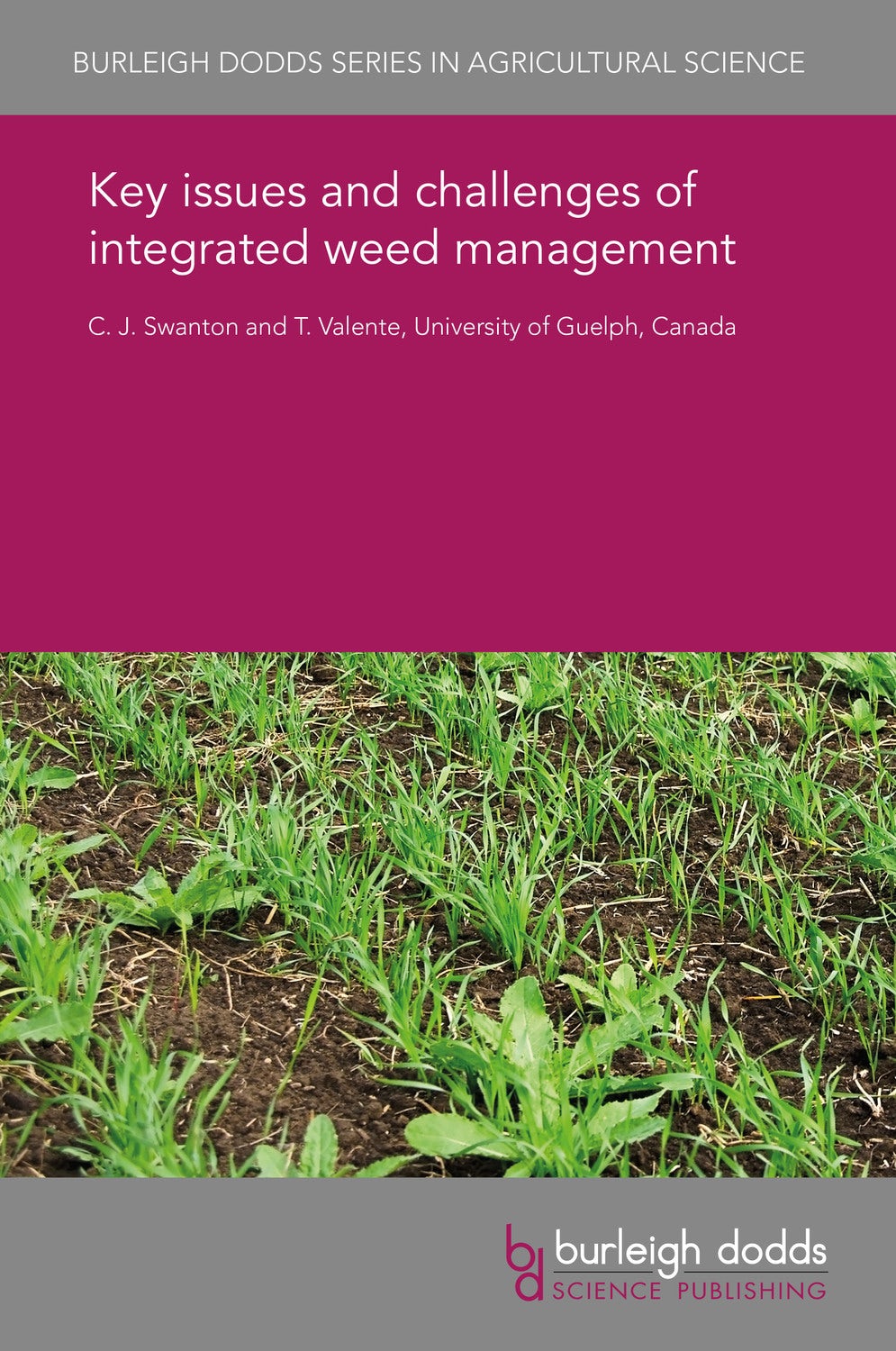
In order to intensify agricultural productivity while at the same time enhance ecosystem services, it is necessary to evaluate carefully how current weed-management technologies are deployed, including herbicides and herbicide-resistant crops. Herbicide chemistries and herbicide-resistant crops have provided excellent technologies that have resulted in significant changes to the way weeds can be controlled. This chapter highlights several key components that must form the basis for an effective integrated weed-management strategy, including tillage, the importance of understanding weed emergence relative to the crop, critical periods for weed control, crop morphology, row width, nutrient management and crop rotation.

Price: $32.50
Publisher: Burleigh Dodds Science Publishing
Imprint: Burleigh Dodds Science Publishing
Series: Burleigh Dodds Series in Agricultural Science
Publication Date:
26 December 2017
ISBN: 9781838794262
Format: eBook
BISACs:
TECHNOLOGY & ENGINEERING / Agriculture / Sustainable Agriculture, TECHNOLOGY & ENGINEERING / Agriculture / Agronomy / Crop Science, TECHNOLOGY & ENGINEERING / Pest Control

1 Introduction 2 Tillage 3 Time of weed emergence relative to the crop 4 Critical periods for weed control 5 Crop morphology 6 Row width and seeding density to reduce weed competitiveness 7 Nutrient management 8 Crop rotation 9 Future trends and conclusion 10 Where to look for further information 11 References