


Some error occured while loading the Quick View. Please close the Quick View and try reloading the page.
A history of the McCleskey v. Kemp Supreme Court ruling that effectively condoned racism in capital cases
In 1978 Warren McCleskey, a Black man, killed a white police officer in Georgia. He was convicted by a jury of 11 whites and 1 African American, and was sentenced to death. Although McCleskey’s lawyers were able to prove that Georgia courts applied the death penalty to Blacks who killed whites four times as often as when the victim was Black, the Supreme Court upheld the death sentence in McCleskey v.Kemp, thus institutionalizing the idea that racial bias was acceptable in the capital punishment system. After a thirteen-year legal journey, McCleskey was executed in 1991.
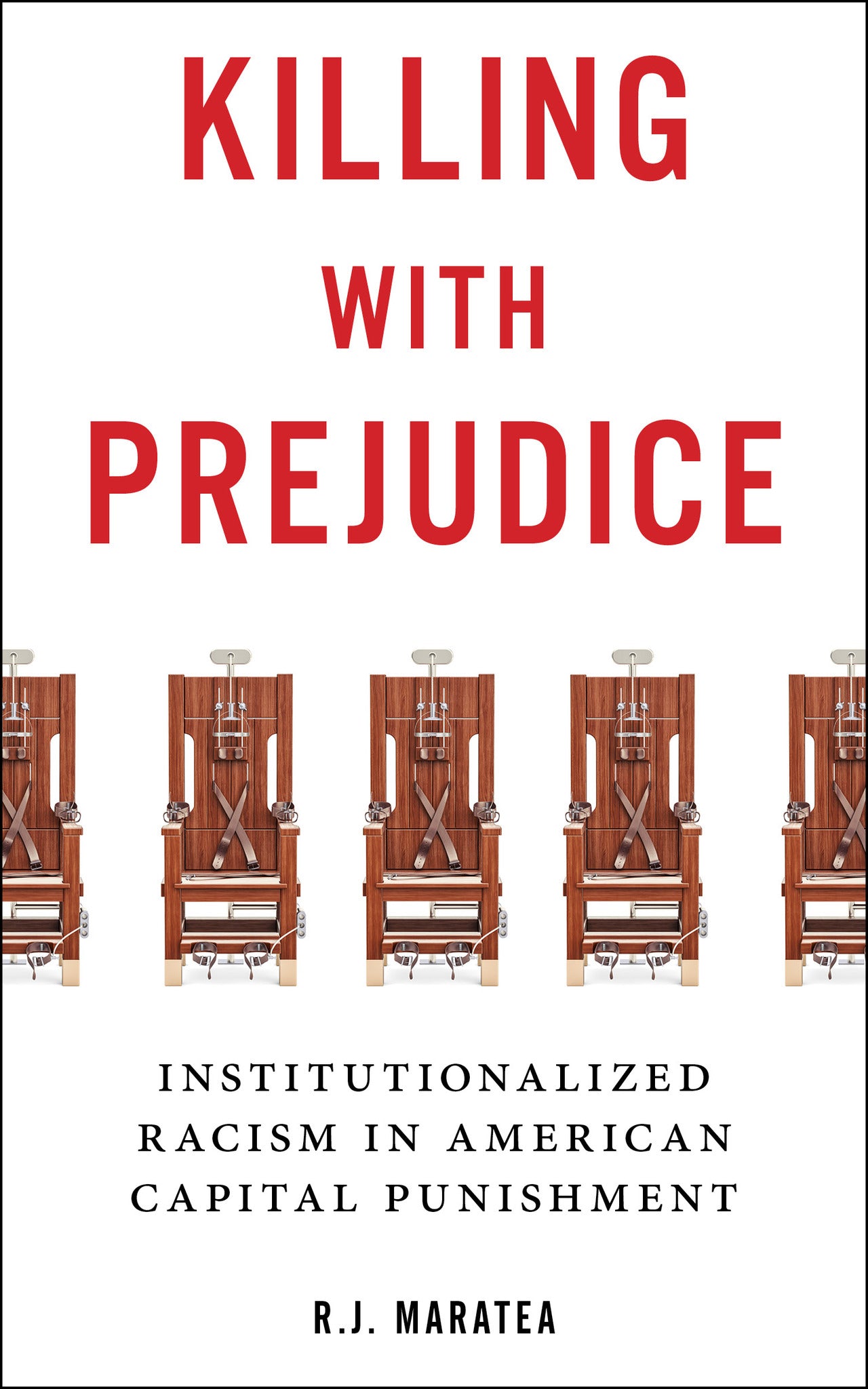
In Killing with Prejudice, R.J. Maratea chronicles the entire litigation process which culminated in what has been called “the Dred Scott decision of our time.” Ultimately, the Supreme Court chose to overlook compelling empirical evidence that revealed the discriminatory manner in which the assailants of African Americans are systematically undercharged and the aggressors of white victims are far more likely to receive a death sentence. He draws a clear line from the lynchings of the Jim Crow era to the contemporary acceptance of the death penalty and the problem of mass incarceration today.
The McCleskey decision underscores the racial, socioeconomic, and gender disparities in modern American capital punishment, and the case is fundamental to understanding how the death penalty functions for the defendant, victims, and within the American justice system as a whole.


By connecting the past to the present, Maratea reveals how the mistreatment of Black people in the United States has continued through color-blind racial logics that are further legitimized in the courtroom... This book is ideal for sociolegal scholars seeking to better understand the American death penalty system. Maratea’s case study of McCleskey not only reveals insights about the case but also illustrates larger sociolegal forces that lead to the disproportion execution of Black Americans. The book pulls from law and history to show readers how support for and the application of American capital punishment is deeply rooted in structural racism.
A well organized and very well written book that underscores the centrality of McKleskey v. Kemp in modern understandings of the death penalty.
— Isaac Unah,author of The Supreme Court in American Politics
Maratea places the McCleskey case and his personal circumstances within the context of the history of racism in the criminal justice system. He documents the fact that the imposition of the death penalty was and continues to be racially biased an atavistic link to Jim Crow laws, an embarrassment to due process, and an affront to the Constitution.
— Gennaro F. Vito,University of Louisville
R.J. Marateas erudite history of arguably the most toxic Supreme Court case of the post-civil rights era is a stunning achievement. It is a rare book that highlights how structural racismborne of a deeply cynical and callous jurisprudence and criminal justice policylegitimizes taken for granted logics that continue to deny full citizenship to people of color in the U.S. today.
— Benjamin Fleury-Steiner,University of Delaware
Maratea’s book arrives at a highly relevant time. [...] The author offers compelling evidence of what Justice William Brennan, in his dissent to McCleskey v. Kemp, called 'the grip of a historical legacy spanning centuries...the subtle and persistent influence of the past.'