


Some error occured while loading the Quick View. Please close the Quick View and try reloading the page.
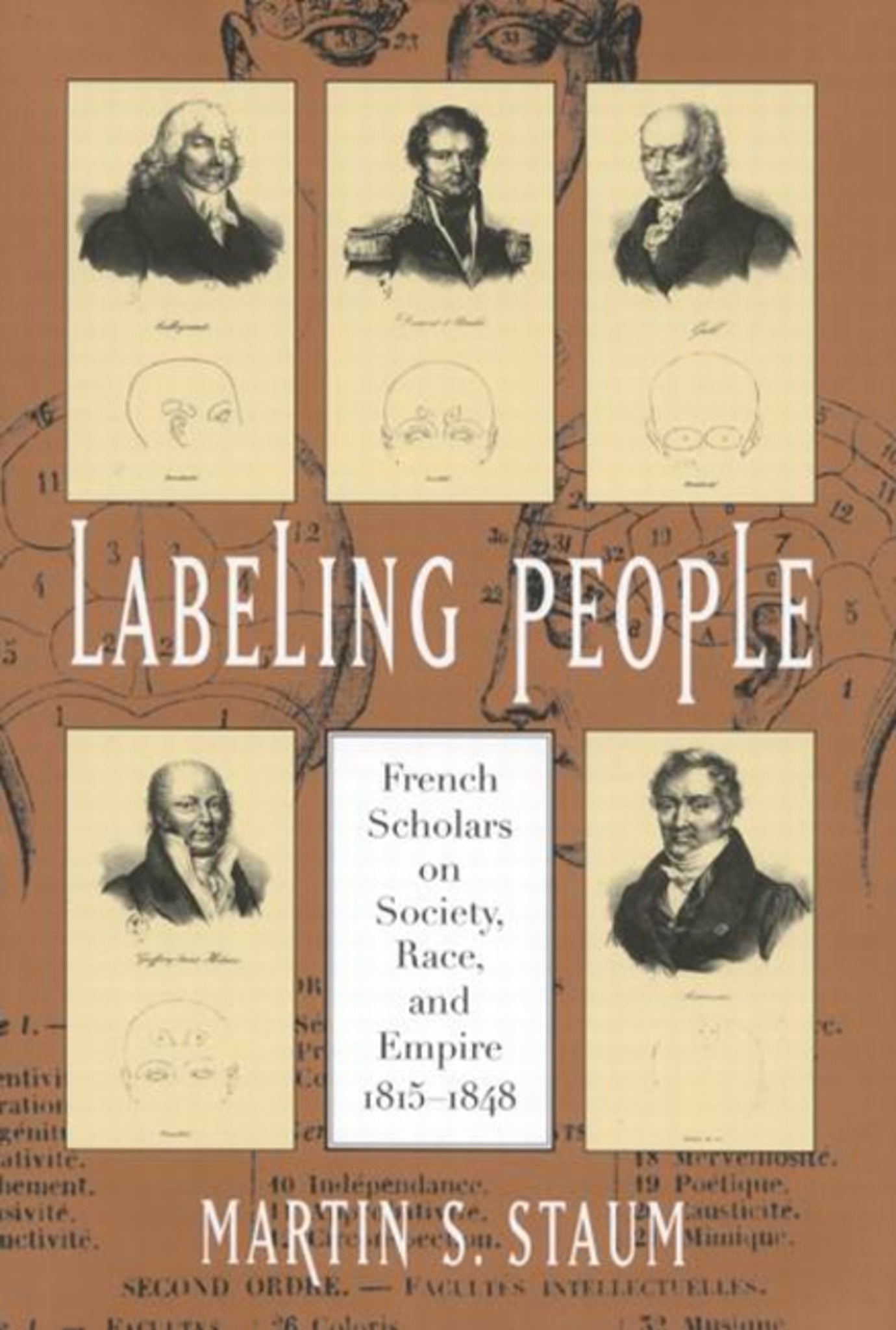
Nineteenth-century French scholars, during a turbulent era of revolution and industrialization, ranked intelligence and character according to facial profile, skin colour, and head shape. They believed that such indicators could determine whether individuals were educable and peoples perfectible. In Labeling People Martin Staum examines the Paris societies of phrenology (reading intelligence and character by head shapes), geography, and ethnology and their techniques for classifying people. He shows how the work of these social scientists gave credence to the arrangement of "races" in a hierarchy, the domination of non-European peoples, and the limitation of opportunities for ill-favored individuals within France.
While previous studies have contrasted the relative optimism of middle-class social scientists before 1848 with a later period of concern for national decline and racial degeneration, Staum demonstrates that the earlier learned societies were also fearful of turmoil at home and interested in adventure abroad. Both geographers and ethnologists created concepts of fundamental "racial" inequality that prefigured the imperialist "associationist" discourse of the Third Republic, believing that European tutelage would guide "civilizable" peoples, and providing an open invitation to dominate and exploit the "uncivilizable."

