


Some error occured while loading the Quick View. Please close the Quick View and try reloading the page.
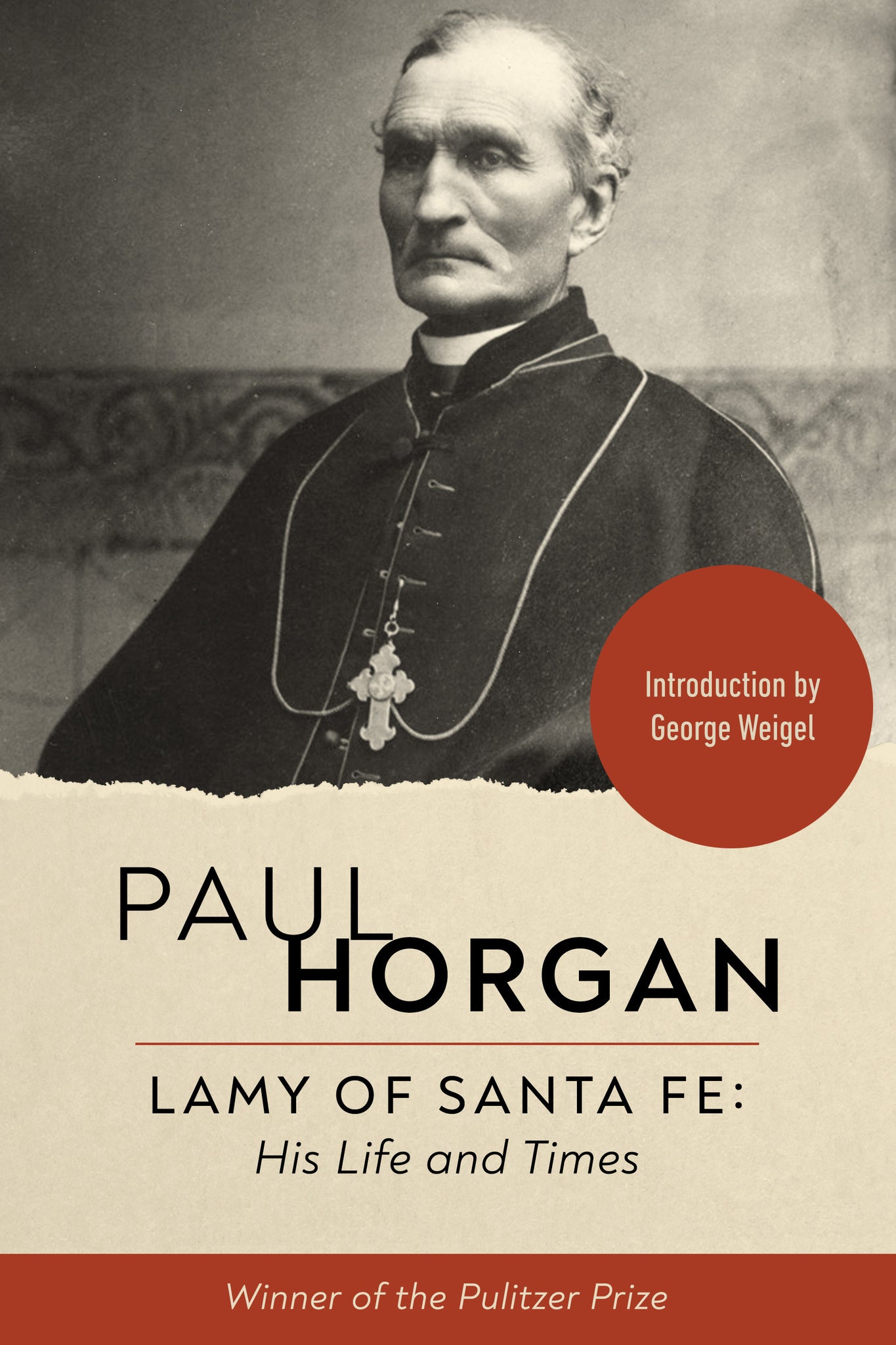
The Pulitzer-winning biography of a pioneer hero of the frontier Southwest.
Winner of the Pulitzer Prize for History (1976).
With a new introduction by George Weigel.
Originally published in 1975, Paul Horgan’s beautifully crafted biography, a classic of the genre, chronicles the life of Archbishop Jean Baptiste Lamy (1814–88), New Mexico’s first resident bishop and the real-life inspiration for Willa Cather’s masterpiece, Death Comes for the Archbishop.
In these pages, Horgan—who, besides his work as a historian, was also a novelist and artist—paints an unforgettable portrait of an indefatigable, charitable, and faithful missionary and churchman. He tells the story of Lamy’s many accomplishments, including the creation of hospitals, orphanages, schools, and colleges, and the story of the archbishop’s many conflicts—often with his own priests. More broadly, Horgan gives readers a vivid picture of that pivotal period in the history of the American Southwest when Spanish and Mexican rule slipped away.
Lamy of Santa Fe is filled with hardy, often extraordinary adventure. It is sustained both by its author’s captivating style and its subject’s magnificent strength of character.


“Lamy of Santa Fe is a classic work. Not only is the research exemplary but so is the narrative artistry, the work of history as art.”—Robert Gish, author, Nueva Granada: Paul Horgan and the Modern Southwest
“Lamy of Santa Fe stands as a beacon in American biography.”—James Day, author, Paul Horgan
I. France, 1814–1839
i. The Fugitives
ii. Caesar and Vercingetorix
iii. Romanesque Heritage
iv. Auvergnats
v. The Home Village
vi. The Two Friends
vii. To Go
viii. America
II. The Middle West, 1839–1850
i. Cincinnati
ii. To the Forests
iii. The Pattern
iv. Those Waiting
v. Self-Searchings
vi. The Materials
vii. Private Concerns
viii. Machebeuf’s Intrigue
ix. The War
x. To Covington
xi. Lamy to France
xii. After the 1846 War
xiii. A Bishop for New Mexico
xiv. These Two Vicars
III. To Santa Fe, 1850–1851
i. New Orleans
ii. S. S. Palmetto
iii. Interlude at Galveston
iv. The Wreck at Indianola
v. San Antonio
vi. To the Rio Grande
vii. Triumphal Entry
IV. The Desert Diocese, 1851–1852
i. Defiance
ii. The Society
iii. The First Needs
iv. The Durango Journey
v. Confrontation in Durango
vi. Disciplines
vii. The Plains Eastward
viii. Westward Prairies
V. The Antagonists, 1852–1856
i. The Pastoral Letter
ii. Rebellion
iii. Diocesan See
iv. Trouble at Albuquerque
v. Disputed Boundaries
vi. The Old Dean
VI. Scandal at Taos, 1852–1861
i. Martínez Rampant
ii. The Advocate at Rome
iii. Martínez, Gallegos, Politics
iv. Machebeuf and Company Returning
v. The Excommunications
vi. Schism
VII. The Colonists, 1858–1863
i. Niceties of Geography
ii. The Poisoned Chalice
iii. Quest in Sonora
iv. Again to Auvergne
v. Quarrel with Durango
vi. “Pike’s Peak”
vii. Marie, the Convent, the Country
viii. The Civil War and Santa Fe
ix. Emergencies—Denver and Return
VIII. The Painted Land, 1863–1867
i. Across Arizona
ii. Hospital and Schools
iii. Christmas Eve: Attempted Murder
IX. Rome and Battle, 1867
i. Rome—An Accounting
ii. Madame Bontesheim and Bureaucracy
iii. Homeward
iv. Prairie News
v. The Battle of the Arkansas Crossing
X. Increase, 1868–1874
i. A Quiet Conscience
ii. Two New Bishops
iii. Vatican Council
iv. Follies and Dangers
v. For the Pueblos
vi. Hard Times
XI. Archbishop, 1875–1880
i. The Archbishop
ii. Jubilation
iii. A Mile a Day
iv. Styles
v. Atmospheres
XII. Gardener and Apostle, 1880–1885
i. Relief
ii. The Gardener
iii. The Apostle
XIII. Day’s End at Santa Fe, 1884–1889
i. Changeover
ii. The Old Men
iii. Day’s End
iv. Two Summertimes
Sources Consulted
Notes
Acknowledgements
Index