


Some error occured while loading the Quick View. Please close the Quick View and try reloading the page.
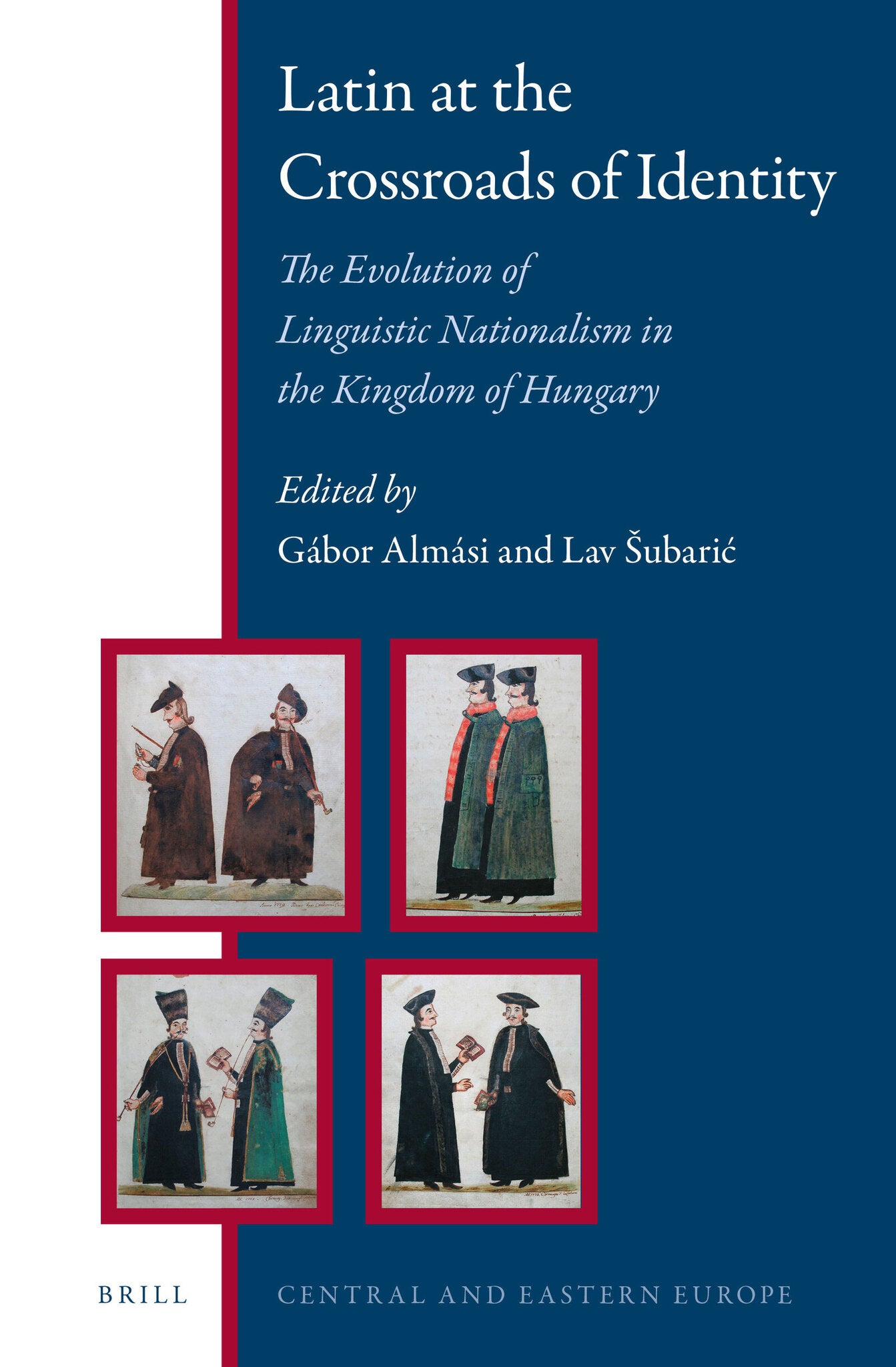
From the late 18th century in the multi-ethnic Kingdom of Hungary, new language-based national identities came to dominate over those that had previously been constructed on legal, territorial, or historical basis. While the Hungarian language struggled to emancipate itself, the roles and functions of Latin (the official language until 1844) were changing dramatically. Latin held a different significance for varying segments of society, from being the essential part of an individual identity to representing an obstacle to “national survival”; from guaranteeing harmony between the different linguistic communities to hindering change, social and political justice. This pioneering volume aims to highlight the ways language debates about Latin and Hungarian contributed to the creation of new identities and ideologies in Central Europe.
Contributors include Gábor Almási, Per Pippin Aspaas, Piroska Balogh, Henrik Hönich, László Kontler, István Margócsy, Alexander Maxwell, Ambrus Miskolczy, Levente Nagy, Nenad Ristović, Andrea Seidler, Teodora Shek Brnardić, Zvjezdana Sikirić Assouline, and Lav Šubarić
Contributors include Gábor Almási, Per Pippin Aspaas, Piroska Balogh, Henrik Hönich, László Kontler, István Margócsy, Alexander Maxwell, Ambrus Miskolczy, Levente Nagy, Nenad Ristović, Andrea Seidler, Teodora Shek Brnardić, Zvjezdana Sikirić Assouline, and Lav Šubarić

Price: $227.00
Pages: 312
Publisher: Brill
Imprint: Brill
Series: Central and Eastern Europe
Publication Date:
24 July 2015
ISBN: 9789004300170
Format: Hardcover

"Latin at the Crossroads of Identity is highly recommendable and is a valuable volume not only for linguists, as some may deduce from just the name of the ancient Roman language in its title, but also for historians, sociologists, and a wider audience interested in topics related to Central Europe and all-European culture [...] a volume that thoroughly explores the complex and dynamic relation between language and national identity within the Hungarian Kingdom of the turn of the eighteenth and nineteenth centuries."
Ferdinand Siarl in Hungarian Cultural Studies. e-Journal of the American Hungarian Educators Association
"The book will act as a useful corrective to the traditional view on the importance of Latin as contained to early modernity only, while on the other hand, it constitutes a much needed introduction to central European Latinitas. Hopefully, other scholars not only will incorporate the presented information in their own publications and research, but will also probe into some issues and problems signaled on the volume’s pages."
Tomasz Kamusella (University of St Andrews) in Colloquia Humanistica (2017-6).
Ferdinand Siarl in Hungarian Cultural Studies. e-Journal of the American Hungarian Educators Association
"The book will act as a useful corrective to the traditional view on the importance of Latin as contained to early modernity only, while on the other hand, it constitutes a much needed introduction to central European Latinitas. Hopefully, other scholars not only will incorporate the presented information in their own publications and research, but will also probe into some issues and problems signaled on the volume’s pages."
Tomasz Kamusella (University of St Andrews) in Colloquia Humanistica (2017-6).
Gábor Almási, Ph.D. (1972), Eötvös Loránd University of Budapest, is external researcher at Ludwig Boltzmann Institute for Neo-Latin Studies. His interests range from Renaissance studies to pre-modern nationalism. He is the author of Uses of Humanism (Brill, 2009).
Lav Šubarić, Ph.D. (1971), University of Innsbruck, is key researcher at Ludwig Boltzmann Institute for Neo-Latin Studies. His interests include manuscript studies, Medieval Latin and Neo-Latin studies. He has co-authored Tyrolis Latina. Geschichte der Lateinischen Literatur in Tirol (Böhlau, 2012).
Lav Šubarić, Ph.D. (1971), University of Innsbruck, is key researcher at Ludwig Boltzmann Institute for Neo-Latin Studies. His interests include manuscript studies, Medieval Latin and Neo-Latin studies. He has co-authored Tyrolis Latina. Geschichte der Lateinischen Literatur in Tirol (Böhlau, 2012).