


Some error occured while loading the Quick View. Please close the Quick View and try reloading the page.
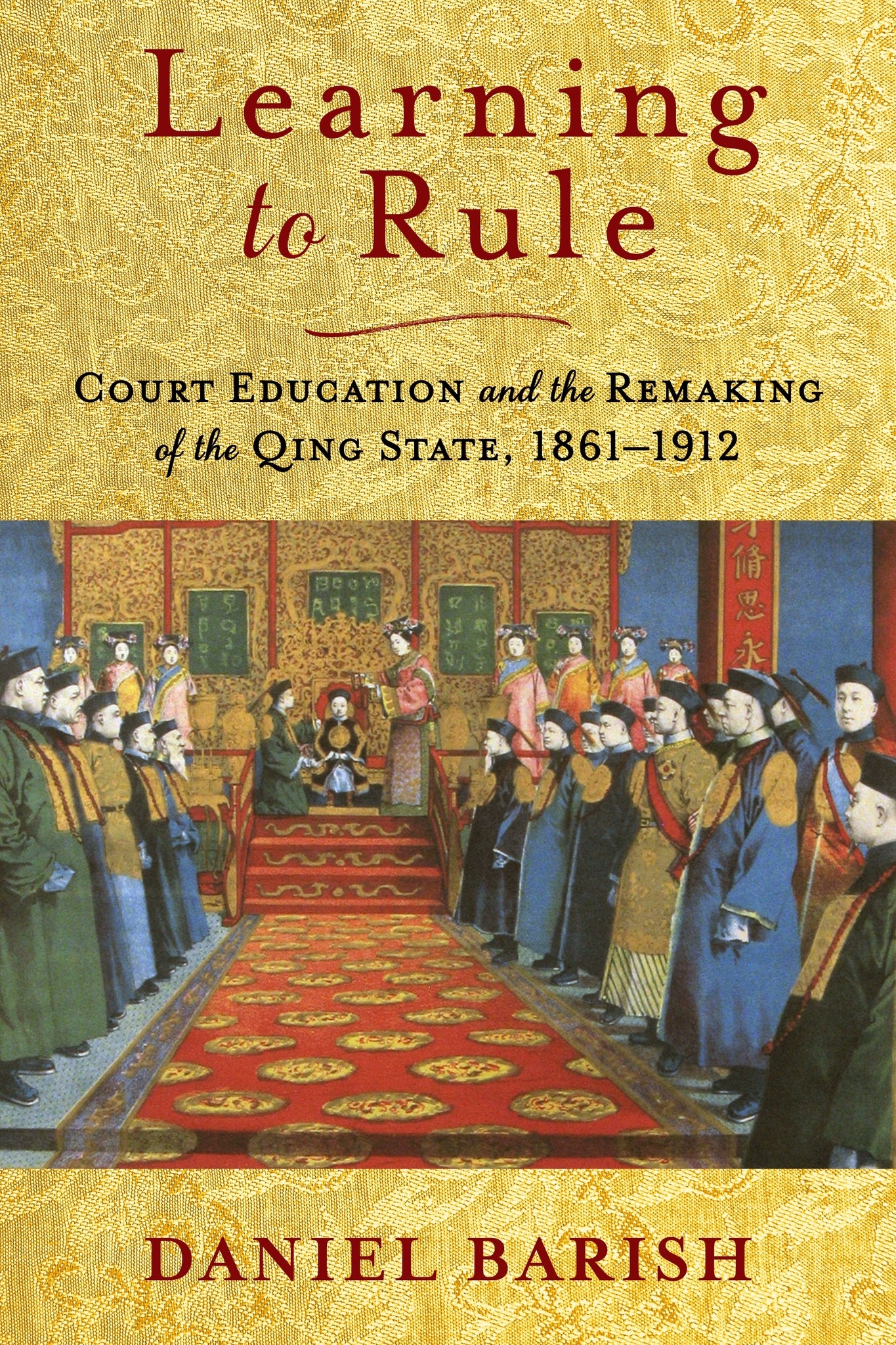
In the second half of the nineteenth century, local leaders around the Qing empire attempted to rebuild in the aftermath of domestic rebellion and imperialist aggression. At the same time, the enthronement of a series of children brought the question of reconstruction into the heart of the capital. Chinese scholars, Manchu and Mongolian officials, and writers in the press all competed to have their ideas included in the education of young rulers. Each group hoped to use the power of the emperor—both his functional role within the bureaucracy and his symbolic role as an exemplar for the people—to promote reform.
Daniel Barish explores debates surrounding the education of the final three Qing emperors, showing how imperial curricula became proxy battles for divergent visions of how to restabilize the country. He sheds light on the efforts of rival figures, who drew on China’s dynastic history, Manchu traditions, and the statecraft tools of imperial powers as they sought to remake the state. Barish traces how court education reflected arguments over the introduction of Western learning, the fate of the Manchu Way, the place of women in society, notions of constitutionalism, and emergent conceptions of national identity. He emphasizes how changing ideas of education intersected with a push for a renewed imperial center and national unity, helping create a model of rulership for postimperial regimes. Through the lens of the education of young emperors, Learning to Rule develops a new understanding of the late Qing era and the relationship between the monarchy and the nation in modern China.


— Pamela Kyle Crossley, author of Orphan Warriors: Three Manchu Generations and the End of the Qing World and The Wobbling Pivot: China Since 1800
Eschewing stale teleologies of nineteenth-century decline, this highly original and well-crafted study of late Qing reforms thoughtfully probes what happens to imperial politics and national ambitions when the emperor is a child and his tutors the most powerful men in the land.
— Mark C. Elliott, author of The Manchu Way: The Eight Banners and Ethnic Identity in Late Imperial China
In Barish’s study of imperial education, Empress Dowager Cixi emerges as a skillful coalition builder, open to diverse policy stances, who participates in the global movement toward nationalizing monarchies. Learning to Rule offers readers a fresh, complex vision of Qing rule in its last decades.
— Evelyn S. Rawski, author of The Last Emperors: A Social History of Qing Imperial Institutions
Based on a wide range of sources, Daniel Barish’s eminently readable investigation of the people and issues surrounding the education of the three child-emperors of the late Qing dynasty is deeply insightful. He offers key new perspectives on the survival of the Qing into the twentieth century, the evolving political views of the educated classes, and the global forces at work in an era of nationalizing monarchies.
— Peter Zarrow, author of Educating China: Knowledge, Society, and Textbooks in a Modernizing World, 1902–1937
This intriguing study is highly recommended for scholars and students of late imperial and modern China, particularly those with interests in late Qing political transformations, ethnic relations, and imperial culture.
An innovative and erudite study...
— Jennifer W. Jay, University of Alberta
Acknowledgments
Introduction
1. New Forms of Learning for a New Age of Imperial Rule, 1861–1874
2. The Malleability of Youth: Guangxu in the Classroom, 1875–1890
3. Putting Lessons Into Practice: Guangxu on the Throne, 1891–1898
4. Cixi’s Pedagogy: Female Education and Constitutional Governance, 1898–1908
5. Learning to Be a Constitutional Monarch, 1908–1912
Conclusion: Emperor and Nation in Modern China
Character Glossary
Notes
Bibliography
Index