


Some error occured while loading the Quick View. Please close the Quick View and try reloading the page.
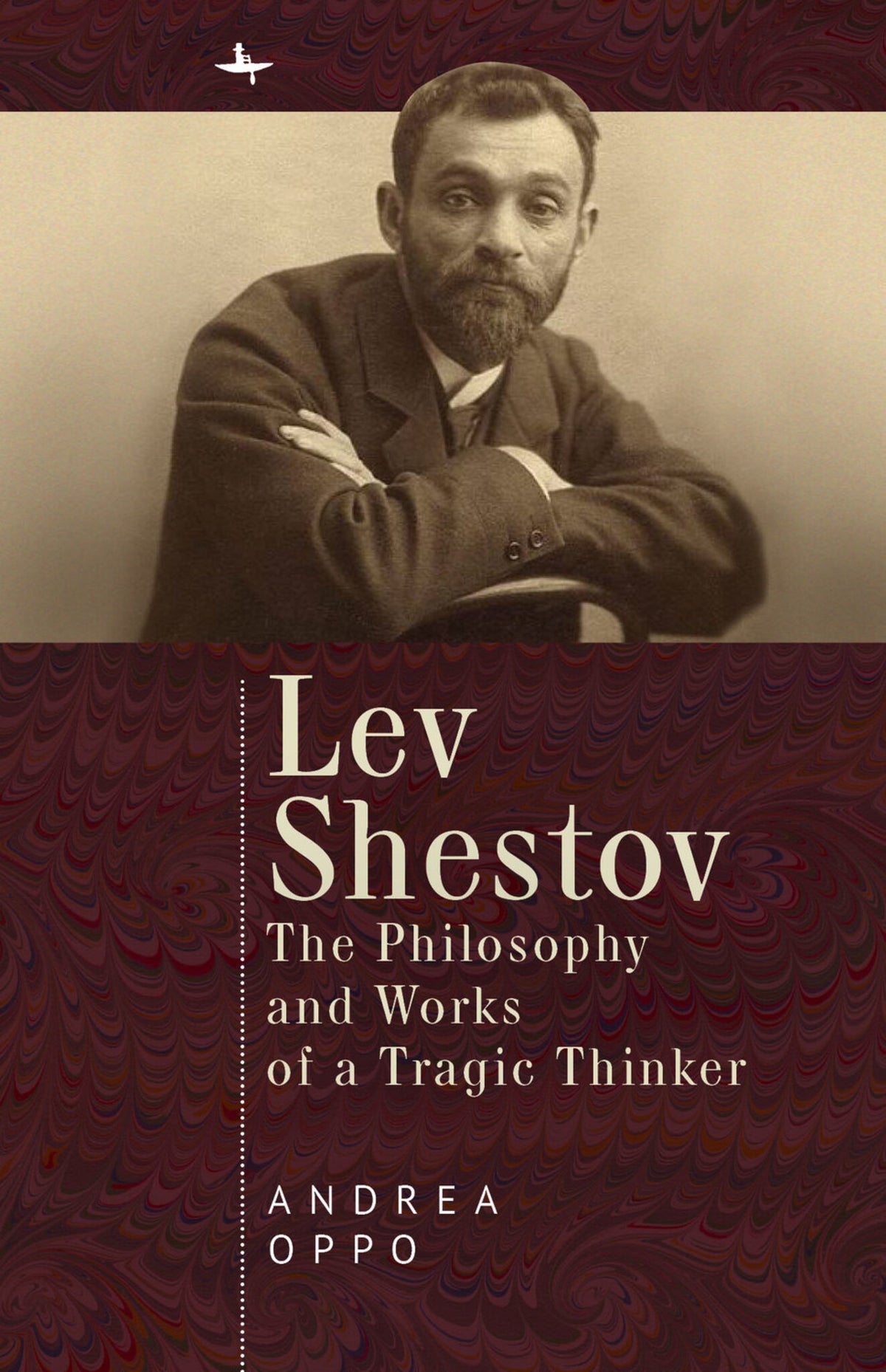
This study spans the entire life and work of the Russian philosopher Lev Shestov (1866-1938). It offers keys to understanding his thought, while also tracing the historical itinerary of his work. Shestov’s thought is not only interesting in itself, as a “philosophy fighting against philosophy,” but also because it reveals an entire world of cultural connections in its extraordinarily keen exploration of other “souls.” The reader will find in Shestov some of the sharpest analyses of authors such as Shakespeare, Nietzsche, Tolstoi, Dostoevskii, Luther, Plotinus, Pascal, Kierkegaard and many others. This study will better determine the controversial and fascinating philosopher’s place in the history of Russian and Western thought.


“Oppo’s study is impressively comprehensive…Students of Shestov will appreciate the meticulousness of Oppo’s research, which is reflected in an excellent bibliography that is in itself a reason to invest in this book.”
— Ruth Coates, Slavic Review
Andrea Oppo is Professor of Contemporary Philosophy at the Pontifical Faculty of Theology of Sardinia (Italy). He is the editor of Shapes of Apocalypse: Arts and Philosophy in Slavic Thought (Boston, 2013), and the author of Philosophical Aesthetics and Samuel Beckett (Oxford, 2008) and of numerous articles on the relationship between philosophy and the arts in the twentieth century.
Table of Contents
Acknowledgments
Editorial Notes
Introduction
Part One: Shestov in Russia
Chapter I: The Philosophy of Tragedy (1898–1905)
1.1 Introduction: The Birth of a Tragic Conscience
1.2 Shestov before Shestov: Shakespeare and Pushkin
1.3 Tolstoi’s Struggle between “Yasnaya Polyana” and “Astapovo”
1.4 Friedrich Nietzsche: Truth against Morality
1.5 Dostoevskii and Nietzsche as “Philosophers of the Underground”
1.6 Apotheosis of “Bespochvennost'”: Towards a Philosophy of Tragedy
Chapter II: Art as Negativity—The Literary Criticism Years (1901–1910)
2.1 Introduction: Shestov and the Philosophical Problem of Art
2.2 Aestheticism and Ideology: On Merezhkovskii and Turgenev
2.3 Creatio ex Nihilo: Chekhov’s Aesthetics
2.4 The “Oracular” Gratuity of Sologub’s Prose and Poetry
2.5 Ibsen and the Destiny of Art
2.6 Retracting Tragedy: Dostoevskii as an Essayist
2.7 The “Magnificent” Vyacheslav Ivanov
Part Two: Shestov in France
Chapter III: Wandering Through the Souls (1914–1929)
3.1 Introduction: The Events of History—Shestov’s Political Views
3.2 The Power of Keys: Faith and Church in Martin Luther
3.3 The Two Histories of Western Philosophy
3.4 The Fight against Self-Evidences: Dostoevskii, Pascal, and Spinoza
3.5 Philosophy’s Revolt against Itself: Plotinus’s Ecstasies
3.6 Audacities and Submissions: Shestov’s Intellectual World
3.7 Shestov and the Russian Philosophers
Chapter IV: Athens and Jerusalem—The Logic and the Thunder (1930–1938)
4.1 Introduction: Shestov as a “Jewish Philosopher”
4.2 The Bible and the Original Sin: In Dialogue with Martin Buber
4.3 The Last Encounter: Kierkegaard
4.4 Étienne Gilson and the Spirit of Medieval Philosophy
4.5 Philosophers in Chains: At the Sources of Metaphysics
Conclusion
1. Reception and Legacy of Shestov’s Philosophy
2. The Question of Irrationalism and of “Antiphilosophy”
3. The (Neo-)Platonic Paradigm: Shestov’s “Third Sailing”
4. Afterword: Reading between the Lines
Appendices
1. Shestov and Husserl
2. Shestov and Berdyaev
3. Shestov and Fondane
Bibliography and Works Cited
1. Shestov’s Works
A.1 Books
A.2 Articles and Correspondence
2. Selected Studies on Shestov
B.1 Biographies, Memoirs, Specific Journals, and Bibliographies
B.2 Books on Shestov
B.3 Articles and Book Chapters on Shestov
3. Further References
Index