


Some error occured while loading the Quick View. Please close the Quick View and try reloading the page.
Winner of the 2019 CEU Award for Outstanding Research
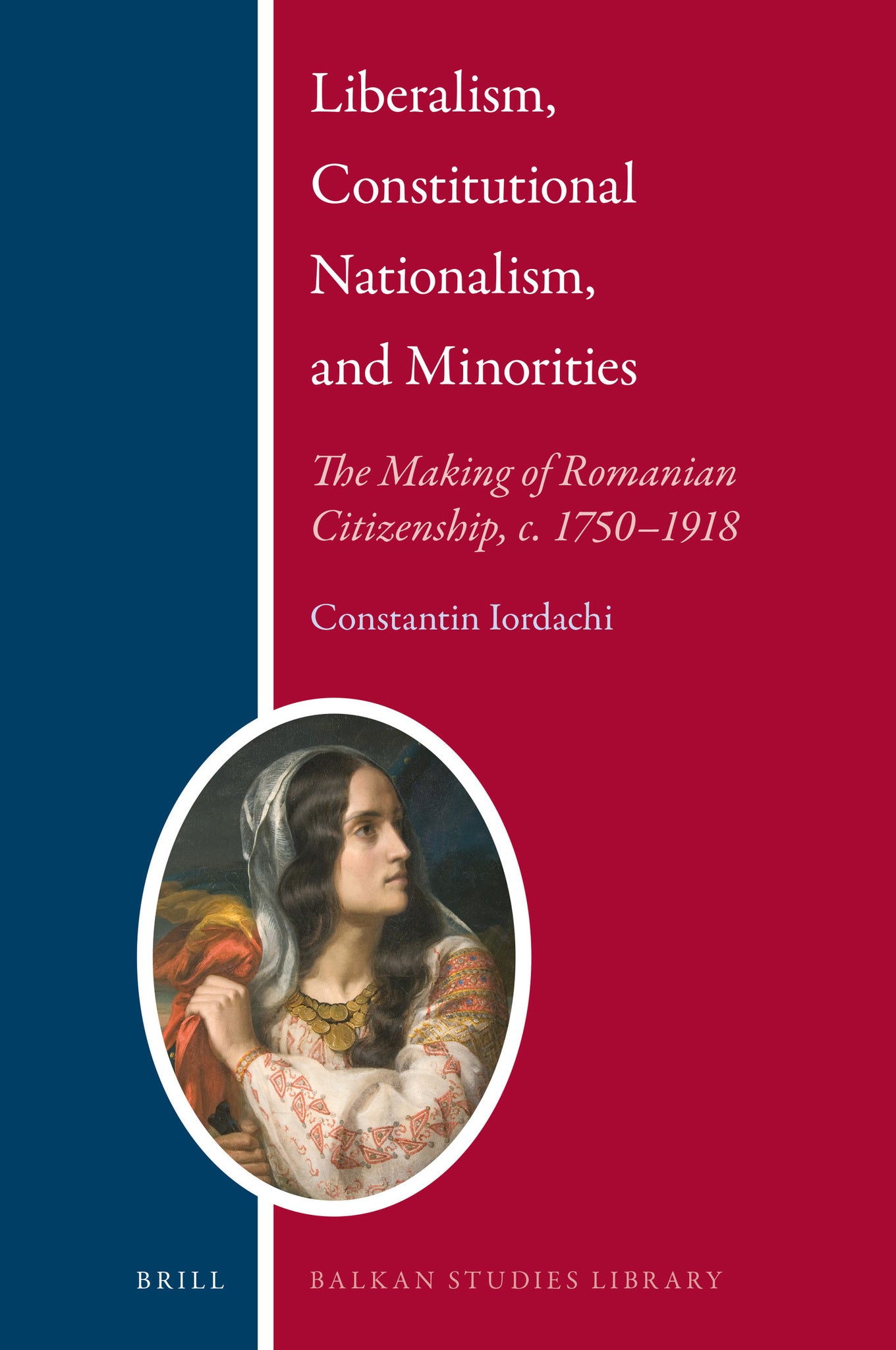
This book documents the making of Romanian citizenship from 1750 to 1918 as a series of acts of national self-determination by the Romanians, as well as the emancipation of subordinated gender, social, and ethno-religious groups. It focuses on the progression of a sum of transnational “questions” that were at the heart of North-Atlantic, European, and local politics during the long nineteenth century, concerning the status of peasants, women, Greeks, Jews, Roma, Armenians, Muslims, and Dobrudjans. The analysis emphasizes the fusion between nationalism and liberalism, and the emancipatory impact national-liberalism had on the transition from the Old Regime to the modern order of the nation-state. While emphasizing liberalism's many achievements, the study critically scrutinizes the liberal doctrine of legal-political “capacity” and the dark side of nationalism, marked by tendencies toward exclusion. It highlights the challenges nascent liberal democracies face in the process of consolidation and the enduring appeal of illiberalism in periods of upheaval, represented mainly by nativism. The book's innovative interdisciplinary approach to citizenship in the Ottoman and post-Ottoman Balkans and the richness of the sources employed, appeal to a diverse readership.
This book documents the making of Romanian citizenship from 1750 to 1918 as a series of acts of national self-determination by the Romanians, as well as the emancipation of subordinated gender, social, and ethno-religious groups. It focuses on the progression of a sum of transnational “questions” that were at the heart of North-Atlantic, European, and local politics during the long nineteenth century, concerning the status of peasants, women, Greeks, Jews, Roma, Armenians, Muslims, and Dobrudjans. The analysis emphasizes the fusion between nationalism and liberalism, and the emancipatory impact national-liberalism had on the transition from the Old Regime to the modern order of the nation-state. While emphasizing liberalism's many achievements, the study critically scrutinizes the liberal doctrine of legal-political “capacity” and the dark side of nationalism, marked by tendencies toward exclusion. It highlights the challenges nascent liberal democracies face in the process of consolidation and the enduring appeal of illiberalism in periods of upheaval, represented mainly by nativism. The book's innovative interdisciplinary approach to citizenship in the Ottoman and post-Ottoman Balkans and the richness of the sources employed, appeal to a diverse readership.

Price: $239.00
Pages: 682
Publisher: Brill
Imprint: Brill
Publication Date:
18 July 2019
ISBN: 9789004358881
Format: Hardcover

“a sophisticated exploration of the creation of Romania during the long nineteenth century, examined from the perspective of the development and evolution of citizenship […] the book is impeccably edited and handsomely produced.”
Paul Michelson, in Slavic Review (2020) "Iordachi’s book on the practice of citizenship is an important work that researchers concerned with legislation as a means of social regulation cannot afford to ignore. It also provides a solid starting point for further analysis of state-building processes in the modern period."
Mara Mărginean, George Barițiu Institute of History, Cluj-Napoca, Romania, in Journal of Romanian Studies issue 3.1 (2021), pp 121-3.
Paul Michelson, in Slavic Review (2020) "Iordachi’s book on the practice of citizenship is an important work that researchers concerned with legislation as a means of social regulation cannot afford to ignore. It also provides a solid starting point for further analysis of state-building processes in the modern period."
Mara Mărginean, George Barițiu Institute of History, Cluj-Napoca, Romania, in Journal of Romanian Studies issue 3.1 (2021), pp 121-3.
Constantin Iordachi teaches at the Central European University, Budapest. He has published widely on citizenship, nationalism and fascism. His most recent project is Martyrdom to Purification: The Fascist Faith of the Legion `Archangel Michael' in Romania, 1927-1941 (London: Routledge, forthcoming 2019).