


Some error occured while loading the Quick View. Please close the Quick View and try reloading the page.
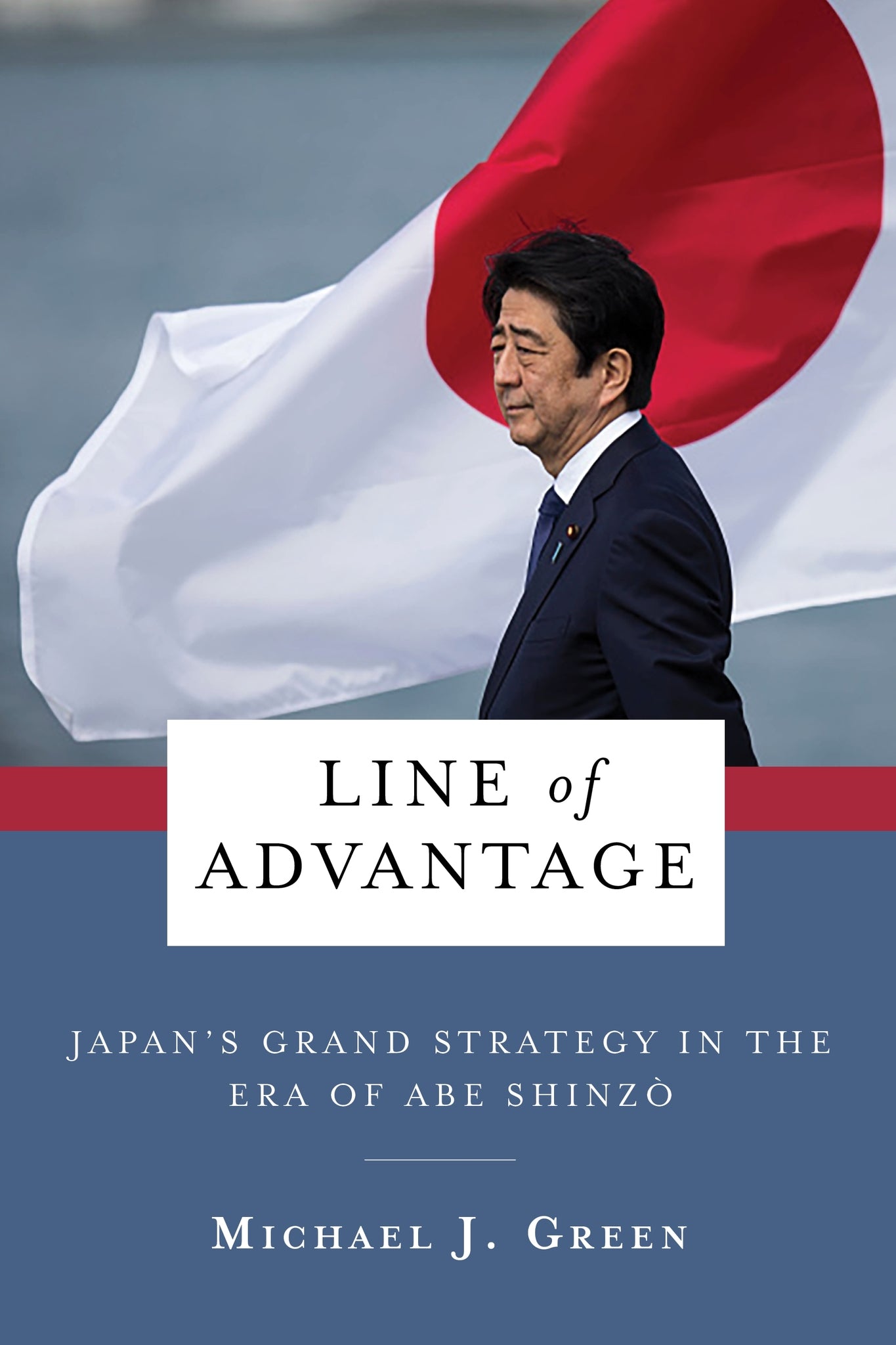
No other country has devised a grand strategy for managing China’s rising economic and military power as deliberately or successfully as Japan. Seeking to counter Chinese ambitions toward regional hegemony, Japan has taken an increasingly assertive role in East Asia and the world. During the tenure of Prime Minister Abe Shinzo, the country pursued closer security cooperation with the United States and other democracies, established a more centralized national defense system, and advanced rules and norms to preserve the open regional order in the Indo-Pacific that is crucial to its prosperity and survival—all while managing an important economic relationship with China.
In Line of Advantage, Michael J. Green provides a groundbreaking and comprehensive account of Japan’s strategic thinking under Abe. He explains the foundational logic and the worldview behind this approach, from key precedents in Japanese history to the specific economic, defense, and diplomatic priorities shaping contemporary policy toward China, the United States, the two Koreas, and the Indo-Pacific region. Drawing on two decades of access to Abe and other Japanese political, military, and business leaders, Green provides an insider’s perspective on subjects such as how Japan pursued competition with China without losing the benefits of economic cooperation. Assessing the strengths and weaknesses of Japan’s new active role, Line of Advantage sheds new light on a period with profound implications for the future of U.S. competition with China and international affairs in Asia more broadly.


— Sheila A. Smith, author of Japan Rearmed: The Politics of Military Power
For a time, the United States was AWOL from our traditional duty as leader of the West. Michael J. Green thoughtfully and professionally chronicles the ascent of Abe into that void. Academically rigorous yet guided by a master policy maker’s feel, this is a book that Asianists will use as a resource well into the future.
— Richard L. Armitage, former deputy secretary of state and president of Armitage International
In this extremely timely book, Michael J. Green sheds light on Japan’s emergence as a leader in its strategy on China, as well as in Abe’s politics and diplomacy. Green, a highly experienced scholar-practitioner, demonstrates formidable knowledge and profound insight on Japan’s history, geopolitics, and statecraft, peppering the text with many personal and intimate conversations with top U.S. and Japanese decision makers. He envisions the U.S.-Japan alliance as the twenty-first-century equivalent of the Anglo-American alliance, wearing the mantle of the Pacific mission and maritime strategy of John MacMurray and George Kennan.
— Yoichi Funabashi, author of Meltdown: Inside the Fukushima Nuclear Crisis
Line of Advantage is a splendid book for developing an understanding of Japan’s changing grand strategy and its development across the political spectrum
Green knows Japanese foreign policy like few others.
— Andrew J. Nathan
Named an editor's pick best book of 2022.
A splendid book....a valuable resource for interested scholars, policy-makers, government officials, and even a more general audience of Japanese politics enthusiasts. It is an essential read to understand how Japan intends to navigate the years and decades to come.
A remarkable early historical narrative of Abe’s legacy in Japanese foreign and security policy. It is well worth a read by policymakers and postgraduate students alike.
A book that anyone interested in Japanese security should read to understand how the country got to this point and how it will answer the current geopolitical challenges.
Acknowledgments
A Note on Transliteration of Japanese Words and Names
Introduction
1. The Historic Roots of Modern Japanese Grand Strategy
2. China
3. The United States
4. The Indo-Pacific
5. Korea
6. Internal Balancing
Conclusion: The End of the Yoshida Doctrine
Notes
Index