


Some error occured while loading the Quick View. Please close the Quick View and try reloading the page.
A free ebook version of this title is available through Luminos, University of California Press’s Open Access publishing program. Visit www.luminosoa.org to learn more.
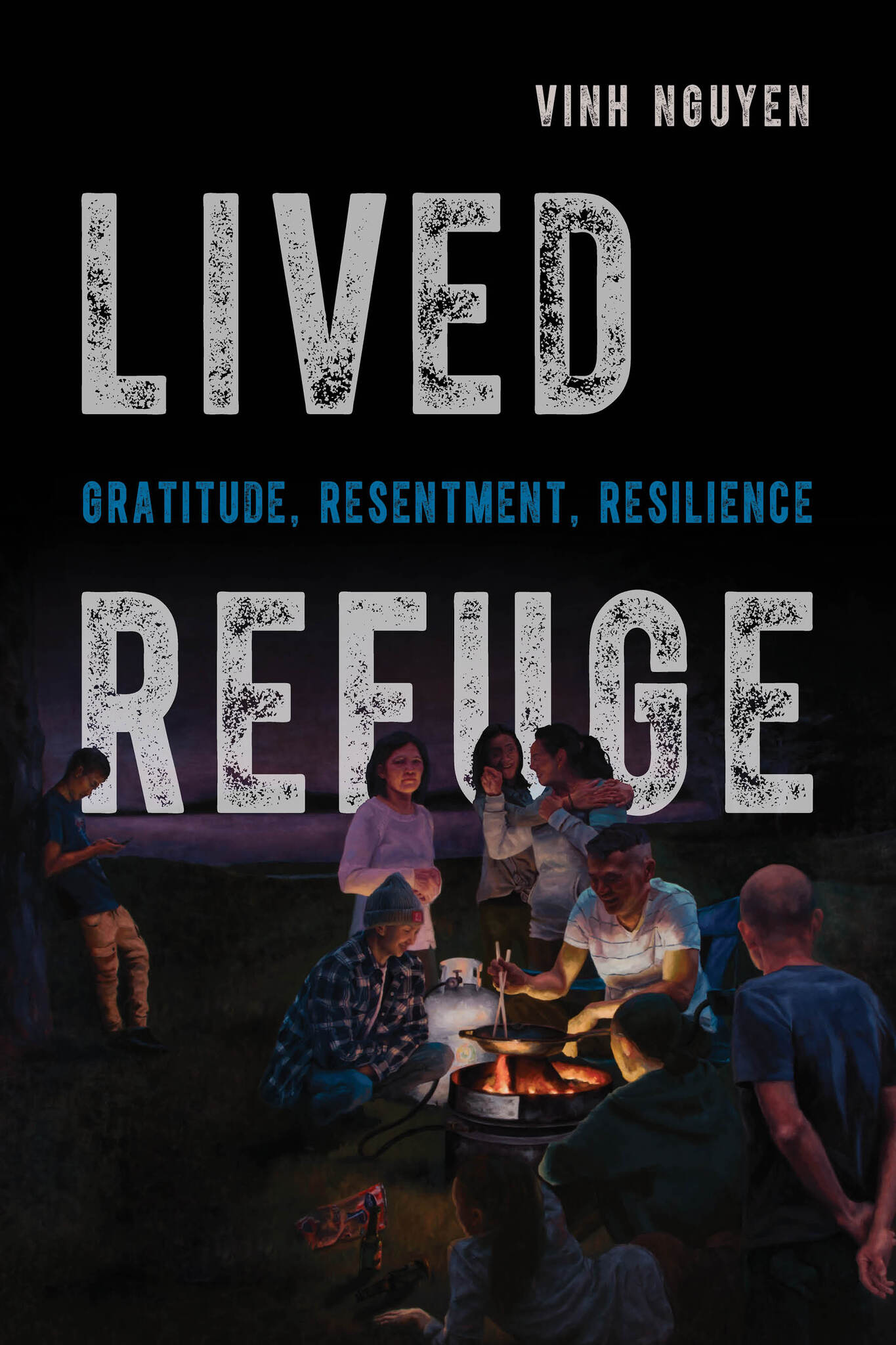
In a world increasingly shaped by displacement and migration, refuge is both a coveted right and an elusive promise for millions. While conventionally understood as legal protection, it also transcends judicial definitions. In Lived Refuge, Vinh Nguyen reconceptualizes refuge as an ongoing affective experience and lived relation rather than a fixed category with legitimacy derived from the state.
Focusing on Southeast Asian diasporas in the wake of the Vietnam War, Nguyen examines three affective experiences—gratitude, resentment, and resilience—to reveal the actively lived dimensions of refuge. Through multifaceted analyses of literary and cultural productions, Nguyen argues that the meaning of refuge emerges from how displaced people negotiate the kinds of safety and protection that are offered to (and withheld from) them. In so doing, he lays the framework for an original and compelling understanding of contemporary refugee subjectivity.
In a world increasingly shaped by displacement and migration, refuge is both a coveted right and an elusive promise for millions. While conventionally understood as legal protection, it also transcends judicial definitions. In Lived Refuge, Vinh Nguyen reconceptualizes refuge as an ongoing affective experience and lived relation rather than a fixed category with legitimacy derived from the state.
Focusing on Southeast Asian diasporas in the wake of the Vietnam War, Nguyen examines three affective experiences—gratitude, resentment, and resilience—to reveal the actively lived dimensions of refuge. Through multifaceted analyses of literary and cultural productions, Nguyen argues that the meaning of refuge emerges from how displaced people negotiate the kinds of safety and protection that are offered to (and withheld from) them. In so doing, he lays the framework for an original and compelling understanding of contemporary refugee subjectivity.

Price: $34.95
Pages: 184
Publisher: University of California Press
Imprint: University of California Press
Series: Critical Refugee Studies
Publication Date:
November 14, 2023
Trim Size: 9.00 X 6.00 in
ISBN: 9780520397262
Format: Paperback

"Nguyen time and again writes in unusually beautiful prose, with rich imagery and delicate intricacy more commonly found in works of art than in academic monographs. . . .This monograph requires careful and sometimes repeated readings to grasp. Nevertheless, for those who are interested in a deep and deeply insightful understanding of refugees’ lived experiences—especially of Southeast Asian refugees as conveyed in their writings and other creative expressions—this book will be well worth the investment of time and contemplation."
"Poetically written with a reflective incorporation of philosophy, history, and literature. Its strength lies in the ability to push the taken-for-granted boundaries of a concept."
"Lived Refuge makes significant contributions to various fields, including critical refugee studies, Southeast Asian studies, literary studies, and cultural studies … It is an essential read for everyone who wants to understand the complexities of existence in the aftermath of war, genocide, and loss."
“A welcome contribution to the field, Nguyen explores refugee experiences not to make claims about the state but to better apprehend the contours of lives lived in refuge.”
"Poetically written with a reflective incorporation of philosophy, history, and literature. Its strength lies in the ability to push the taken-for-granted boundaries of a concept."
"Lived Refuge makes significant contributions to various fields, including critical refugee studies, Southeast Asian studies, literary studies, and cultural studies … It is an essential read for everyone who wants to understand the complexities of existence in the aftermath of war, genocide, and loss."
“Nguyen’s beautiful prose … color[s] the pages with a certain level of elegance that teeters between academic writing and a tender love letter to the literary and creative works that he engages with … a remarkable, refreshing read that further shows the necessity for humanities-based scholarship that critically examines the lived experiences of refugees as well as their afterlives that continue to haunt us and our actions.”
Vinh Nguyen is Associate Professor of English at Renison University College, University of Waterloo. He is coeditor of The Routledge Handbook of Refugee Narratives and Refugee States: Critical Refugee Studies in Canada.