


Some error occured while loading the Quick View. Please close the Quick View and try reloading the page.
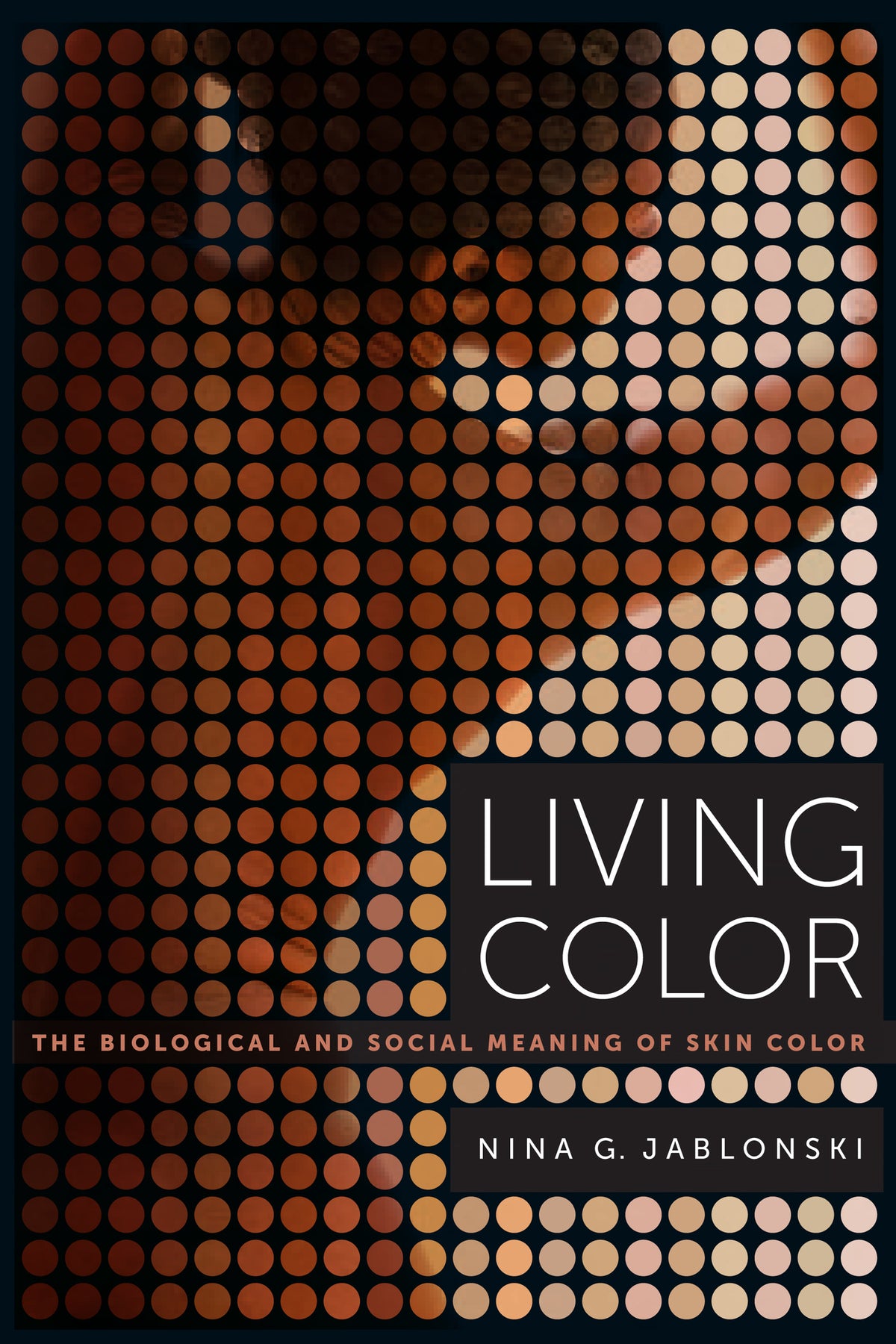
Living Color is the first book to investigate the social history of skin color from prehistory to the present, showing how our body’s most visible trait influences our social interactions in profound and complex ways. In a fascinating and wide-ranging discussion, Nina G. Jablonski begins with the biology and evolution of skin pigmentation, explaining how skin color changed as humans moved around the globe. She explores the relationship between melanin pigment and sunlight, and examines the consequences of rapid migrations, vacations, and other lifestyle choices that can create mismatches between our skin color and our environment.
Richly illustrated, this book explains why skin color has come to be a biological trait with great social meaning— a product of evolution perceived by culture. It considers how we form impressions of others, how we create and use stereotypes, how negative stereotypes about dark skin developed and have played out through history—including being a basis for the transatlantic slave trade. Offering examples of how attitudes about skin color differ in the U.S., Brazil, India, and South Africa, Jablonski suggests that a knowledge of the evolution and social importance of skin color can help eliminate color-based discrimination and racism.
Richly illustrated, this book explains why skin color has come to be a biological trait with great social meaning— a product of evolution perceived by culture. It considers how we form impressions of others, how we create and use stereotypes, how negative stereotypes about dark skin developed and have played out through history—including being a basis for the transatlantic slave trade. Offering examples of how attitudes about skin color differ in the U.S., Brazil, India, and South Africa, Jablonski suggests that a knowledge of the evolution and social importance of skin color can help eliminate color-based discrimination and racism.

Price: $29.95
Pages: 288
Publisher: University of California Press
Imprint: University of California Press
Publication Date:
October 17, 2014
Trim Size: 9.00 X 6.00 in
ISBN: 9780520283862
Format: Paperback

“Accessible to general readers. . . . The book fascinates! Highly recommended.”
"Clear [and] thorough, but not exhaustive or boring."
“Her fresh approach to the skin color/race conundrum is not only provocative, but persuasive and exceptionally accessible whether she’s writing about the science of skin color or Kant ('one of the most influential racists of all time')."
“Delivers an open, frank and important dialogue on the causes and effects of pigmentation on our biological and social lives.”
"Jablonski has crafted a lucid and precisely written book indeed. You can feel her weighing each word before setting it down."
"Living Color would make a fine addition to the collection of anyone interested in racial history, as it would an introductory text in any university class on the topic."
"What is most impressive . . . is how easily and simply it transitions from very biologically based data in the first section to more social and historical data in the second section."
Nina G. Jablonski is Distinguished Professor of Anthropology at Pennsylvania State University. She is the author of Skin: A Natural History, (UC Press), and was named one of the first Alphonse Fletcher, Sr. Fellows for her efforts to improve the public understanding of skin color.
List of Illustrations
Preface and Acknowledgments
Introduction
Part One. Biology
1. Skin’s Natural Palette
2. Original Skin
3. Out of the Tropics
4. Skin Color in the Modern World
5. Shades of Sex
6. Skin Color and Health
Part Two. Society
7. The Discriminating Primate
8. Encounters with Difference
9. Skin Color in the Age of Exploration
10. Skin Color and the Establishment of Races
11. Institutional Slavery and the Politics of Pigmentation
12. Skin Colors and Their Variable Meanings
13. Aspiring to Lightness
14. Desiring Darkness
15. Living in Color
Notes
References
Index
Preface and Acknowledgments
Introduction
Part One. Biology
1. Skin’s Natural Palette
2. Original Skin
3. Out of the Tropics
4. Skin Color in the Modern World
5. Shades of Sex
6. Skin Color and Health
Part Two. Society
7. The Discriminating Primate
8. Encounters with Difference
9. Skin Color in the Age of Exploration
10. Skin Color and the Establishment of Races
11. Institutional Slavery and the Politics of Pigmentation
12. Skin Colors and Their Variable Meanings
13. Aspiring to Lightness
14. Desiring Darkness
15. Living in Color
Notes
References
Index