


Some error occured while loading the Quick View. Please close the Quick View and try reloading the page.
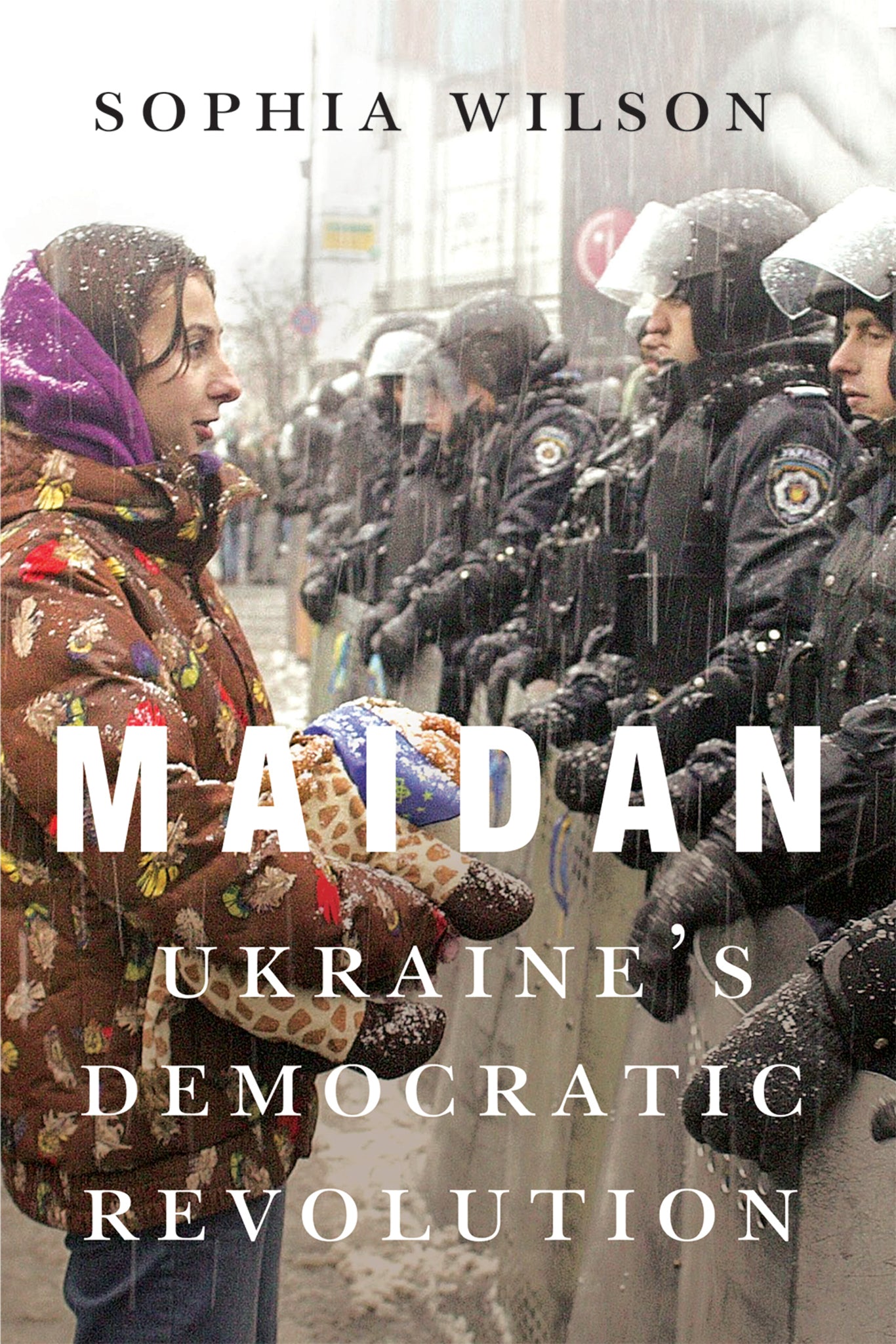
The 2013–14 Maidan Revolution, or Revolution of Dignity, was far more than a series of protests: the coalescence of complex social networks formed a powerful grassroots movement that restored democracy to a country slipping into authoritarianism. Maidan gives a carefully researched account of the underbelly of the resistance process, investigating how participants self-organized to create the resistance, why the peaceful movement eventually turned to violence, and how the revolutionary process changed those who came to change the country.
Democratic revolution is a state–society dialogue about rights, and the regime that results depends on the ideas negotiated during revolutionary socialization. Offering an unparalleled opportunity to see that negotiation in action, Maidan draws on more than one hundred personal interviews, oral histories, legal documents, and court hearings. The Ukrainian state used violence and violations of due process to suppress the resistance, thereby declaring new boundaries in rights relations. In turn, the people pushed back in multiple arenas – the protest square, courtrooms, hospitals, churches, and media – to successfully challenge the constitutionality of the state’s actions.
Western media accounts tend to oversimplify the Revolution of Dignity as backlash against President Viktor Yanukovych’s decision not to sign a European Union agreement. The reality had far deeper implications for the geopolitics of the region. Sophia Wilson’s account of the revolution, and the Kremlin propaganda about it, underscores why it is impossible to understand Russia’s invasion of Ukraine without first understanding what fuelled the Maidan: the affirmation of democracy and the rooting out of Russian puppet authoritarianism.


“Wilson expertly contextualizes Ukraine’s pivotal Revolution of Dignity in protest, power, and resistance studies. An important read for those seeking a better understanding of Russia’s ongoing aggression and Moscow’s false narratives about Ukraine and Ukrainians.” Gene Fishel, George Mason University
“The Maidan protests of 2013–14 were a pivotal event in recent Ukrainian history. Wilson’s insightful analysis depicts the dynamics that led to this crisis as well as to the myriad consequences that followed. Maidan is a must-read for anyone interested in a fine-grained understanding of the political climate and processes of social change that preceded Russia’s invasion of Ukraine.” Catherine Wanner, author of Everyday Religiosity and the Politics of Belonging in Ukraine