


Some error occured while loading the Quick View. Please close the Quick View and try reloading the page.
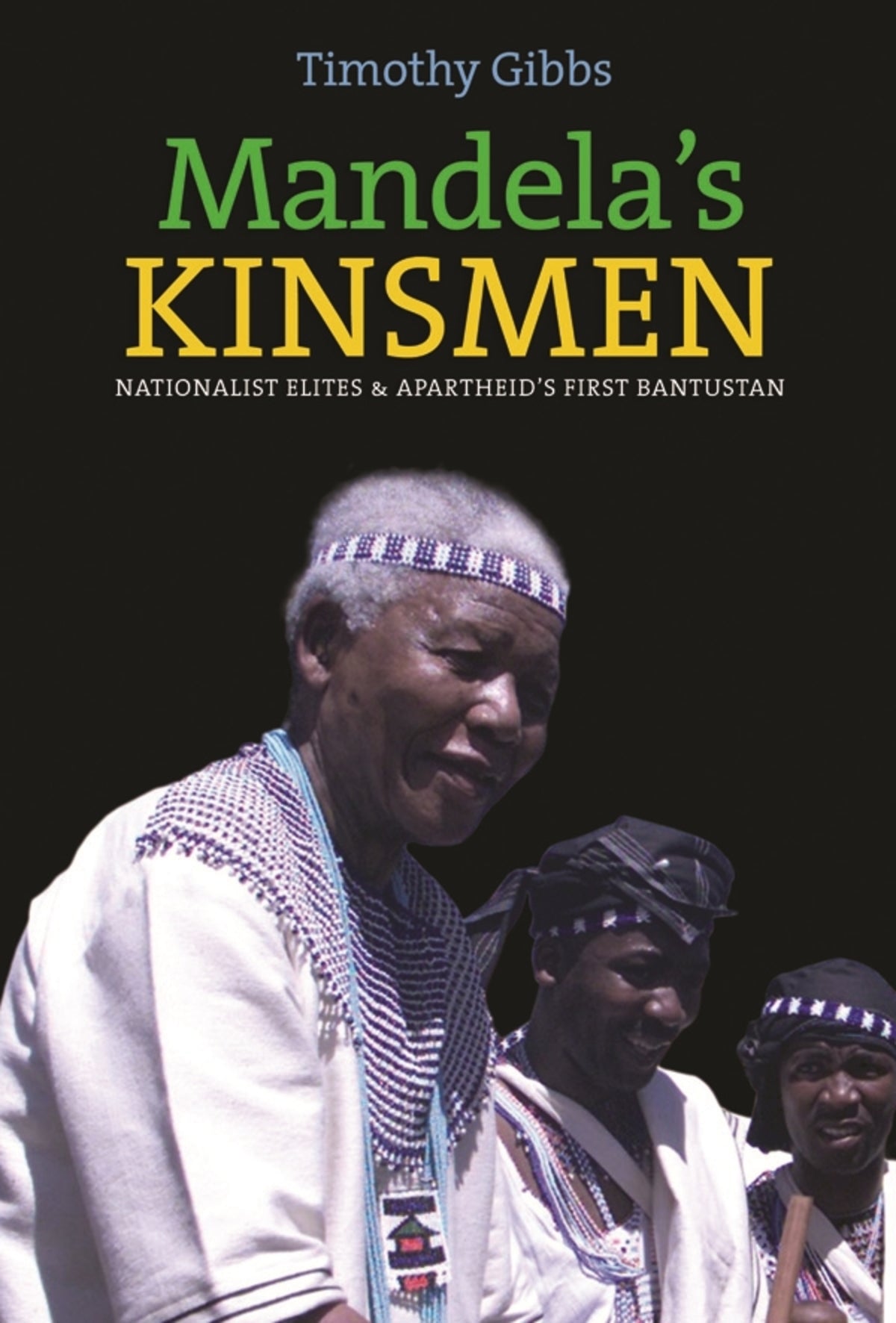
A novel study of the complex connections between Nelson Mandela and the nationalist leadership in the ANC with their kinsmen inside the Transkei Bantustan state, that reveals the significance of ethnic belonging, so important in African history.
At a time of increasing regional fractures within the African National Congress, Mandela's Kinsmen provides a timely study of South Africa's nationalist elite. Whilst mass protests against apartheid were forged in the crucible of township and trade union politics, Gibbs focuses on Mandela's fraught relationships to his kinsmen inside apartheid's foremost "tribal" Bantustan, the Transkei. He uncovers the enduring connections between the nationalist elites and the chieftaincy areas, and argues the enduring institutional legacies of the Bantustans continue to shape post-apartheid South Africa.
Timothy Gibbs is a Lecturer in African History, University College London.
Southern Africa (South Africa, Namibia, Lesotho, Swaziland & Botswana): Jacana
At a time of increasing regional fractures within the African National Congress, Mandela's Kinsmen provides a timely study of South Africa's nationalist elite. Whilst mass protests against apartheid were forged in the crucible of township and trade union politics, Gibbs focuses on Mandela's fraught relationships to his kinsmen inside apartheid's foremost "tribal" Bantustan, the Transkei. He uncovers the enduring connections between the nationalist elites and the chieftaincy areas, and argues the enduring institutional legacies of the Bantustans continue to shape post-apartheid South Africa.
Timothy Gibbs is a Lecturer in African History, University College London.
Southern Africa (South Africa, Namibia, Lesotho, Swaziland & Botswana): Jacana

Price: $24.99
Pages: 224
Publisher: Boydell & Brewer Inc.
Imprint: James Currey
Publication Date:
17 March 2017
Trim Size: 9.21 X 6.14 in
ISBN: 9781847011565
Format: Paperback
BISACs:
POLITICAL SCIENCE / Political Process / General, Political structure and processes, HISTORY / Africa / South / Republic of South Africa, SOCIAL SCIENCE / Sociology / Rural, African history

A study such as this one has several important implications.it illuminates the shades of grey that are so common in history but so easily overlooked.
An extraordinarily rich book . . . An essential text for research library collections and scholars working on South African political history and contemporary politics (for there is much evidence that these networks continue to run through the present-day ANC and its rivals), and would also be suited for advanced graduate students.
Gibbs . . . offers one of the few sustained discussions of nationalism and rural politics in South Africa, from the beginning of apartheid during the 1950s to the politics of chieftainship and tribalism today.
In this compelling study of Nelson Mandela's kinsmen, Timothy Gibbs brings to life the powerful role that the Transkei, a former South African homeland skirting the country's eastern coast, had played in the nation's liberation struggle. . . . In this web of intrigue that Gibbs spins together, he shows how the environment and the values inculcated from it played a large political role in the connections and relationships of people who would not have met ordinarily.
Gibbs's book provides a refreshing challenge to studies of insurgency that are rooted exclusively in economic factors or rational choice methodologies. . Gibbs makes important contributions to both the literature on insurgency and to the study of South African politics.
The Transkei was a Potemkin state; this book effectively chronicles how it really functioned and how it related to Mandela, the African National Congress, and South Africa as a whole. Summing up: Highly recommended.
'An important contribution to the field of recent South African history... breaks new scholarly ground in its exploration of the ambiguous relationship between the ANC and Bantustan elites.' -
— Colin Bundy, Honorary Fellow, Green Templeton College, University of Oxford
'Superbly done. It will gain a wide and deserved large readership, and a respected one, within South Africa and academia generally.' -
— Roger Southall, Professor Emeritus in Sociology, University of the Witwatersrand
An extraordinarily rich book . . . An essential text for research library collections and scholars working on South African political history and contemporary politics (for there is much evidence that these networks continue to run through the present-day ANC and its rivals), and would also be suited for advanced graduate students.
Gibbs . . . offers one of the few sustained discussions of nationalism and rural politics in South Africa, from the beginning of apartheid during the 1950s to the politics of chieftainship and tribalism today.
In this compelling study of Nelson Mandela's kinsmen, Timothy Gibbs brings to life the powerful role that the Transkei, a former South African homeland skirting the country's eastern coast, had played in the nation's liberation struggle. . . . In this web of intrigue that Gibbs spins together, he shows how the environment and the values inculcated from it played a large political role in the connections and relationships of people who would not have met ordinarily.
Gibbs's book provides a refreshing challenge to studies of insurgency that are rooted exclusively in economic factors or rational choice methodologies. . Gibbs makes important contributions to both the literature on insurgency and to the study of South African politics.
The Transkei was a Potemkin state; this book effectively chronicles how it really functioned and how it related to Mandela, the African National Congress, and South Africa as a whole. Summing up: Highly recommended.
'An important contribution to the field of recent South African history... breaks new scholarly ground in its exploration of the ambiguous relationship between the ANC and Bantustan elites.' -
— Colin Bundy, Honorary Fellow, Green Templeton College, University of Oxford
'Superbly done. It will gain a wide and deserved large readership, and a respected one, within South Africa and academia generally.' -
— Roger Southall, Professor Emeritus in Sociology, University of the Witwatersrand
Introduction: Mandela's Kinsmen
Education, Monarchy and Nationalism
The First Bantustan, 1954-1963
The Second Peasants' Revolt, Mpondoland 1960-1980
The Old Mission Schools, 1963-1980
The Comrade-King, Bantustan Politics, 1964-1980
Chris Hani's Guerrillas, 1974-1987
The Apartheid Endgame, 1987-1996
The New South Africa and Transkei's Collapse, 1990 onwards
Conclusion: African Nationalism and its Fragments
Education, Monarchy and Nationalism
The First Bantustan, 1954-1963
The Second Peasants' Revolt, Mpondoland 1960-1980
The Old Mission Schools, 1963-1980
The Comrade-King, Bantustan Politics, 1964-1980
Chris Hani's Guerrillas, 1974-1987
The Apartheid Endgame, 1987-1996
The New South Africa and Transkei's Collapse, 1990 onwards
Conclusion: African Nationalism and its Fragments