


Some error occured while loading the Quick View. Please close the Quick View and try reloading the page.
First comprehensive survey of a major genre of medieval English texts: its purpose, characteristics, and reception.
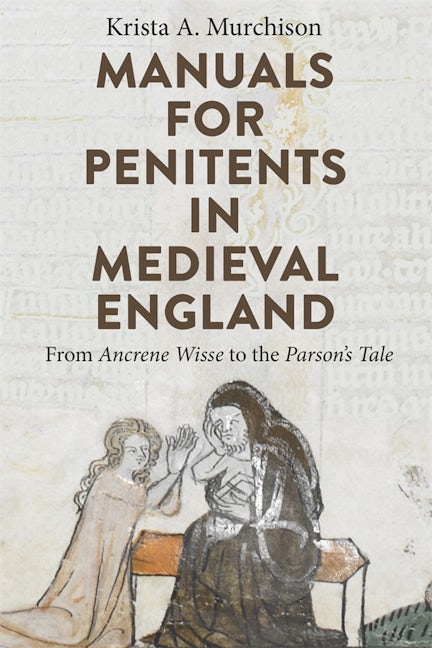
The "bestseller list" of medieval England would have included many manuals for penitents: works that could teach the public about the process of confession, and explain the abstract concept of sin through familiar situations. Among these 'bestselling' works were the Manuel des péchés (commonly known through its English translation Handlyng Synne), The Speculum Vitae, and Chaucer's Parson's Tale.
This book is the first full-length overview of this body of writing and its material and social contexts. It shows that while manuals for penitents developed under the Church's control, they also became a site of the Church's concern. Manuals such as the Compileison (which was addressed to a much broader audience than its English analogue, Ancrene Wisse) brought learning that had been controlled by the Church into the hands of layfolk and, in so doing, raised significant concerns over who should have access to knowledge. Clerics worried that these manuals might accidentally teach people new sins, remind them of old ones, or become sites of prurient interest. This finding, and others explored in this book, call for a new awareness of the complications and contradictions inherent in late medieval orthodoxy and reveal plainly that even writing that happened firmly within the Church's control could promote new and complex ways of thinking about religion and the self.
The "bestseller list" of medieval England would have included many manuals for penitents: works that could teach the public about the process of confession, and explain the abstract concept of sin through familiar situations. Among these 'bestselling' works were the Manuel des péchés (commonly known through its English translation Handlyng Synne), The Speculum Vitae, and Chaucer's Parson's Tale.
This book is the first full-length overview of this body of writing and its material and social contexts. It shows that while manuals for penitents developed under the Church's control, they also became a site of the Church's concern. Manuals such as the Compileison (which was addressed to a much broader audience than its English analogue, Ancrene Wisse) brought learning that had been controlled by the Church into the hands of layfolk and, in so doing, raised significant concerns over who should have access to knowledge. Clerics worried that these manuals might accidentally teach people new sins, remind them of old ones, or become sites of prurient interest. This finding, and others explored in this book, call for a new awareness of the complications and contradictions inherent in late medieval orthodoxy and reveal plainly that even writing that happened firmly within the Church's control could promote new and complex ways of thinking about religion and the self.

Price: $95.00
Pages: 190
Publisher: Boydell & Brewer Inc.
Imprint: D.S.Brewer
Publication Date:
17 December 2021
Trim Size: 9.21 X 6.14 in
ISBN: 9781843846086
Format: Hardcover
BISACs:
LITERARY CRITICISM / Medieval, Literary studies: ancient, classical and medieval, RELIGION / Christian Church / General

Krista Murchison's brilliant in-depth study of casts light on an area that has received little focused attention. She challenges the long-standing idea that modernity was largely a development of the early modern Renaissance mind. The focus on the self-reflection literature of this earlier period is an engaging
attempt to demystify the medieval by examining a wildly popular genre of medieval writing. This is a brilliant piece of scholarship and will be an excellent addition to reading lists focusing on church history and lay practices.
attempt to demystify the medieval by examining a wildly popular genre of medieval writing. This is a brilliant piece of scholarship and will be an excellent addition to reading lists focusing on church history and lay practices.
Introduction: Teaching Sin
Part I. Self-Examination Writing before 1250
1 Sin in the Cloister
2 'A Woman in Whom Great Trust was Placed': Differentiated Education and Ancrene Wisse
Part II. Manuals for Penitents, 1250-1300
3 Learning about Sin
4 'De privetez n'i troverét rien': The Compileison and 'Anxieties of Outreach'
Part III. Manuals for Penitents, 1300-13505 A Reforming Curriculum
6 Teaching Virtue
'To enden in som vertuous sentence': Concluding with Chaucer's Parson
Bibliography
Index
Part I. Self-Examination Writing before 1250
1 Sin in the Cloister
2 'A Woman in Whom Great Trust was Placed': Differentiated Education and Ancrene Wisse
Part II. Manuals for Penitents, 1250-1300
3 Learning about Sin
4 'De privetez n'i troverét rien': The Compileison and 'Anxieties of Outreach'
Part III. Manuals for Penitents, 1300-13505 A Reforming Curriculum
6 Teaching Virtue
'To enden in som vertuous sentence': Concluding with Chaucer's Parson
Bibliography
Index