


Some error occured while loading the Quick View. Please close the Quick View and try reloading the page.
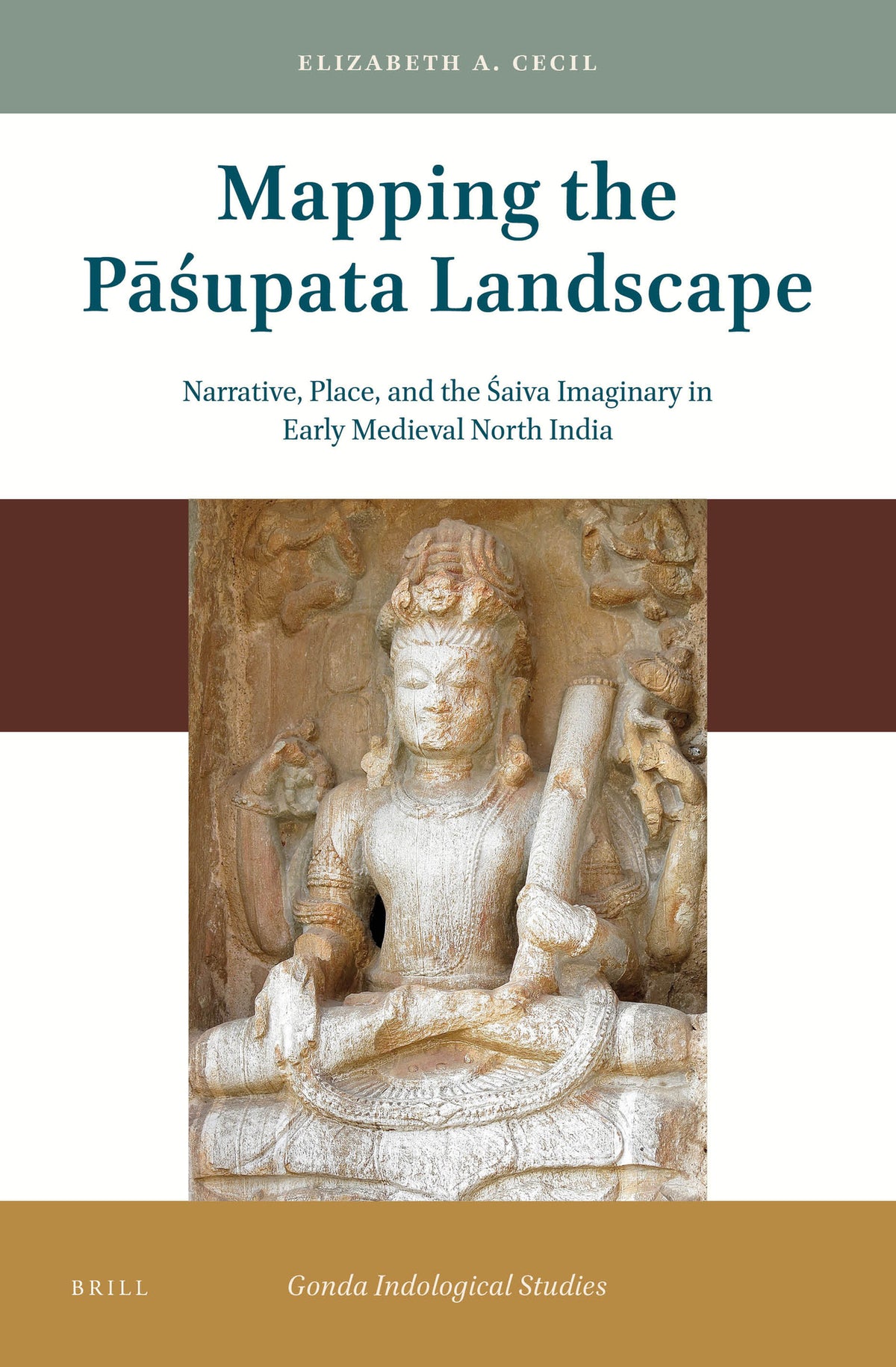
In Mapping the Pāśupata Landscape: Narrative, Place, and the Śaiva Imaginary in Early Medieval North India, Elizabeth A. Cecil explores the sacred geography of the earliest community of Śiva devotees called the Pāśupatas. This book brings the narrative cartography of the Skandapurāṇa into conversation with physical landscapes, inscriptions, monuments, and icons in order to examine the ways in which Pāśupatas were emplaced in regional landscapes and to emphasize the use of material culture as media through which notions of belonging and identity were expressed. By exploring the ties between the formation of early Pāśupata communities and the locales in which they were embedded, this study reflects critically upon the ways in which community building was coincident with place-making in Early Medieval India.

Price: $96.00
Pages: 272
Publisher: Brill
Imprint: Brill
Publication Date:
12 March 2020
ISBN: 9789004423947
Format: Hardcover

'Elizabeth Cecil’s investigation into the emergence of a Pāśupata landscape between the 6th and 10th centuries CE is an important contribution to early Śaiva studies for multiple reasons. Historically, the Pāśupatas are considered one of the earliest and most influential groups of Śiva worshipers, active across much of the North-Indian landscape. Cecil comprehensively writes their history with an at once broad and granular approach drawn from several disciplines – philological, art historical, theoretical, economic, sociological, and historical.' - Benjamin J. Fleming
New York University, South Asian Studies, 37,1 (2021).
'In this thoroughly documented book, Elizabeth Cecil marshals textual, architectural,epigraphic, and art-historical evidence to aid in the recovery of the fascinating history of the spread of Śaivism in northern India from the sixth to the tenth centuries.(...) we are offered here a fascinating window into the history of the development of this vital tradition in its myriad forms, in a study that opens the way for further discovery and debate, and, with and through this volume, new precision in the recovery of the social history of Śaivism—and Pāśupata Śaivism—in South Asia.' - John Nemec, University of Virginia, Indo-Iranian Journal 65 (2022).
'In this thoroughly documented book, Elizabeth Cecil marshals textual, architectural,epigraphic, and art-historical evidence to aid in the recovery of the fascinating history of the spread of Śaivism in northern India from the sixth to the tenth centuries.(...) we are offered here a fascinating window into the history of the development of this vital tradition in its myriad forms, in a study that opens the way for further discovery and debate, and, with and through this volume, new precision in the recovery of the social history of Śaivism—and Pāśupata Śaivism—in South Asia.' - John Nemec, University of Virginia, Indo-Iranian Journal 65 (2022).
Elizabeth A. Cecil, Ph.D. (2016), is Assistant Professor of Religion at Florida State University. Her scholarship explores the history of Hindu religions in South and Southeast Asia through the study of text, image, monument, and landscape.