


Some error occured while loading the Quick View. Please close the Quick View and try reloading the page.
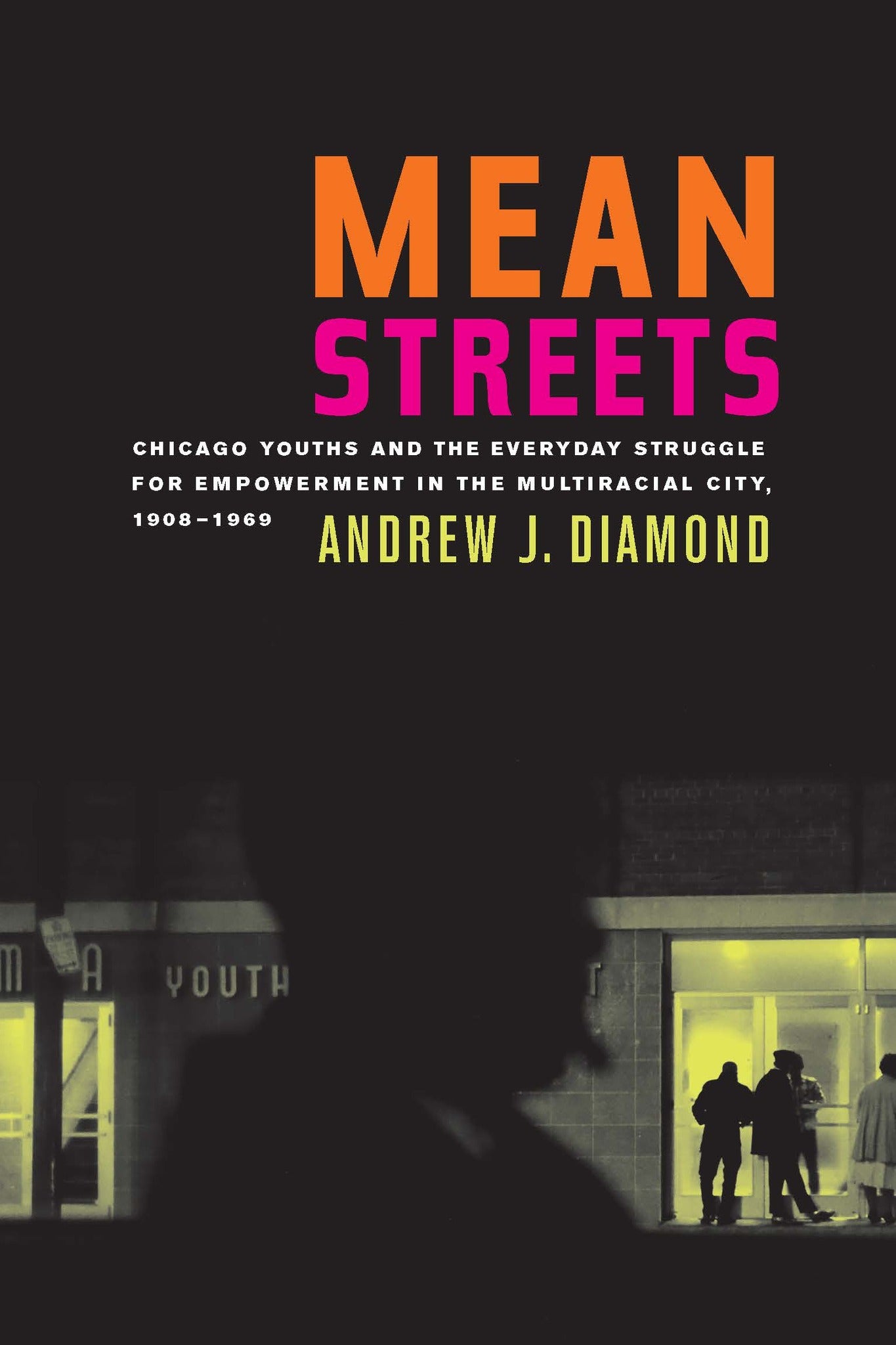
Mean Streets focuses on the streets, parks, schools, and commercial venues of Chicago from the era of the 1919 race riot to the civil rights battles of the 1960s to cast a new light on street gangs and to place youths at the center of the twentieth-century American experience. Andrew J. Diamond breaks new ground by showing that teens and young adults stood at the vanguard of grassroots mobilizations in working-class Chicago, playing key roles in the formation of racial identities as they defended neighborhood boundaries. Drawing from a wide range of sources to capture the experiences of young Mexicans, Puerto Ricans, African Americans, Italians, Poles, and others in the multiracial city, Diamond argues that Chicago youths gained a sense of themselves in opposition to others.

Price: $29.95
Pages: 416
Publisher: University of California Press
Imprint: University of California Press
Series: American Crossroads
Publication Date:
10 June 2009
Trim Size: 9.00 X 6.00 in
ISBN: 9780520257474
Format: Paperback

“Diamond contends that young Euro-American men forged their masculine and racial identities . . . around their encounters with the colour line.”
Andrew J. Diamond is Associate Professor of American History and Civilization at the Université Charles de Gaulle - Lille 3 in France.
List of Illustrations
List of Abbreviations
Acknowledgments
Maps
Introduction: Bringing Youths into the Frame
1. The Generation of 1919
2. Between School and Work in the Interwar Years
3. Hoodlums and Zoot-Suiters: Fear, Youth, and Militancy during Wartime
4. Angry Young Men: Race, Class, and Masculinity in the Postwar Years
5. Teenage Terrorism, Fighting Gangs, and Collective Action in the Era of Civil Rights
6. Youth and Power
Epilogue: Somewhere over the Rainbow
Notes
Index
List of Abbreviations
Acknowledgments
Maps
Introduction: Bringing Youths into the Frame
1. The Generation of 1919
2. Between School and Work in the Interwar Years
3. Hoodlums and Zoot-Suiters: Fear, Youth, and Militancy during Wartime
4. Angry Young Men: Race, Class, and Masculinity in the Postwar Years
5. Teenage Terrorism, Fighting Gangs, and Collective Action in the Era of Civil Rights
6. Youth and Power
Epilogue: Somewhere over the Rainbow
Notes
Index