


Some error occured while loading the Quick View. Please close the Quick View and try reloading the page.
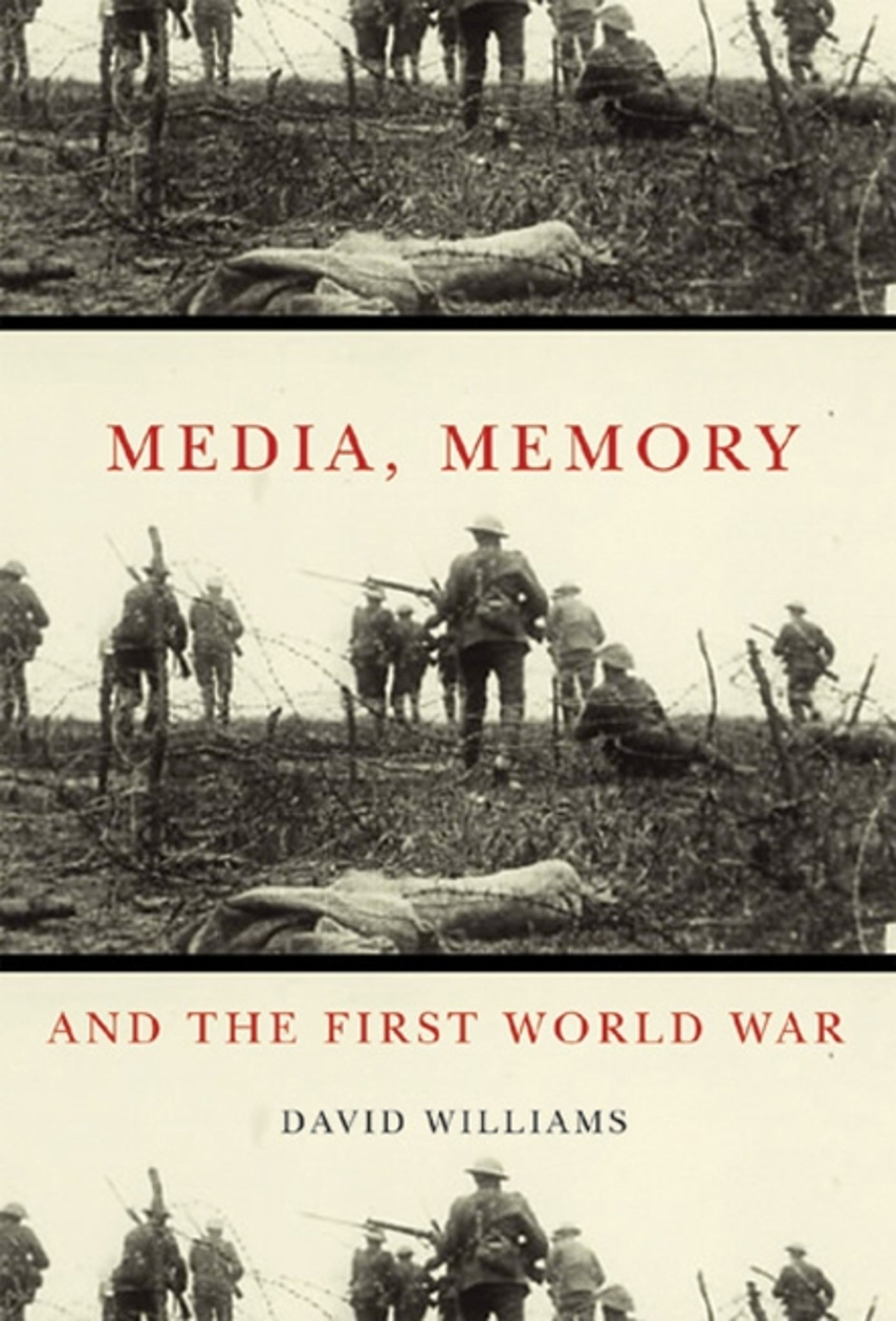
Why does the Great War seem part of modern memory when its rituals of mourning and remembrance were traditional, romantic, even classical? In this highly original history of memory, David Williams shows how classic Great War literature, including work by Remarque, Owen, Sassoon, and Harrison, was symptomatic of a cultural crisis brought on by the advent of cinema. He argues that images from Geoffrey Malins' hugely popular war film The Battle of the Somme (1916) collapsed social, temporal, and spatial boundaries, giving film a new cultural legitimacy, while the appearance of writings based on cinematic forms of remembering marked a crucial transition from a verbal to a visual culture. By contrast, today's digital media are laying the ground for a return to Homeric memory, whether in History Television, the digital Memory Project, or the interactive war museum.
Of interest to historians, classicists, media and digital theorists, literary scholars, museologists, and archivists, Media, Memory, and the First World War is a comparative study that shows how the dominant mode of communication in a popular culture - from oral traditions to digital media - shapes the structure of memory within that culture.


"A brilliant book that deserves a large readership because it considers deep matters in an impressively intelligent way … This is a stunning work of imagination at so many levels - the reader is challenged by its speculative links and suggestions." Winnipeg Free Press
"What franker acknowledgment of a monograph's interest than a reader's wish that the discussion there had gone on longer? Highly recommended." University of Toronto Quarterly
"This book makes important additions to the trajectory of research that maps memory in the context of the First World War. Williams extends the boundaries of his subject to accommodate the vast interests of researchers, including those who specialize in military history, media theory, classicism and literature." Canadian Military History
"An important and original thesis." Modern Fiction Studies
"The author's inspiring overall argument and the thorough theoretical underpinning thereof, his in-depth analysis of cultural and media artefacts, and his creative treatment of a remarkably broad range of sources from different media and times make the reading of this book an enlightening experience for scholars in a wide variety of disciplines." Leen Engelen, Media & Design Academy (KHLim), Catholic University Leuven
"A fascinating insight into the adaptation of memory in the modern world, and the role of public memory in Canada in particular - this book is a worthy contribution to memory studies and deserves a wide readership." Keith Dickson, Joint Forces Staff College
"Media, Memory, and the First World War is fascinating in its inter-disciplinarity - the author has a good grasp on a wide range of sources and raises excellent analytical points throughout the book." Jonathan Vance, University of Western Ontario
"A cutting-edge, intellectually ambitious, and thought-provoking analysis of the familiar Great War canon that raises fascinating new possibilities for interpreting these works." Mark Sheftall, Duke University
"Williams has opened a dialogue and thrown down a challenge that will likely add further energy and activity to the already active and energetic investigation of public and private memory as it relates to the Great War." Tami Davis Biddle, US Army War College