


Some error occured while loading the Quick View. Please close the Quick View and try reloading the page.
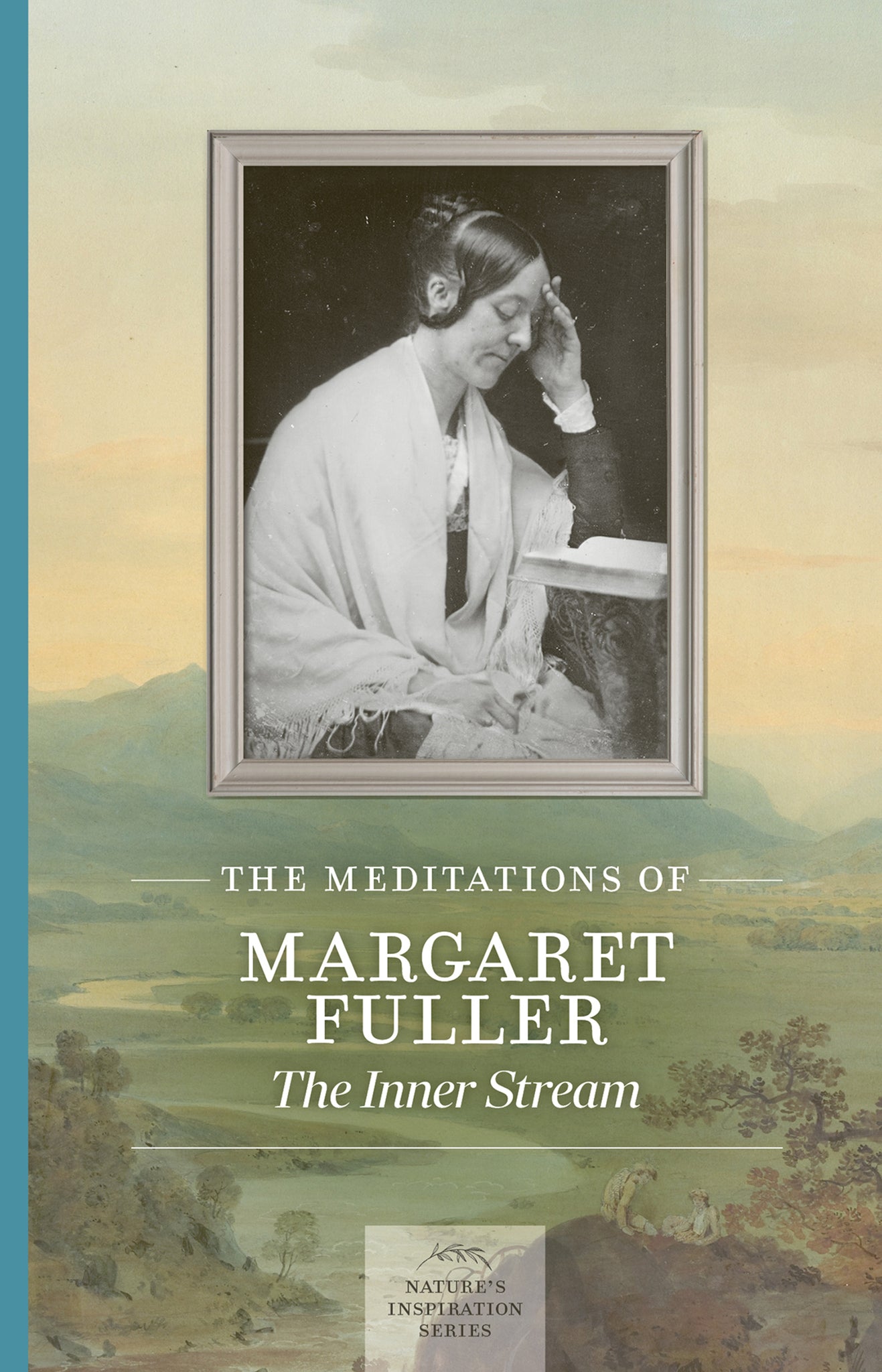
Pause, reflect, and encounter the natural world through the meditative writings of Margaret Fuller.
For Margaret Fuller—one of the most original American thinkers of the 19th century—nature was both refuge and revelation, a place where the outer world and inner life met. “Nature is a perpetual motion,” she wrote, “and her path is beauty.” A leading voice of the Transcendentalist movement, Fuller found in prairies, rivers, mountains, and gardens a language for the soul and a way of seeing that invited stillness, awareness, and wonder.
The Meditations of Margaret Fuller gathers 59 carefully selected passages from her essays, travel writings, and reflections, drawn from works such as Summer on the Lakes and her contributions to The Dial. Moving from wide-open landscapes to quiet moments of inward reflection, these meditations remind us that “every path is attractive” and that meaning often reveals itself when we pause to truly observe. This timeless collection provides moments of clarity, calm, and contemplation. It speaks to readers seeking peace, perspective, and renewal in the natural world.
Book Features:
- Lyrical reflections on landscapes that awaken the mind and spirit
- Meditative passages drawn from Fuller’s most celebrated writings
- Observations that link the rhythms of nature with spiritual and emotional insight
- Contemplative companion for quiet reading and mindful moments
- Royalties from this edition are donated to support causes aligned with Margaret Fuller’s enduring values


Margaret Fuller (1810–1850) was a writer, editor, journalist, translator—and one of the most original American thinkers of the 19th century. Born in Cambridge, Massachusetts, Fuller received an unusually rigorous education from her father, a lawyer and congressman, who immersed her in classical literature, philosophy, and European thought. Although also trained for domestic life, Fuller firmly considered herself, first and foremost, an intellectual and a writer.
A leading voice of the Transcendentalist movement, alongside Ralph Waldo Emerson and Henry David Thoreau, Fuller co-founded and edited the influential journal The Dial. She later wrote for the New York Tribune, producing essays on literature, nature, spirituality, and social reform. Her travels across America and Europe shaped her reflective and lyrical prose. Although her life was cut tragically short, her work endures for its emotional depth and its vision of the natural world as a source of moral and spiritual awakening.
Editor’s Note
The Magnolia of Lake Pontchartrain
Niagara Falls
The Whirlpool at Niagara
On Lake Erie
Seeing the Prairie for the First Time
New Form of Life
Never in a Better Place for Vespers
Of Illinois
Water, Mother of Beauty
The Flood of Emotion
The Living Heart of the World
Milwaukee
Mackinac
Arched Rock from the Water
Sault St. Marie
A More Equal, More Harmonious Life
Along a New River
The Fourth of July
Born Again
The True Lovely Time
The Garden of God
Even by Failure
In the Company of Mountains
On Poor Health
On Truth
The Dart Within the Heart
Nature Held Nothing Back
Past Summer Hours
Paradise Farm
In the Open Air
The Passage of Life
The Majestic Beauty of the Mountains
In the Hudson Valley
Light and Shade
A Night on Ben Lomond (Scotland)
A Voice
Love
Dried Ferns
The Virtue of Candlelight
Italian Spring
Where Beauty Loves to Dwell
Every Path Attractive
No Better Heaven
Harbor
A Different Sort of Song
Happy of Heart
Earthly Music
Coming Home to a Child
The Soul of Things
Going to the Churchyard
Always as a Picture
No Better Afternoon
Grief Is but for a Season
The Relationships Which Remain
On Prometheus
Eventual Good
Death in the House
Every Noble and Natural Feeling
A Death at Sea
Works Cited, All by Margaret Fuller