


Some error occured while loading the Quick View. Please close the Quick View and try reloading the page.
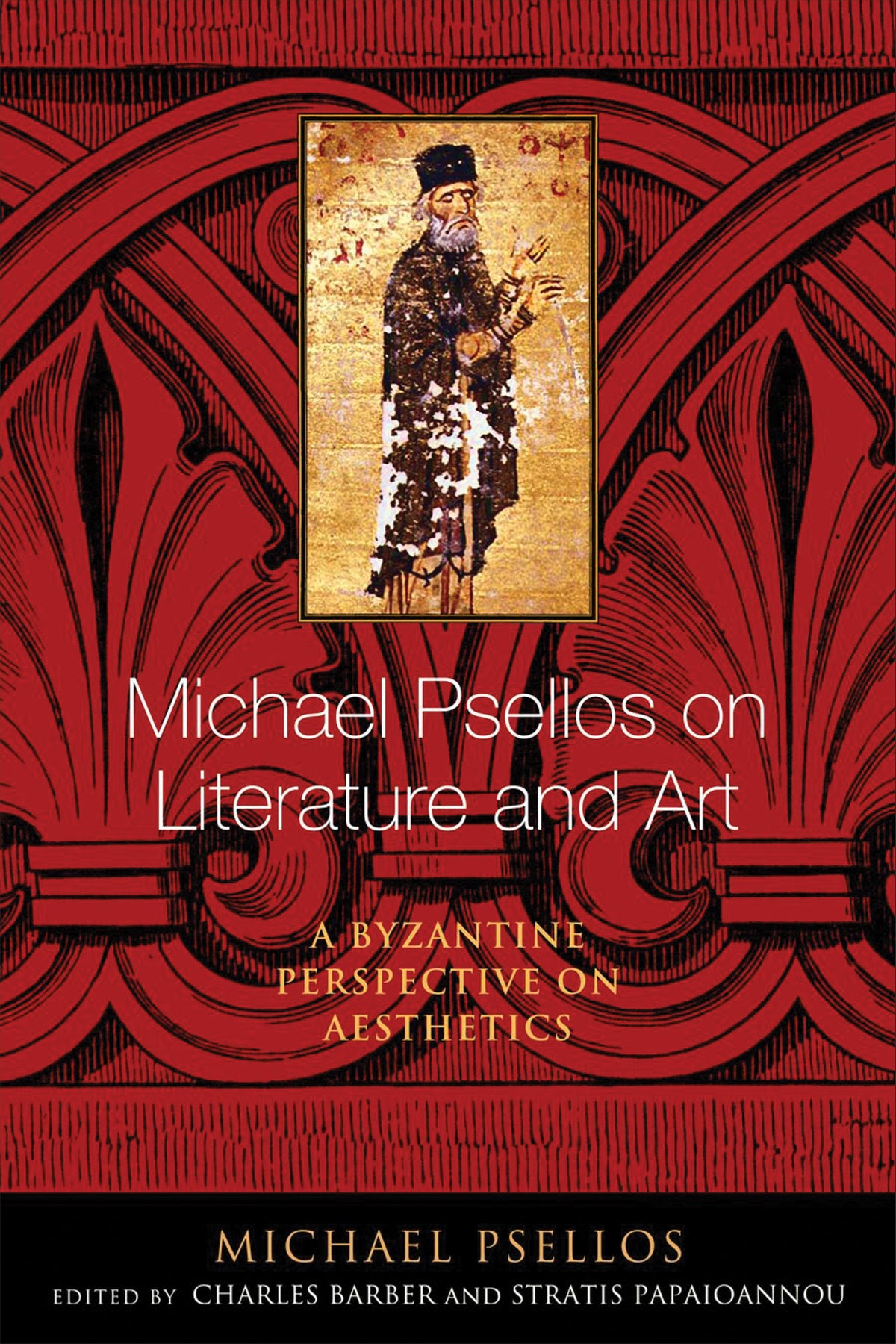
The ambition of Michael Psellos on Literature and Art is to illustrate an important chapter in the history of Greek literary and art criticism and introduce precisely this aspect of Psellian writing to a wider public.


“Building upon two earlier volumes on Psellos that focused primarily on his orations and letters, this third volume from the University of Notre Dame Press offers English translations and commentaries from a collaboration of scholars on a wide array of his writings on literary theory, visual ethics, and art criticism.” —Parergon
"This important volume offers a nuanced and compelling justification for Psellos' traditional designation as 'the best Byzantine author'—the translated texts help contextualize and illuminate not only Byzantine ideas of literature and art, but also those central to Psellos' own philosophy. It is thus essential for Byzantinists as well as scholars working on any part of the Greco-Roman cultural tradition." —Ingela Nilsson, Uppsala University
"Modern histories of aesthetic theory in the West have resolutely ignored the contributions of Byzantine thinkers. Thanks to this splendid collection of translations, this will now change. The editors, both eminent scholars of Byzantine culture, together with a distinguished team of experts, have produced elegant versions of a wide variety of works by the brilliant polymath, Michael Psellos, accompanied with rich notes and introductions. The book is indispensable to anyone interested in Byzantine perspectives on art and literature." —David Konstan, New York University
"[This book] aims to establish the literary and historical value of the letters of Michael Psellos, and some of his other writings about literature and art. As the writer of a colourful history of the virtues and failings of the Byzantine emperors under whom he served as a civil servant and court philosopher, Psellos is a promising choice as a writer for reading with pleasure." —Times Literary Supplement
"Michael Psellos has been a neglected gem—until now. This authoritative selection of Psellos’ rhetorical and aesthetic writings, with its expert introductory essays and detailed annotations, will make him widely available and accessible at last. Thanks to the splendid efforts of this team of leading Byzantinists, Psellos will find his rightful place on the syllabus and in the classroom, and he will soon become a household name among students of Classics and of later periods.Michael Psellos on Literature and Art augurs a new era in the study of antiquity’s cultural heritage at the boundaries of art, religion, and philosophy." —James I. Porter, Chancellor’s Professor of Rhetoric and Classics, University of California, Berkeley
“This book is a major contribution not only to the field of Psellian studies in particular, but also the major field of Byzantine aesthetics in general. To my knowledge, it is the first effort to bring together a host of particular texts (all by the pen of Michael Psellos) that touch upon literary theory, visual aesthetics, and aesthetics in a wider sense.”—Alexander Alexakis, University of Ioannina
Michael Psellos was a Byzantine Greek monk, writer, philosopher, politician, and historian.
Charles Barber is professor of art and archaeology at Princeton University.
Stratis Papaioannou is associate professor of classics and director of the Program of Medieval Studies at Brown University.
General Introduction — Stratis Papaioannou
Part One. On Literature: Rhetoric and ΛΌΓΌΙ
Introduction to Part One: Stratis Papaioannou
1. Synopsis of the Rhetorical Forms, based on Hermogenes’ On Forms — Stratis Papaioannou
2. Synopsis of Rhetoric in Verses, based on the Hermogenian Corpus — Jeffrey Walker
3. On Literary Composition, based on Dionysios of Halikarnassos’ On Composition —Anthony Littlewood
4. On Rhetoric, based on Longinos’ Art of Rhetoric — Stratis Papaioannou
5. On Tragedy — Stratis Papaioannou
6. On the Different Styles of Certain Writings: A Rhetor’s Canon — Stratis Papaioannou
7. The Styles of Gregory the Theologian, Basil the Great, Chrysostom, and Gregory of Nyssa —Stratis Papaioannou
8. An Encomium of Gregory of Nazianzos’ Style — Stratis Papaioannou
9. Two Lectures on Gregory of Nazianzos: Theol. I 19 (on Or. 40.24) and 98 (on Or. 43.1) — Stratis Papaioannou
10. On Saint John Chrysostom — Stratis Papaioannou
11. To One Asking “Who Wrote Verse Better, Euripides Or Pisides?” — Anthony Littlewood
12. A Comparison of the Novels of Heliodoros and Achilleus Tatios — Anthony Littlewood
13. Encomium for Kyr Symeon Metaphrastes — Elizabeth A. Fisher
14. Encomium for the Monk Ioannes Kroustoulas Who Read Aloud at the Holy Soros — Stratis Papaioannou
Part Two: Arts and Aesthetics
Introduction to Part Two — Charles Barber
15. On Perception and Perceptibles — Charles Barber and David Jenkins
16. On Beauty and On Intelligible Beauty — Charles Barber and David Jenkins
17. To the Emperor Doukas, Regarding the Inscription — Anthony Kaldellis
18. On Ancient Works of Art (Or. min. 33 and 34) — Christine Angelidi
19. Ekphrasis of the Crucifixion — Charles Barber and Elizabeth A. Fisher
20. Discourse on the Miracle that Occurred in the Blachernai Church — Elizabeth A. Fisher
21. A Miraculous Icon of the Mother of God — Charles Barber, David Jenkins, and Stratis Papaioannou
22. The Empress Zoe and Christ Antiphonêtês — Charles Barber
23. Select Letters on Art and Aesthetics — Charles Barber