


Some error occured while loading the Quick View. Please close the Quick View and try reloading the page.
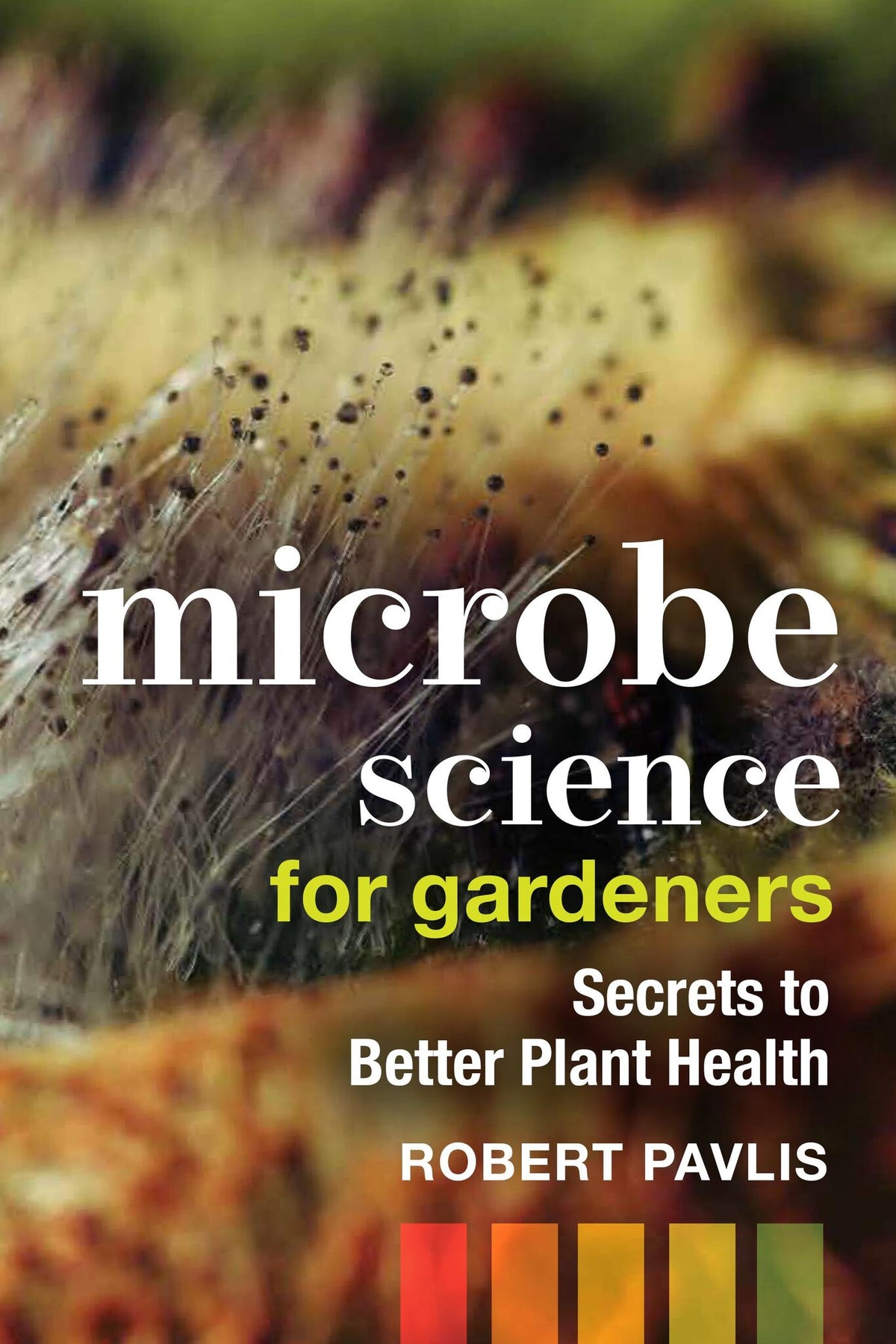
Healthy gardens begin with thriving microbial life.
Bacteria and fungi quietly shape plant health, nutrient availability, and soil resilience. Microbe Science for Gardeners explains how soil organisms function and how your gardening practices influence them.
When you understand the hidden world below ground, you can strengthen everything above it.
What You'll Gain
- How bacteria and fungi drive nutrient cycling
- How mycorrhizal fungi support root systems
- How soil disturbance affects microbial networks
- How organic inputs build microbial diversity
- How to evaluate microbial products critically
Rather than marketing claims, you'll get evidence-based guidance.
Practical Applications
- Support beneficial microbes naturally
- Improve nutrient efficiency
- Reduce practices that harm soil life
- Build long-term soil resilience
- Strengthen plant immunity through soil health
If you're looking for practical ways to cultivate living soil systems, this book offers clear scientific insight you can apply immediately.
Who This Book Is For
- Gardeners interested in soil biology
- Regenerative and organic growers
- Market farmers building resilience
- Readers evaluating microbial products
- Anyone curious about the science beneath their garden
Support the unseen. Strengthen the visible.


"Robert Pavlis' newest book, Microbe Science for Gardeners beautifully breaks it down in his usual no-nonsense way. If you want to learn anything about the science of soil, and what's in it, this book will help you easily understand the vital role microbes play in bringing soil (and everything growing in it) to life!"
–Joe Lamp'l, founder, joegardener.com, The Online Gardening Academy™, creator/ executive producer, Growing a Greener World®
"Robert Pavlis' Microbe Science for Gardeners is an accessible and understandable dive into the amazing relationship between microbes and plants. Useful and practical gardening advice."
–Jeff Lowenfels, author, the Teaming Series and DIY Autoflowering Cannabis
"Microbe Science for Gardeners is deeply in-tune with the current science and Pavlis also introduces us to lesser-known and developing ideas in soil microbiology that we will see grow over the next few years. No matter your understanding of soil biology, I suspect Microbe Science for Gardeners will leave you deeply enriched, as it has me. From backyard to farm-scale, this is a book every grower should possess."
–Jesse Frost, author, The Living Soil Handbook: The No-till Grower's Guide to Ecological Market Gardening
"This fascinating book by Robert Pavlis presents the latest science on what is known (and not known) about the multitude of bacteria, fungi, and other microbes that fill the soil, cover leaves, and interact with roots. This is an outstanding resource and should be in the hands of anyone interested in gardening!"
–Linda Gilkeson, author, Backyard Bounty: The Complete Guide to Year-Round Organic Gardening in the Pacific Northwest "A must-have for gardeners who want to understand the unseen worlds above and below the soil, Robert Pavlis' latest book explains the hidden life keeping our plants thriving."
–Rebecca Martin, technical editor, Mother Earth News
"Robert Pavlis has a unique ability to communicate complex topics with ease and clarity. He has done it again with Microbe Science for Gardeners. This comprehensive exploration of soil ecology examines the dynamic relationships between plants and the microbiome of the soil, providing the reader with a guide to understanding the role of bacteria, viruses, fungi and other microbes in the creation and maintenance of healthy soil."
–Darrell Frey, owner, Three Sisters Farm, and author, Bioshelter Market Garden: A Permaculture Farm
Robert Pavlis is a Master Gardener with over 45 years' experience in the art and science of horticulture, with a particular focus on soil chemistry and health. He is the owner and developer of Aspen Grove Gardens, a 6-acre botanical garden featuring 3,000 varieties of plants. A sought-after speaker, and lecturer, Robert has published many articles in magazines such as Mother Earth News and Ontario Gardening. He maintains two widely read blogs – gardenfundamentals.com and gardenmyths.com – and a popular YouTube channel with tens of thousands of subscribers. Robert is the author of Compost Science for Gardeners, Plant Science for Gardeners, Soil Science for Gardeners, and Building Natural Ponds. He lives in Guelph, Canada.
1. Introduction
Why Learn About Microbes?
Terms Used in This Book
2. The World Under a Microscope
Microbes by the Numbers
Microbes Are Important to Plants
Microbes Can Harm Plants
Gardeners Affect Microbes
How Do Microbes Move Around?
How Much Do We Really Know?
3. Bacteria
How Do Bacteria Eat?
Where Do Bacteria Live?
Life Cycle of Bacteria
Nitrogen-Fixing Bacteria
4. Fungi
What do Fungi Eat?
Where Do Fungi Live?
Life Cycle of Fungi
Pathogenic Fungi
Mycorrhizal Fungi
5. Yeast
Life Cycle of Yeast
Yeast-Plant Interactions
Yeast in Hellebore Nectar
Yeast Creates Alcoholics
Yeast on Leaves
Yeast in Soil
A Bioindicator of Air Quality
A Possible Solution to Plastic Pollution
6. Nematodes
7. Protozoa
Life Cycle of Protozoa
Nutrient Cycling
Protozoa-Plant Interactions
Plant Diseases
8. Viruses
Viruses in Soil
Life Cycle of a Virus
The Spread of Viruses
Virus Infection of Microbes
Virus Infection of Plants
Rapid Mutation
Beneficial Interaction with Plants
9. More Microbes
Archaea
Actinomycetes
Cyanobacteria
Algae
10. Microbe Communities
Microbe Communities and Microbiomes
Signaling Between Microbes
Microbes Attack Microbes
Mycorrhizal Interactions
Lichens
11. Plants Love Microbes
Nutrient Availability
The Phyllosphere
Rhizosphere
Rhizophagy Cycle
Seed Microbiome
12. Manipulating Microbes
Fungal-to-Bacterial Ratio
Effect of Agriculture
Biodiversity
13. Bioinoculants for the Garden
Bioinoculants for Seeds
Bioinoculants as a Foliar Spray
Bioinoculants for Soil
Microbes Are No Longer Living
Should Gardeners Use Commercial Bioinoculants?
Compost Tea
14. Pathogens
You Suspect a Disease—What Now?
List of Plant Diseases
Fighting Plant Diseases
Commercial Pesticides
Human Diseases
Endnotes
Index
About the Author
Also by the Author
About New Society Publishers