


Some error occured while loading the Quick View. Please close the Quick View and try reloading the page.
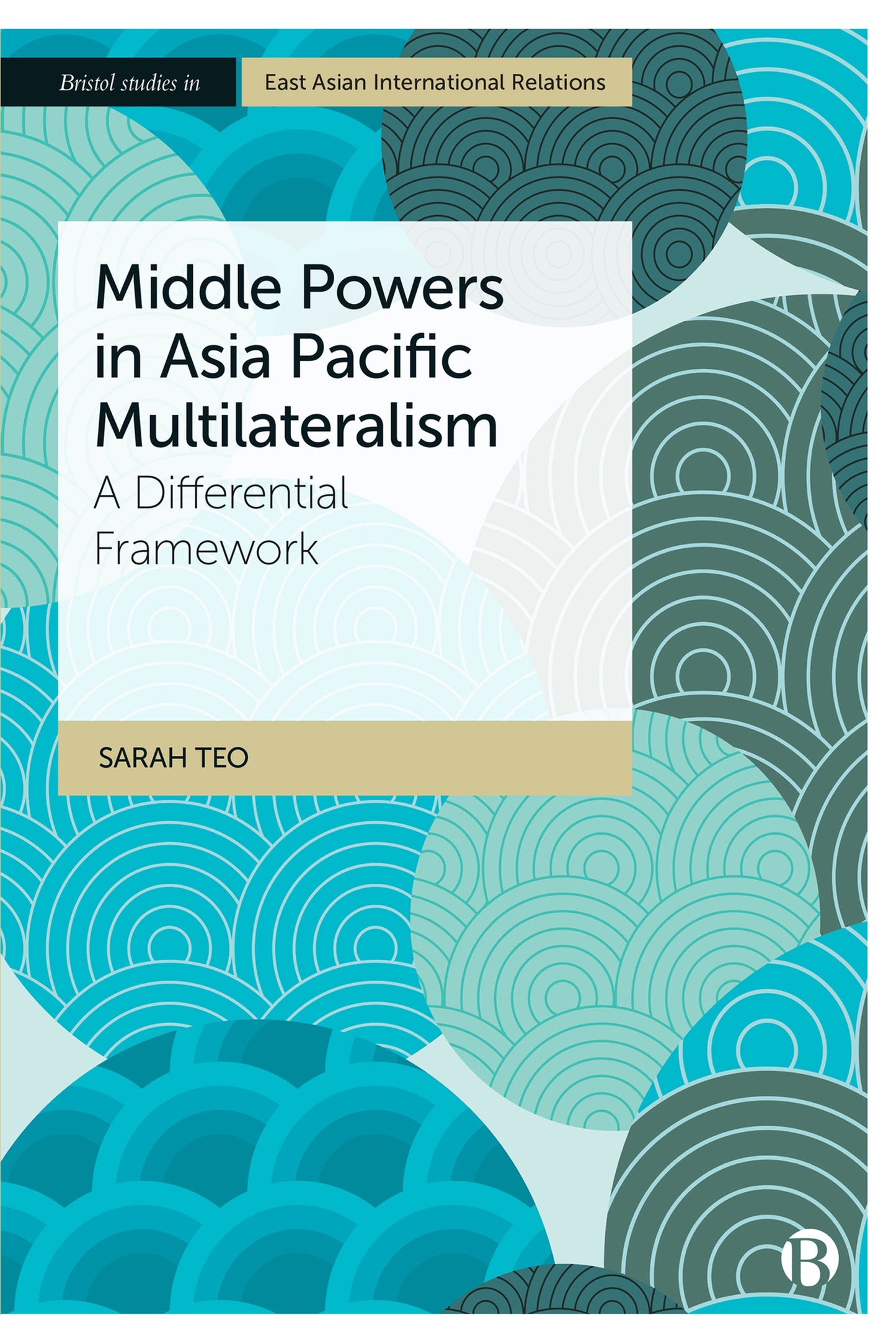
Drawing on insights from differentiation theory, this book examines the participation of middle powers in multilateralism.
Taking Australia, Indonesia and South Korea as examples, the book examines these countries’ roles in regional organizations, and particularly during the creation of the Asia-Pacific Economic Cooperation (APEC) and East Asia Summit. Through its analysis, the book argues that middle powers pursue dilution of major power stratificatory forces, as well as functionally differentiated roles for themselves in multilateral diplomacy.
The book sets out a valuable new framework to explain and understand the behaviour of middle powers in multilateralism.


1. Introduction
2. The Study of Middle Powers and Their Behaviour
3. Towards a Differential Framework for Middle Power Behaviour
4. Formation of Asia-Pacific Economic Cooperation
5. Shaping the East Asia Summit
6. The Differentiation of Middle Power Behaviour in Asia Pacific Multilateralism
7. Conclusion