


Some error occured while loading the Quick View. Please close the Quick View and try reloading the page.

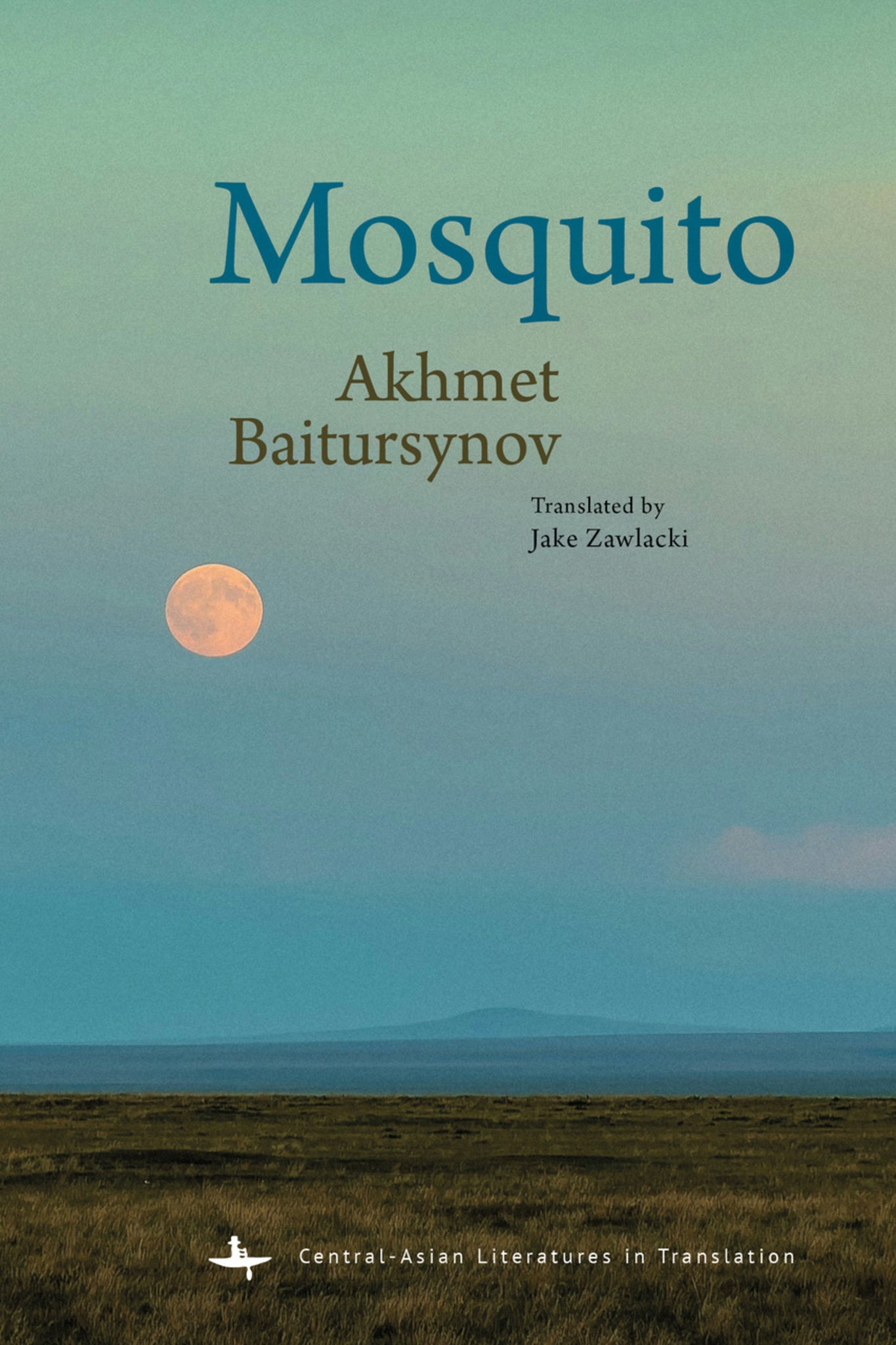
Published in 1911, and then expanded and republished in 1922, Mosquito consists of 36 poems ranging in lengths from six lines to over one hundred and fifty. It contains Akhmet Baitursynov’s most overtly political poems, aimed at the yet-to-exist Kazakh nation: to his people, to his kin, and to the many future sons and daughters of Kazakhstan. His intentions with the collection are clear, as we see in the opening lines of the poem “Author’s Note”: to buzz around the sleeping Kazakh populace in hopes of awakening them with a rallying cry.


"The importance of this book cannot be underestimated, and I am so excited that the translation of these timeless poems and Baitursynov’s oeuvre is now available in English. It is such a huge milestone for the Central Asian intellectual landscape. Akhmet Baitursynov holds a special and historic position in the history of the whole region and is considered one of the founding fathers of Kazakhstan and Kazakh modern literature. Masa or Mosquito is a classic of Qazaq adebieti – Kazakh literature and a masterful genre-bending, linguistically exquisite, crucial work of its time that interprets and reads so well in contemporary contexts. Jake Zawlacki has done a great and careful job translating these works and sustaining the depth of the original Kazakh language that is often so hard to translate due to its unique visual foundation in which Baitursynov was a virtuoso researcher and writer, composer, and archivist of the language. The book will be of interest to wider audiences – both those who are familiar with Central Asian literature and those who know very little about the early twentieth century (pre-Soviet) developments in Kazakh poetry. It is a timeless masterpiece."
—Dr Diana T Kudaibergen, UCL SSEES, author of Rewriting the Nation in Modern Kazakh Literature
"Expertly and thoughtfully rendered, Zawlacki brings the poems of Ahkmet Baitursynov to life in English, wings and all. A worthy introduction to this fantastic Kazakh poet."
—Ariel Francisco, author of All the Places We Love Have Been Left in Ruins
“Nationalists think that if people only pay attention, they will develop political and ethnic consciousness. Poets describe this mindshift as “waking up,” a powerful idea still in our era of conflicts over “wokeness.” In this spirit, Thomas Davis called for the rise of Ireland in an 1846 line, “the West’s awake.” Nationalist poets used this same concept in the Russian empire, as in Judah Leib Gordon’s 1866 Hebrew poem, “Awake, My People!” The early-20th-century Kazakh poet, teacher, political activist, and alphabet reformer Akhmet Baitursynov, though, understood that most people would rather stay asleep, and thus he memorably compared his nationalist message, in a 1911 poem, to the irritating buzzing of a mosquito at night, preventing someone from sleeping. Jake Zawlacki’s lively translation of Baitursynov’s verse offers a compelling view into Kazakh history and culture for English readers even as it can help us learn about nationalism and literature in general.”
— Gabriela Safran, Professor of Slavic Languages and Literatures and Eva Chernov Lokey Professor in Jewish Studies at Stanford University.
“At a time when Kazakh youth search for a renewed sense of national identity, Baitursynov’s Masa arrives at the perfect moment. Speaking directly to the reader with force and power, Jake Zawlacki’s translation of Mosquito lends a new voice to one of the most subversive, radical, and avante‑garde writers in Kazakh history.Today, this first ever English translation of Mosquito arrives at another pivotal moment in Kazakhstan’s history, one where today’s youth search for an identity beyond Russian influence. ”
— Fatima Moldashova, Kazakh language and culture expert
Akhmet Baitursynov (1872-1937) was a highly influential Kazakh writer, educator, poet, linguist, and leading member of the Kazakh nationalist group Alash Orda. Today, he is recognized as one of the intellectual forefathers of modern Kazakhstan, and bears the honorific “The Educator.”
Jake Zawlacki is a writer, translator, and scholar. He is also a Returned Peace Corps Volunteer from Mongolia, a Fulbright Alumnus to the Kyrgyz Republic, and a graduate of Stanford University’s Russian, Eastern European and Eurasian Studies Program. He teaches writing at the University of San Diego.
Acknowledgements
Introduction
Translator’s Note
References
Mosquito
Author’s Note
A Writer’s Joy
To My Kin
From Zhadovskaya
Khozha Nasr’s Cunning
Invitation to Study
Năbek’s Horse
The Unlucky Peasant
Geese
The Ass and the Owl
Kazakhness
Kazakh Culture
Letter to a Friend
Pieces, Gathered
Letter to My Mother
My Prayer
Words of the Captive
A Farmer of Humanity
To the Blue Asses
To the City of Qa-------
To My People
To Calm
To Mrs. N. K.
To My Little Brother Poet
Letter From My Brother-in-Law, I. B.
Reply to a Letter
Science
From Nadson
Garden
Pushkin’s Voltaire
Horse
The Wise Alek and Death
The Fisherman and the Fish
The Golden Rooster
From Lermontov