


Some error occured while loading the Quick View. Please close the Quick View and try reloading the page.
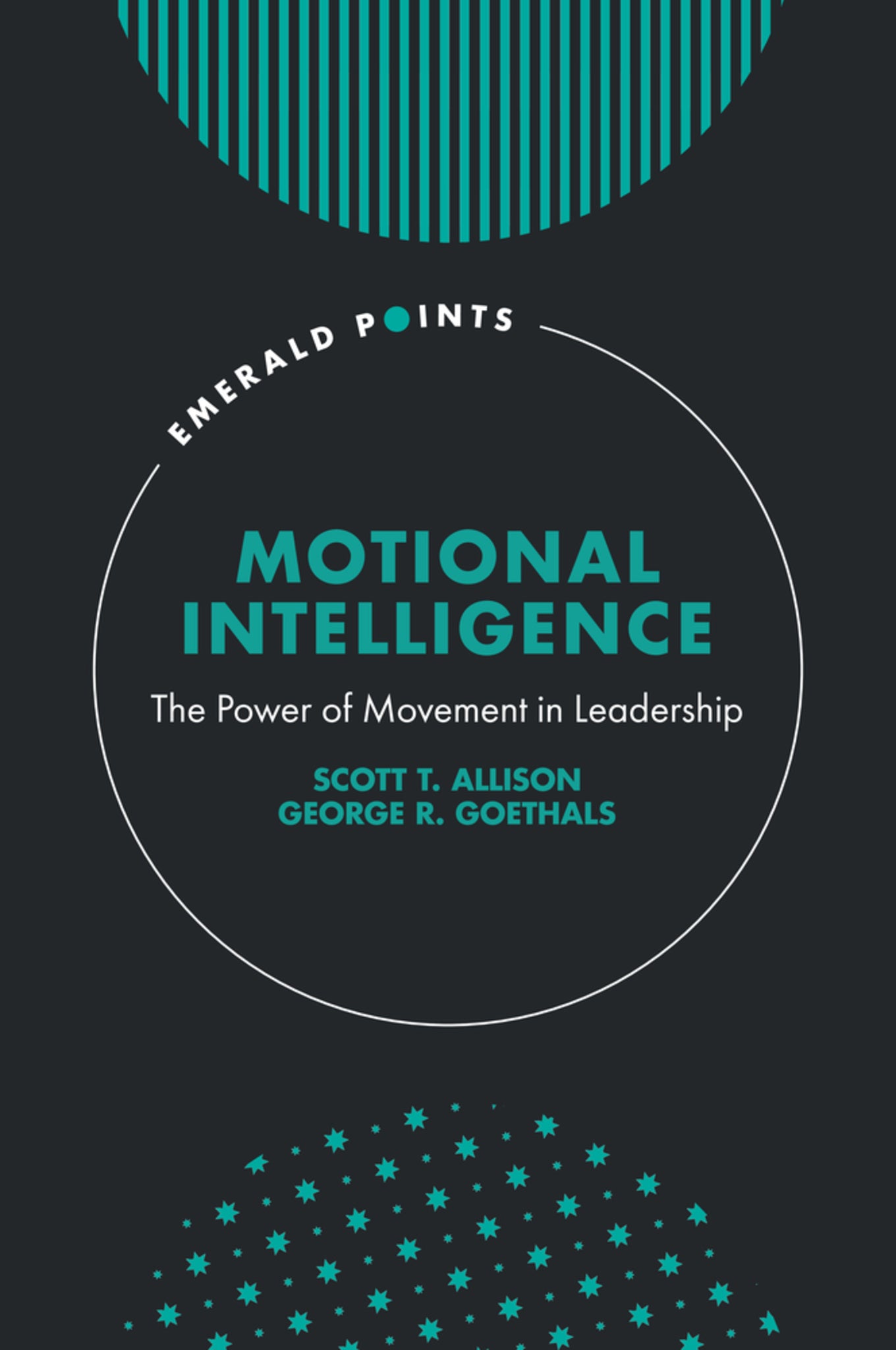
Leadership studies are increasingly emphasizing embodied communication, nonverbal influence, and the physical presence of leaders—especially in diverse, hybrid, and high-stakes social environments. Motional Intelligence advances this shift by introducing a bold new framework for understanding how posture, gesture, rhythm, and bodily timing shape influence, trust, attraction, and power. Drawing on psychology, neuroscience, evolutionary theory, leadership research, film, and everyday social life, the book shows that long before words are processed, people evaluate leaders through movement—reading confidence, warmth, dominance, or threat in the body itself.
Across domains ranging from leadership and romance to classrooms, boardrooms, athletics, and popular culture, the authors demonstrate how movement operates as a deeply social form of intelligence—one that is expressive (how leaders signal), perceptive (how they read others), and regulative (how they adapt in real time). The book also reveals how identical movements can be interpreted differently depending on gender, status, and context, shaping credibility and opportunity in subtle but powerful ways.
Accessible yet rigorous, Motional Intelligence reframes leadership as an embodied practice and argues that ethical responsibility begins not only with what leaders think or say, but with how they move.


Scott T. Allison is Professor Emeritus of Psychology at the University of Richmond, USA. He has received Richmond's Distinguished Educator Award and the Virginia Council of Higher Education's Outstanding Faculty Award.
George R. Goethals is the E. Claiborne Robins Distinguished Professor in Leadership Studies Emeritus at the University of Richmond, USA. He has received the Lifetime Achievement Award from the International Leadership Association and Richmond’s Distinguished Scholarship Award.
Chapter 1. All the World’s a Stage: What It Means to Think in Motion
Chapter 2. The Power of Motion: Why Movement Moves Us
Chapter 3. Before Words: The Evolutionary and Motivational Origins of MI
Chapter 4. The Speaking Body: Expressive MI and the Language of Movement
Chapter 5. Reading and Steering Motion: Perceptive and Regulative MI in Social Life
Chapter 6. The Glass Mask: MI in Leadership and Romance
Chapter 7. Moving Forward: Concluding Thoughts and the Ethics of MI