


Some error occured while loading the Quick View. Please close the Quick View and try reloading the page.
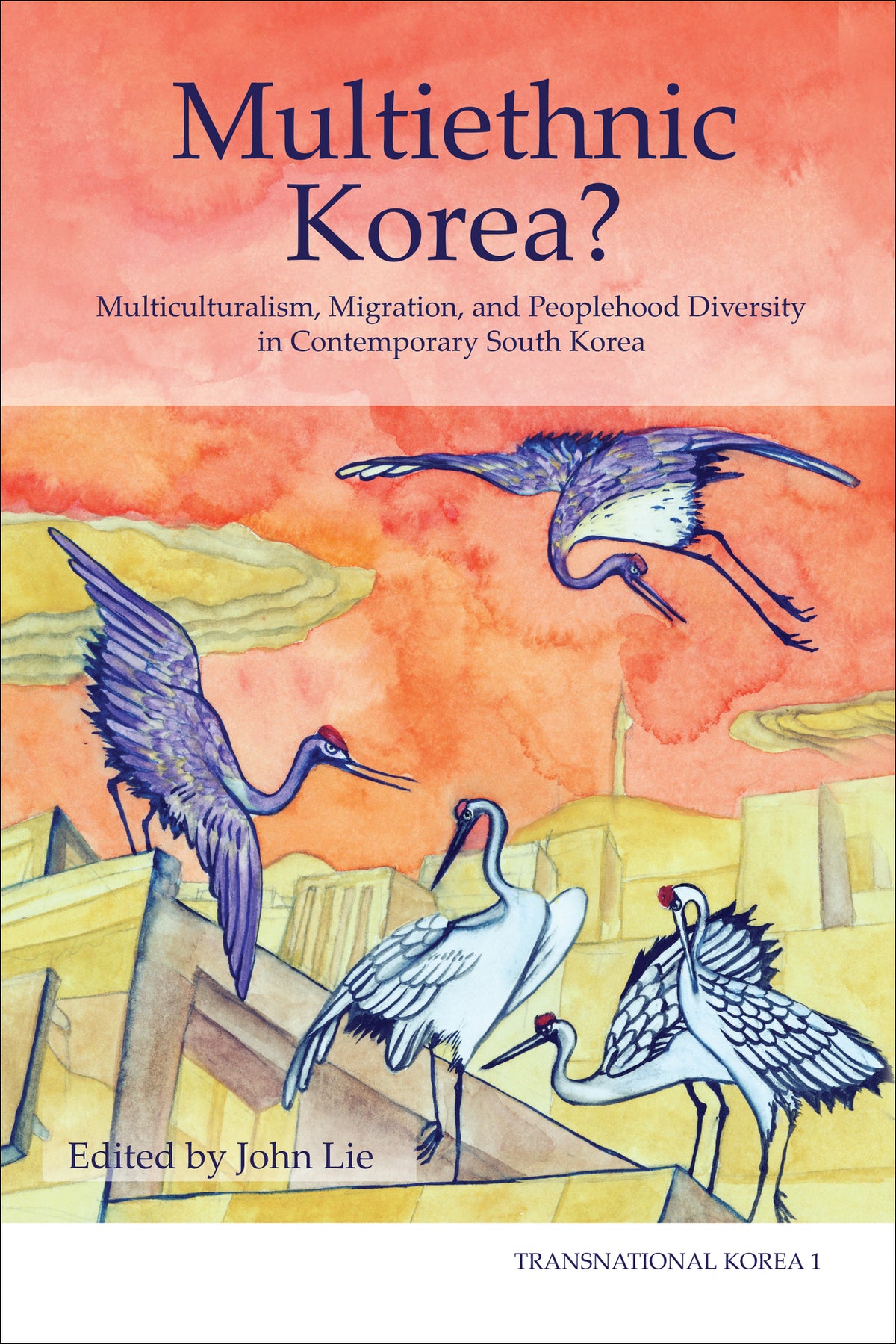


John Lie (pronounced "Lee") is professor of sociology at the University of California, Berkeley. He studies Korean diasporic trajectories and rethinks the categories of modern peoplehood. His recent works include Zainichi (Koreans in Japan): Diasporic Nationalism and Postcolonial Identity (UC Press, 2008) and an edited volume, Multiethnic Korea? Multiculturalism, Migration, and Peoplehood Diversity in Contemporary South Korea (IEAS, 2015).
Education: A.B. in Social Studies, Harvard University; Ph.D. in Sociology, Harvard University
Preface
Contributors
1. Introduction: Multiethnic Korea
John Lie
Part I: An Emergent Multiethnic Multicultural Society?
2. Late Migration, Discourse, and the Politics of Multiculturalism in South Korea: A Comparative Perspective
Timothy C. Lim
3. Korea: Multiethnic or Multicultural?
Nora Hui-Jung Kim
4. Tolerance, Tamunhwa , and the Creating of the New Citizens
EuyRyung Jun
5. Makeshift Multiculturalism: The Transformation of Elementary School Teacher Training
Nancy Abelmann, Gayoung Chung, Sejung Ham, Jiyeon Kang, and Q-Ho Lee
Part II: Migrants and Others
6. The Needs of Others: Revisiting the Nation in North Korean and Filipino Migrant Churches in South Korea
Hae Yeon Choo
7. North Korean Migrants in South Korea: From Heroes to Burdens and First Unifiers
Jin-Heon Jung
8. Beyond Motherlands and Mother Love: Locating Korean Adoptees in Global Korea
Eleana Kim
9. Diverging Paths, Converging Ends: Japan’s and Korea’s Low-Skilled Immigration Policies, 1990–2010
Keiko Yamanaka
Part III: Diversifying Korea
10. Race-ing toward the Real South Korea: The Cases of Black-Korean Nationals and African Migrants
Nadia Y. Kim
11. Almost Korean: Korean Amerasians in an Era of Multiculturalism
Sue-Je L. Gage
12. Can the Union of Patriarchy and Multiculturalism Work? Family Dynamics in Filipina-Korean Rural Households
Minjeong Kim
Part IV: Coda
13. Korean Multiculturalism in Comparative Perspective
Jack Jin Gary Lee and John D. Skrentny
Index