


Some error occured while loading the Quick View. Please close the Quick View and try reloading the page.
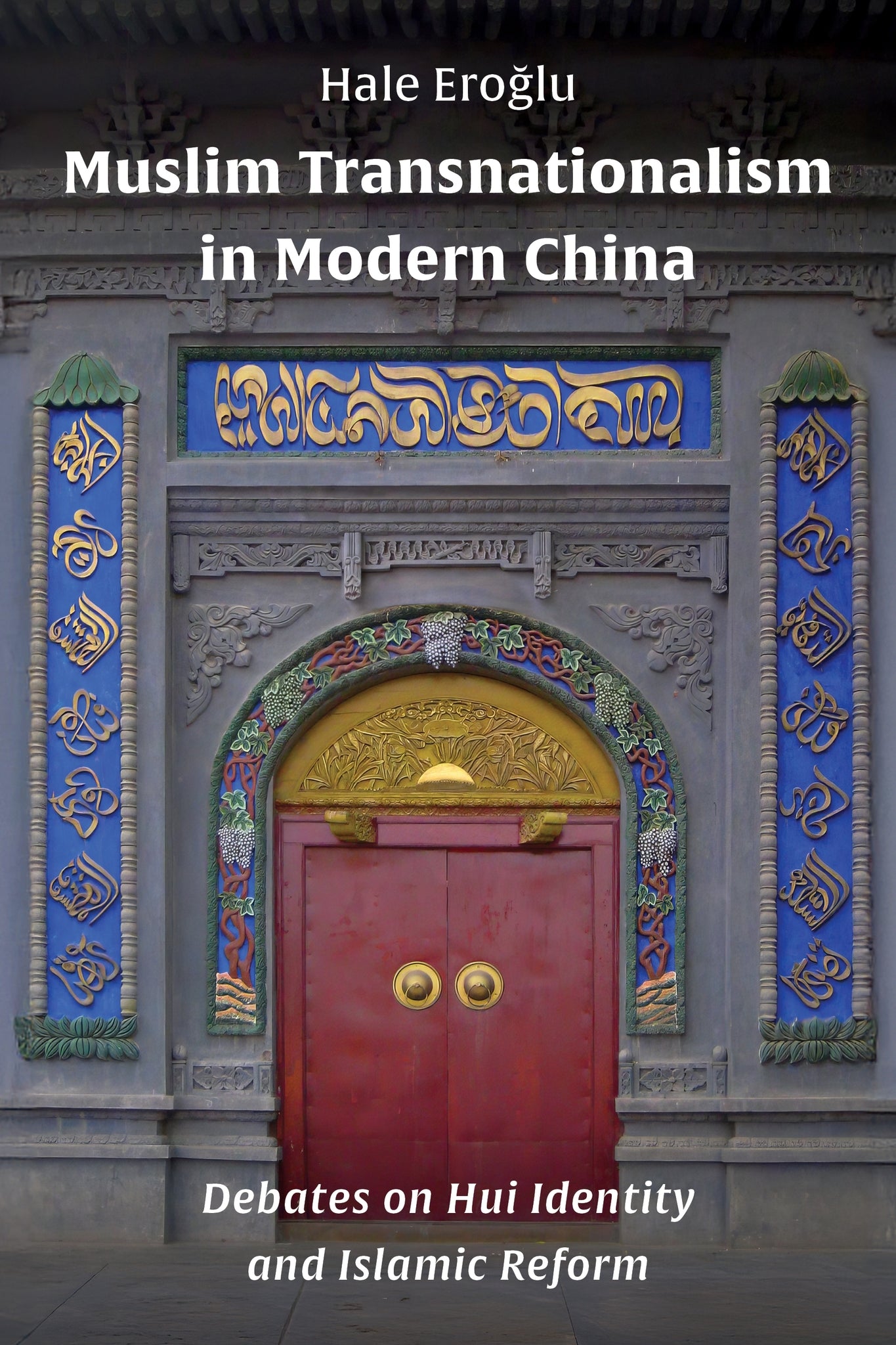
In the early twentieth century, as the multiethnic Qing empire transformed into the Republican Chinese nation-state, Chinese Muslims faced new challenges, confronting competing visions of nation-building, religion, secularism, democracy, and modernity. In this book, Hale Eroğlu explores how a group of key figures navigated this complex landscape, offering a transnational intellectual history of Chinese Muslim thought.
Muslim Transnationalism in Modern China provides a portrait of underrecognized reformists who aimed to turn Muslim subjects into active Chinese citizens and revive “true” Islam in order to aid China’s development and promote peace. Eroğlu examines reformists’ engagement with local and transnational Muslim currents, spanning “orthodox,” “heterodox,” reformist, secular, and socialist movements from Egypt, Britain, India, Turkey, and the Soviet Union. She reveals their varied strategies and highlights how they adapted global ideas to address local challenges such as the policies of the Nationalist and Communist parties, the antireligion discourse of the New Culture Movement, and the anti-Islam rhetoric of Christian missionaries. Drawing from Republican and early Communist-era journals, Chinese translations of Islamic sources, and memoirs and travelogues, this book offers a nuanced understanding of Chinese-speaking Muslim intellectuals’ efforts to balance local and global influences in shaping their community’s future.


— Zvi Ben-Dor Benite, author of The Dao of Muhammad: A Cultural History of Muslims in Late Imperial China
“Eroğlu reveals the remarkable diversity and transnational connections of reformist Sino-Muslim intellectuals in the twentieth century. Seeking a path to Islamic integrity and belonging in modern China, they turned to Kemalist Turkey, the Lahore Ahmadiyya of India, Al-Azhar University in Cairo, and the international socialist discourse of the 1950s, as well as Chinese nationalism. An imaginative, valuable book!
— Jonathan Lipman, author of Familiar Strangers: A History of Muslims in Northwest China
The definitive account of how Chinese-speaking Muslims were transformed into an ethnic group called “Hui.” Eroğlu deftly traces Chinese Muslim intellectuals’ engagements not just with the various states that have held power in modern China but with other Muslim communities across Eurasia, including the Ahmadis, Kemalists, and Egyptian reformists. The result is a transformative contribution to our understanding of China and Islam in the twentieth century.
— Rian Thum, author of The Sacred Routes of Uyghur History
Acknowledgments
Introduction
1. Rectifying the Name: The Controversy About the Identity of the Hui
2. A Place Under the Sun: Chinese Muslims and the Constitutional Movement
3. The Awakened Muslim: Turkish Modernity as an Alternative Model
4. The Free Thinkers: The Ahmadi Message in China
5. In Search of a Pivot: Chinese Muslims and Islamic Reform in Egypt
6. The Revolutionary Muslim: Hui Intellectuals During the Era of Mao
Conclusion
Epilogue
Notes
Bibliography
Index