


Some error occured while loading the Quick View. Please close the Quick View and try reloading the page.
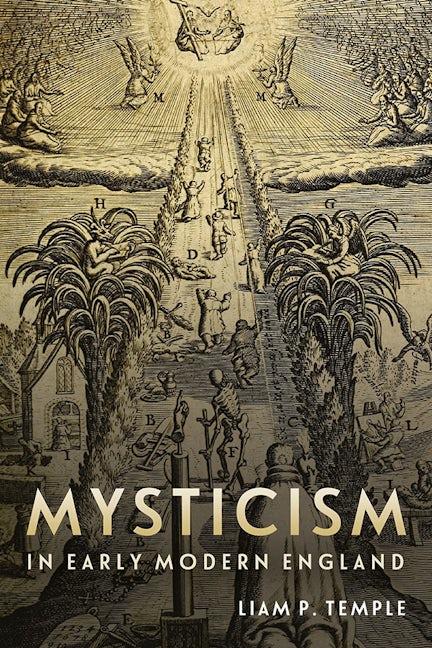
Mysticism in Early Modern England traces how mysticism featured in polemical and religious discourse in seventeenth-century England and explores how it came to be viewed as a source of sectarianism, radicalism, and, most significantly, religious enthusiasm.
Mysticism in Early Modern England examines a vital juncture in the history of Christian mysticism. Exploring both Catholic and Protestant views across the seventeenth and early eighteenth centuries, the book argues for a re-evaluation of the cross-denominational appeal of mystical spirituality. It traces the mysticism of figures such as the Benedictine Augustine Baker, the Familist preacher John Everard, the millenarian Jane Lead, and the Cambridge Platonist writers Henry More and John Worthington. At the same time, it explores the arguments of a number of early modern critics including Meric Casaubon and Edward Stillingfleet, who viewed mysticism with suspicion and ridicule, a product of melancholy and madness incompatible with learned theological and doctrinal discussions. The book contends that the early modern period ultimately saw the association of mysticism with sectarianism, radicalism and religious enthusiasm, resulting in a negative connotation that lasted well into the twentieth century. It also explores connections between England and the Continent, suggesting that parallel and interconnected criticisms of mysticism occurred in France, Italy and Germany over the period. In analysing this significant change in attitude towards mysticism, the book suggests that recent scholarly attempts to 'return' mysticism to modern religious institutions and mainstream histories of religion can be viewed as a direct response to the rejection of mysticism in the early modern period.
LIAM PETER TEMPLE gained his PhD from Northumbria University, Newcastle.
Mysticism in Early Modern England examines a vital juncture in the history of Christian mysticism. Exploring both Catholic and Protestant views across the seventeenth and early eighteenth centuries, the book argues for a re-evaluation of the cross-denominational appeal of mystical spirituality. It traces the mysticism of figures such as the Benedictine Augustine Baker, the Familist preacher John Everard, the millenarian Jane Lead, and the Cambridge Platonist writers Henry More and John Worthington. At the same time, it explores the arguments of a number of early modern critics including Meric Casaubon and Edward Stillingfleet, who viewed mysticism with suspicion and ridicule, a product of melancholy and madness incompatible with learned theological and doctrinal discussions. The book contends that the early modern period ultimately saw the association of mysticism with sectarianism, radicalism and religious enthusiasm, resulting in a negative connotation that lasted well into the twentieth century. It also explores connections between England and the Continent, suggesting that parallel and interconnected criticisms of mysticism occurred in France, Italy and Germany over the period. In analysing this significant change in attitude towards mysticism, the book suggests that recent scholarly attempts to 'return' mysticism to modern religious institutions and mainstream histories of religion can be viewed as a direct response to the rejection of mysticism in the early modern period.
LIAM PETER TEMPLE gained his PhD from Northumbria University, Newcastle.

Price: $120.00
Pages: 236
Publisher: Boydell & Brewer Inc.
Imprint: Boydell Press
Publication Date:
19 April 2019
Trim Size: 9.21 X 6.14 in
ISBN: 9781783273935
Format: Hardcover
BISACs:
RELIGION / Mysticism, Mysticism, HISTORY / Europe / Great Britain / General, HISTORY / Modern / 17th Century, European history

The book's ambition is visible not least in its firmly cross-confessional approach. Scholars have been nodding for years at the need to reintegrate Catholicism firmly into the mainstream of the religious history of early modern England. This is one of the best examples from an early career scholar of it actually being done.
Introduction
English Benedictine Mysticism, 1605-1655
Mysticism and Heterodoxy in Revolutionary England, 1625-1655
Mysticism, Melancholy and Pagano-Papism, 1630-1670
Rationality and Mysticism in the Restoration, 1660-1690
Mysticism and the Philadelphian Moment, 1650-1705
Conclusion
Bibliography
Index
English Benedictine Mysticism, 1605-1655
Mysticism and Heterodoxy in Revolutionary England, 1625-1655
Mysticism, Melancholy and Pagano-Papism, 1630-1670
Rationality and Mysticism in the Restoration, 1660-1690
Mysticism and the Philadelphian Moment, 1650-1705
Conclusion
Bibliography
Index