


Some error occured while loading the Quick View. Please close the Quick View and try reloading the page.
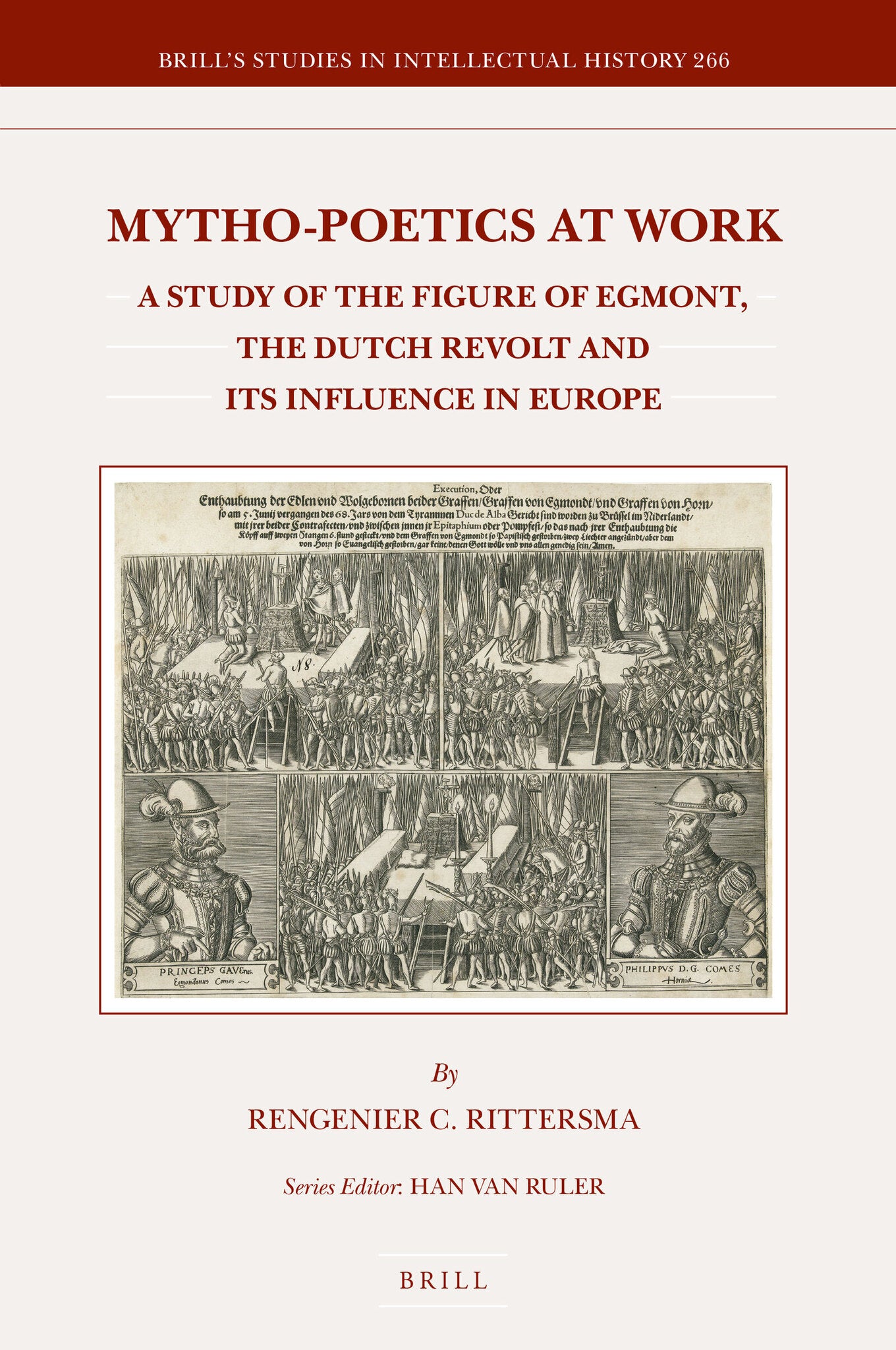
In Mytho-poetics at Work Rengenier Rittersma offers an account of the posthumous fame of the Count of Egmont (1522-1568), whose public decapitation triggered the Dutch revolt. Drawing from numerous European sources – pamphlets, chronicles, and literature – this monograph tries to unravel why and how the alleged freedom fighter became an icon in European thought. It demonstrates that Egmont unfurled an evocative power over several centuries and cultural regions, as his name could be deliberately instrumentalized by different groups of people in order to corroborate their own confessional and political programs.
In addition, this book offers the very first systematic study of the phenomenon of mytho-genesis and provides a conceptual model that can be applied to analogous historical myths.
In addition, this book offers the very first systematic study of the phenomenon of mytho-genesis and provides a conceptual model that can be applied to analogous historical myths.

Price: $232.00
Pages: 416
Publisher: Brill
Imprint: Brill
Publication Date:
11 January 2018
ISBN: 9789004270831
Format: Hardcover

“This book is a splendid achievement: the research is prodigious, the work is clearly organized, and the writing is elegant and even witty. I certainly learned much that I did not know about a classic work of German literature.”
Theodore Ziolkowski, Princeton University
“Rittersma's book can be perceived as a cornerstone in a cultural history of Europe, since it is one of the very first studies that systematically tackles the transformation, during a period of more than two centuries, of a historical figure.”
Peter Burschel, Director Herzog August Bibliothek Wolfenbüttel
“Rittersma’s meditations on myths are thoughtful and illuminating […]. This rich study deserves to be read by historians and literature specialists alike.”
Jan Machielsen, Cardiff University. In: The English Historical Review, Vol. 134, Issue 568 (June 2019), pp. 701–703.
“meticulously researched […] This book provides an often witty and engaging account of the history, influence, and transformation of a historical figure.”
Dannielle Shaw, University of Groningen. In: European History Quarterly, Vol. 49, No. 2 (April 2019), pp. 346–347.
“highly informative and engrossing […] a paradigm for the mythmaking of historical figures.”
Cornelia Niekus Moore, University of Hawaii, Emeritus. In: Sixteenth Century Journal, Vol. 49, No. 4 (2018), pp. 1277–1279.
“a fascinating analysis of the work process of Goethe and Schiller, which Rittersma describes with great attention to detail and great joy.”
Liesbeth Geevers, Lund University. In: Cuadernos de Historia Moderna, Vol. 44, No. 2 (2019), pp. 661–663.
“For scholars of Goethe and Schiller, Rittersma performs an invaluable service.”
Simon Richter, University of Pennsylvania. In: Goethe Yearbook, Vol. 28 (2021), pp. 387–389.
“[Rittersma] legt die komplexe Beziehung von Mythos und Realität offen.”
Olaf Mörke, Universität Kiel. In: H-Soz-Kult, 16.03.2020.
“Cet ouvrage, par l'ampleur et l'exhaustivité du corpus analysé, constitue un bel exemple d'une manière nouvelle d'incorporer l'étude de sources à l'analyse des textes: elle ne se limite pas aux sources dont l'utilisation est attestée, ni à peser la signification des choix des détails retenus dans l'économie de l'œuvre, mais elle retrace sur un mode archéologique toute une présence diffuse et souterraine en amont, comparée à des rhizomes, et replacée elle-même dans les enjeux idéologiques du moment de leur rédaction et saisie dans ses mutations, pour aboutir à l'acmè des années 1780.”
Gérard Laudin, Sorbonne Université (émérite). In: Études germaniques, 2022.
Theodore Ziolkowski, Princeton University
“Rittersma's book can be perceived as a cornerstone in a cultural history of Europe, since it is one of the very first studies that systematically tackles the transformation, during a period of more than two centuries, of a historical figure.”
Peter Burschel, Director Herzog August Bibliothek Wolfenbüttel
“Rittersma’s meditations on myths are thoughtful and illuminating […]. This rich study deserves to be read by historians and literature specialists alike.”
Jan Machielsen, Cardiff University. In: The English Historical Review, Vol. 134, Issue 568 (June 2019), pp. 701–703.
“meticulously researched […] This book provides an often witty and engaging account of the history, influence, and transformation of a historical figure.”
Dannielle Shaw, University of Groningen. In: European History Quarterly, Vol. 49, No. 2 (April 2019), pp. 346–347.
“highly informative and engrossing […] a paradigm for the mythmaking of historical figures.”
Cornelia Niekus Moore, University of Hawaii, Emeritus. In: Sixteenth Century Journal, Vol. 49, No. 4 (2018), pp. 1277–1279.
“a fascinating analysis of the work process of Goethe and Schiller, which Rittersma describes with great attention to detail and great joy.”
Liesbeth Geevers, Lund University. In: Cuadernos de Historia Moderna, Vol. 44, No. 2 (2019), pp. 661–663.
“For scholars of Goethe and Schiller, Rittersma performs an invaluable service.”
Simon Richter, University of Pennsylvania. In: Goethe Yearbook, Vol. 28 (2021), pp. 387–389.
“[Rittersma] legt die komplexe Beziehung von Mythos und Realität offen.”
Olaf Mörke, Universität Kiel. In: H-Soz-Kult, 16.03.2020.
“Cet ouvrage, par l'ampleur et l'exhaustivité du corpus analysé, constitue un bel exemple d'une manière nouvelle d'incorporer l'étude de sources à l'analyse des textes: elle ne se limite pas aux sources dont l'utilisation est attestée, ni à peser la signification des choix des détails retenus dans l'économie de l'œuvre, mais elle retrace sur un mode archéologique toute une présence diffuse et souterraine en amont, comparée à des rhizomes, et replacée elle-même dans les enjeux idéologiques du moment de leur rédaction et saisie dans ses mutations, pour aboutir à l'acmè des années 1780.”
Gérard Laudin, Sorbonne Université (émérite). In: Études germaniques, 2022.
Rengenier Rittersma studied History and German Philology (cum laude) in Amsterdam and Heidelberg and obtained his Ph.D. in History from the European University Institute, Florence. His current project is Tartufomania: Truffle Obsessions in Europe since the Renaissance.