


Some error occured while loading the Quick View. Please close the Quick View and try reloading the page.
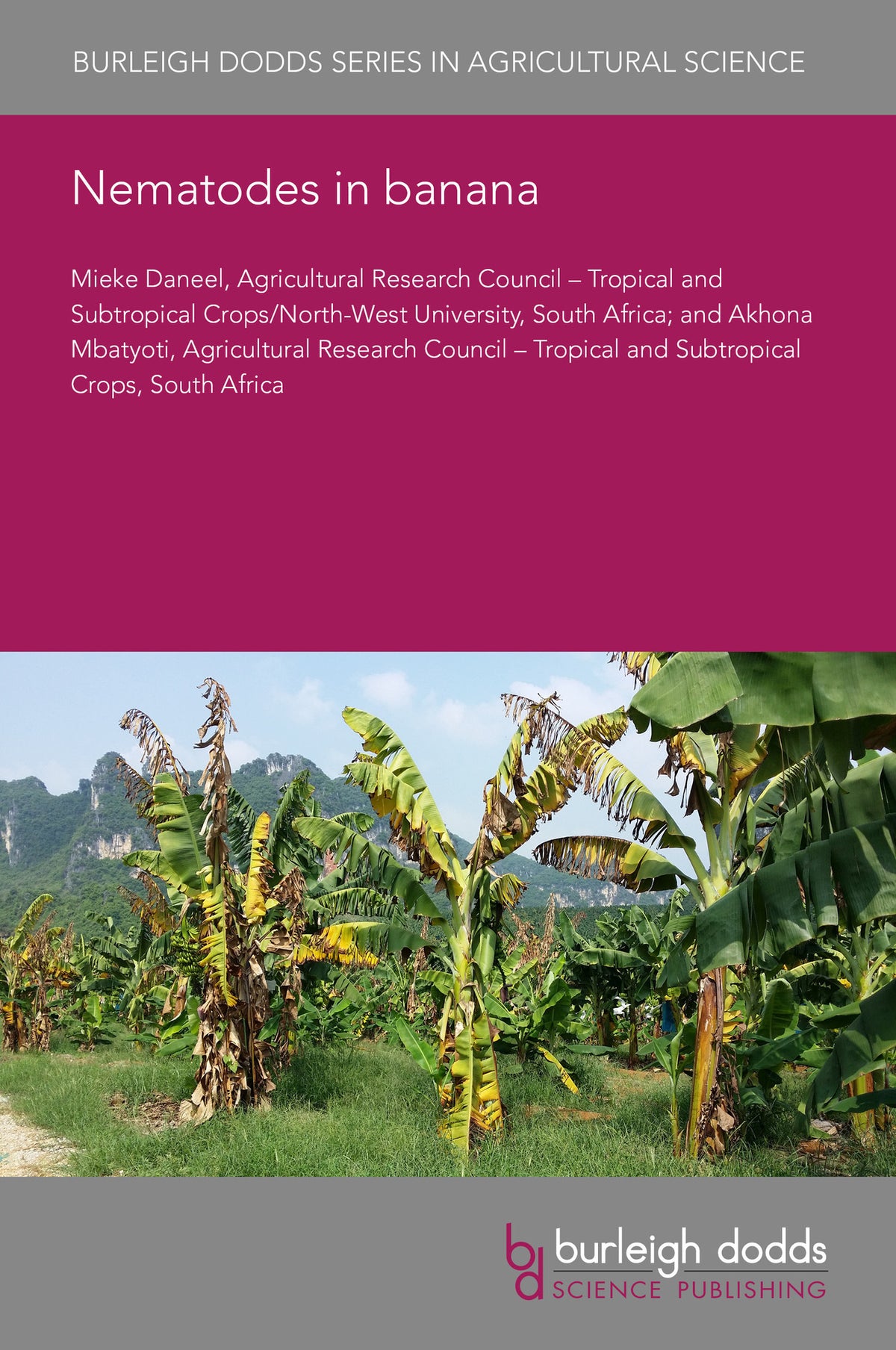
Banana production is threatened by nematodes that parasitize the root system. The damage that nematodes inflict when feeding destroys the banana’s root system, limiting nutrient and water uptake, and reducing the efficiency of the root system to anchor the plant, resulting in toppling, especially during severe wind. Such damage caused by nematodes results in significantly reduced yields. A variety of nematode genera are associated with banana. The most widely distributed and damaging species are Radopholus similis, Pratylenchus coffeae, Pratylenchus goodeyi, Meloidogyne spp. and Helicotylenchus multicinctus. Effective nematode control measures include resistant or tolerant cultivars, chemical control, fallowing, cover- and inter-cropping, application of organic soil amendments and biological control. In East and West Africa, banana serves as a staple food and is planted by smallholder farmers for whom many control options are difficult to implement and chemical control is too expensive. Therefore, alternative control measures for sustainable production need to be explored. Some of these options are discussed in this chapter.


- 1 Introduction
- 2 Plant-parasitic nematodes
- 3 Control of nematodes
- 4 Future trends in research
- 5 Conclusion
- 6 Where to look for further information
- 7 References