


Some error occured while loading the Quick View. Please close the Quick View and try reloading the page.
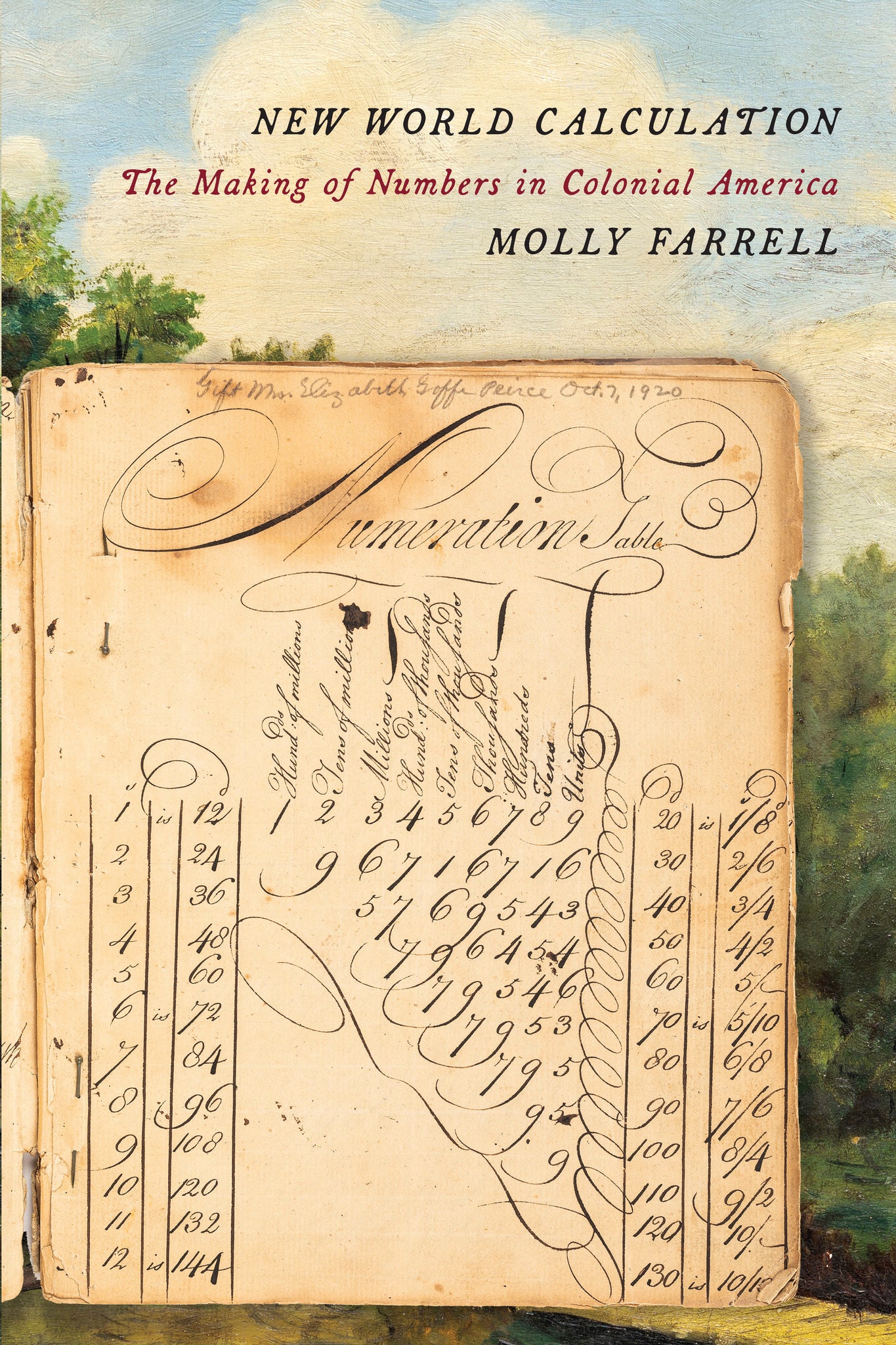
Molly Farrell tells the story of colonial America as a testing ground for new ways of conceptualizing numbers, uncovering overlooked forms of numerical thinking to argue that colonialism and the rise of racial capitalism incited a struggle about what exactly a number is and what it can do.
When English settlers began colonizing Indigenous lands, they confronted groups of people with very different beliefs about numbers. Meanwhile, Atlantic colonialism required tremendous accounting work, especially to support the trade in enslaved Africans. Numeracy, then, seems to be deeply complicit with the colonial project. Farrell, however, follows the circulation of arithmetic primers, cipher books, and other material traces to show how everyday people repurposed numeracy to serve their own ends—ranging from making a living as a fugitive from enslavement to measuring medicine for at-home abortion.
Drawing on book history and Black feminist science and technology studies, New World Calculation argues that we need to restore the math book into its social space in order to disentangle the relationship between quantification and oppression in America's cultural history.


"In an imaginative rethinking of arithmetical knowledge in early America, Farrell examines acts of counting and calculating as sites of meaning, struggle, and expression. An intellectually adventurous encounter with white, Black, and indigenous peoples speaking the language of numbers."—Tamara Plakins Thornton, SUNY, Buffalo
"New World Calculation recasts the history of numbers as a distinctly human, deeply political story. Cracking open early account ledgers, arithmetic primers, and ciphering workbooks, Farrell uncovers intertwined histories of knowledge, race, and technology—as wielded from both above and below—that undergird modern data culture. In this deeply researched book, Farrell brings the study of numeracy into the field of vision of histories of settler colonialism and racial capitalism. Strikingly original and eminently readable, this book places the past in conversation with today's algorithmic world in brilliant and generative ways."—Elizabeth Maddock Dillon, Northeastern University
Introduction: Word Problems
1. Learning to Count
Interlude: Sense and Pleasure
2. Colonial Arithmetic Books
Interlude: Americans and Abortion
3. Fugitive Figures
Interlude: Blackness and Genius
4. Calculating Indians
Conclusion: Unbounded Sets
Notes
Bibliography
Index